
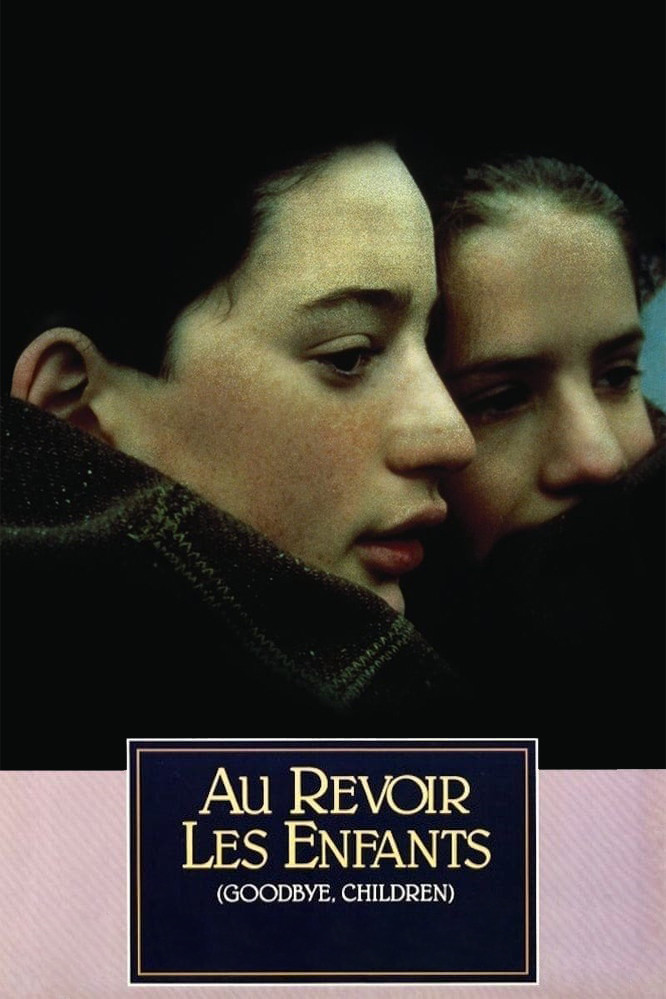
Plot Summary
There are certain films that sit with me long after the credits have rolled, and Louis Malle’s Au Revoir les Enfants is among those rare few. Set in Nazi-occupied France during World War II, the film quietly lures me into the world of a Catholic boarding school for boys—a place where innocence tries, almost desperately, to hold its ground. At the narrative’s center is a tender, conflicted friendship that forms between two students, Julien Quentin and Jean Bonnet. The former is privileged, curious, and, in many ways, shielded by his social status. Jean, on the other hand, is reserved, somber, and, I begin to realize, haunted by unspoken anxieties. Their relationship, built on subtle gestures, shared mischief, and mutual longing for understanding, acts as the film’s beating heart.
Malle, steering the film with both intimacy and restraint, gradually reveals the school’s cloistered atmosphere is as much a refuge as it is a prison. Underneath its order, the threat of betrayal and discovery looms—a reality the boys only half-understand. The daily rituals, playful banter, and moments of petty rebellion feel disarmingly authentic, making the intrusion of outside danger all the more jarring. The narrative pivots on what I sensed early on: Jean’s presence is not merely that of a new student. Beneath the surface, peril waits in the form of suspicion and collaboration, echoing far beyond the gates of the school.
Without crossing into major spoiler territory, I will say that the film’s emotional core tightens with each sequence, as I found myself fearing what the innocence of these children cannot see coming. Malle avoids melodrama; instead, he crafts a coming-of-age tale that is as much about confusion and vulnerability as it is about moral choices under impossible pressure. As the plot unwinds, my empathy for every character—child and adult alike—kept deepening. Genuine human frailty, not ideological certainty, is what drives the story towards its quietly devastating climax.
Key Themes & Analysis
What lingers with me most about Au Revoir les Enfants isn’t just the story, but the ideas it meditates upon. For me, the film’s most powerful theme is innocence confronted by cruelty. Though the boys inhabit a world of enforced discipline and religious ritual, cracks constantly appear in their illusions. The encroaching anti-Semitic laws, barely explained to them, suddenly enter their daily lives with abrupt consequences. I’m struck by how this childhood innocence is unable to fully process the adult world’s arbitrary, lethal rules—a gap that Malle exposes with painful clarity.
Cinematographically, I noticed how Malle’s lens lingers on faces, hands, even lingering shots of hallways, as if to gently insist I pay attention to those quieter, in-between moments—the ones where trust is tested and fleeting solidarity is born. A muted color palette dominates, making the warmth of candlelight and soft winter sunlight all the more sacred. Moments of levity, like winter games or forbidden jokes, are balanced against the persistent grayness outside. I felt the school’s walls both protect and isolate, emphasizing how physical boundaries cannot shield from the war’s psychic toll.
As a director, Malle deploys restraint almost as a weapon. His narrative style avoids easy sentimentality. Instead, it keeps me off-balance, never allowing me to settle into pat explanations or simple moral judgments. Even the adults—priests, teachers, collaborators—are handled with empathy, not condemnation. I appreciate how individual motives are complicated; the “enemies” of the story are not broad archetypes but members of the same fractured community, responding to an impossible situation. In the performances, I found Gaspard Manesse’s portrayal of Julien nuanced and deeply relatable; he embodies both the fierce pride of a boy and the heartache of forced maturity. Raphaël Fejtö, as Jean, radiates vulnerability, making his isolation palpable with just a glance or a nervous pause in speech.
Another motif that engrossed me is that of secrecy—how it shapes both survival and isolation. Personal secrets, institutional secrets, and the secret languages of childhood all collide in this cloistered community. I was reminded that resilience doesn’t always look heroic—it’s often small, stubborn acts of kindness or a refusal to betray a friend when the cost is high. In this way, the film reframed heroism for me, focusing less on grand gestures and more on moral ambiguity. Trust and betrayal, so often the territory of melodrama, here become painfully intimate. The lines between perpetrator, bystander, and victim are always shifting, as they must in any honest portrait of war’s effect on ordinary lives.
If I had to isolate the aspect that draws me back to Au Revoir les Enfants again and again, it’s how the film quietly mourns what is lost when a society succumbs to fear and complicity. There is no brute force in its critique; rather, the pain is cumulative, unfurling in quiet scenes of suspended hope or wordless dread. I saw Malle’s own autobiographical ties to the story in every frame—a personal catharsis rendered universal, which only sharpens the film’s resonance. For those willing to listen, the echoes last far beyond the story’s fade out.
My Thoughts on the Historical & Social Context
When I reflect on how Au Revoir les Enfants reached audiences in 1987, I’m reminded that France was confronting long-taboo subjects about its conduct during the Second World War. Released more than four decades after the war’s end, the film felt, to me, like a reckoning that was both overdue and deeply personal, not just for Malle but for his country. The 1980s saw rising debates within France regarding Vichy collaboration and the complicity of ordinary citizens. Only in the years leading up to the film’s release did public discussion start to shift from narratives of resistance to uncomfortable truths about betrayal and sacrifice. Watching the film, I see it less as a historical artifact and more as an intervention—a call to acknowledge wounds that hadn’t fully healed.
Personally, I find the film’s examination of silence—how people rationalize looking the other way, especially children learning by example—to be fiercely relevant even in today’s world. We continue to live in times when societies grapple with exclusion, prejudice, and the dangers of majority complacency. Malle’s story resonates with me as it draws a direct, unsparing line between the safeguarding of innocence and the risks of moral cowardice. The questions the film asks—about responsibility, empathy, and the price of survival—are ones that refuse easy answers. I cannot help but draw parallels to modern conflicts, where the vulnerable too often rely on others’ willingness to take personal risk for the sake of justice.
For me, the film’s enduring relevance rests on its ability to hold up a mirror to the past while forcing me to confront uncomfortable truths about the present. Every viewing reminds me how easily societies—both then and now—construct boundaries that, in times of fear or crisis, can become deadly. The story matters not because it is unique, but because it is universal. Malle’s film is, in my eyes, both a lament and a warning, a work that continues to provoke discomfort, conversation, and—hopefully—a bit more courage.
Fact Check: Behind the Scenes & Real History
Diving into the real-life origins and production of Au Revoir les Enfants, I discovered layers that only enhance my appreciation of what’s on screen. First, it is no secret that Louis Malle drew from his own childhood. As a young student at a Carmelite boarding school in Fontainebleau, he witnessed an incident profoundly similar to what Julien does in the story. This direct autobiographical connection lends the film not just authenticity, but emotional weight; for me, knowing that Malle is wrestling with his own guilt, memory, and loss makes every scene more haunting.
One detail that fascinates me is the casting process. Gaspard Manesse was not a professional actor—a choice that, in my opinion, infuses the performance with startling realism. Malle conducted an extensive search for actors who could project genuine, unaffected innocence, rather than traditional movie-star precocity. Manesse later reflected on how he was relatively unburdened by the film’s historical content at the time of shooting, which I think added a layer of natural curiosity and bewilderment to his portrayal. Similarly, Raphaël Fejtö’s quiet intensity comes not from technique, but presence—a quality Malle fostered by keeping the young cast away from the most harrowing details of the script until they were needed on set.
From a historical accuracy standpoint, I find it remarkable how the film re-creates the atmosphere of a 1940s French boarding school, down to the smallest ritual and meal. Malle consulted former classmates for details that would ring true, but I noticed some subtle departures from reality. For example, while the actual priests at Malle’s childhood school did shelter Jewish children, the real headmaster survived the war—unlike his cinematic counterpart. These changes, I feel, heighten the stakes and underscore the film’s tragic trajectory, without straying far from the emotional reality of the time.
What truly captures my imagination is how the production navigated extraordinary challenges. Shooting in real French monasteries and schools, the crew encountered harsh winter conditions—a choice that, in my view, amplified the film’s sense of physical and emotional isolation. The cold breath misting in the air during many scenes isn’t a special effect; it’s a documentary detail, grounding the narrative even further in lived experience.
Why You Should Watch It
- Its portrayal of childhood innocence and moral awakening is subtle, deeply moving, and speaks to universal human experience.
- The film’s gentle craftsmanship—every shot, performance, and line of dialogue—pulls me into its world and refuses to let go.
- Understanding history through such a personal, honest lens offers insight into courage, complicity, and the costs of silence in a way that feels painfully relevant today.
Review Conclusion
After several viewings, I can confidently say Au Revoir les Enfants remains one of the most quietly devastating and necessary films I’ve encountered. It’s not just a story of friendship amidst war; it’s a meditation on the responsibilities we bear, however young or powerless we may feel. Malle’s direction—delicate but unflinching—ensures that every loss and fleeting moment of hope resonates long after the story is over. For its emotional truth, moral depth, and unwavering humanity, I give this film a 5/5.
If you want to explore this film beyond basic facts, you may also be interested in how modern audiences respond to it today or whether its story was inspired by real events.
🎬 Check out today's best-selling movies on Amazon!
View Deals on Amazon