
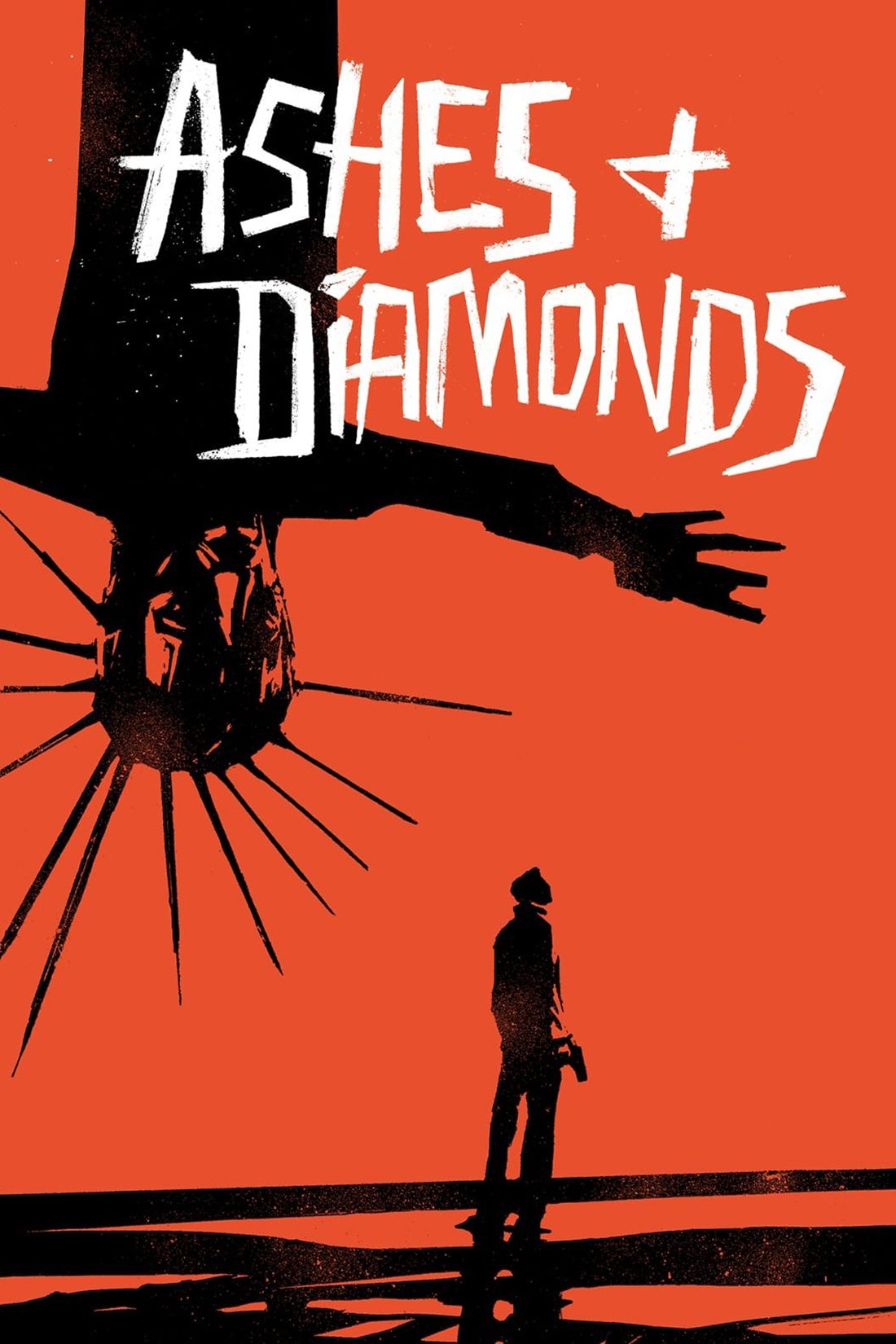
Plot Summary
For as long as I can remember, I’ve been captivated by films that balance the weight of history with intensely personal stories. Watching “Ashes and Diamonds,” directed by Andrzej Wajda, immediately transported me into an emotionally fraught postwar Poland. What lingered with me most wasn’t just the actual plot, but the underlying tension: the country was on the knife’s edge between old allegiances and a new world order. I found myself following Maciek, a young Home Army soldier, during one pivotal day in May 1945—a day that buzzes with the tension of a society at war’s end, bruised but not yet at peace.
My first time watching the film, I noticed how deliberately Wajda unfolds the events, mirroring the disorientation and rootlessness of the period. Maciek’s assignment—to eliminate a local communist leader—serves as the narrative engine, but it’s his moments of pause, gazing into the glow of candles or lingering in conversation with a barmaid named Krystyna, that reveal the turmoil eating at the edges of every frame. I was struck by how these quieter moments are just as tense as the film’s outbursts of violence. There’s a tangible sense that history weighs down every decision, every word not spoken, every glance exchanged.
As the story progresses, I grew increasingly aware of the tug Maciek feels: duty, personal longing, exhaustion, and the slippery concept of honor in a freshly shattered nation. This is not a war film in the sense of battlefields and spectacle, but an intense character study pressed up against a forbidding political backdrop. Even as the narrative kicks into its final act, the film resists clear resolutions. The price of survival in such a moment, as I saw it, is captured not just in the final, devastating images, but in every conflicted heartbeat along the way.
Key Themes & Analysis
The real brilliance of “Ashes and Diamonds” reveals itself to me each time I revisit its themes. I can’t help but see it as a meditation on the cost of ideological conflict—not in terms of abstract politics, but through the intimate, painful choices individuals are forced to make. Maciek’s world is doused in contradiction: loyalty butts against cynicism, hope flickers in the ruins of despair, and nothing ever feels entirely won or lost. I’ve always admired how Wajda structures this film less as a straightforward drama and more as a fevered elegy for a vanished country.
The way Wajda composes each shot lingers in my mind long after viewing—the striking black-and-white cinematography by Jerzy Wójcik bathes Poland’s postwar landscape in both shadows and hard light, constantly reminding me that nothing in this world is truly clear or straightforward. Those iconic images—the rows of upended wine glasses ablaze like a cemetery of desperate prayers—still haunt me. This potent imagery elevates the drama to something nearly mythical. Yet, Wajda never loses sight of the fragile humanity at the film’s core.
Maciek, as portrayed by Zbigniew Cybulski, became for me the embodiment of restless youth in an exhausted country. There’s an emotional volatility in Cybulski’s performance that’s impossible to forget. I felt his uncertainty flicker beneath every swagger and nervous gesture; he reminded me of James Dean, if Dean had been left to wander European ruins instead of American highways. This vulnerability is echoed in Ewa Krzyżewska’s portrayal of Krystyna. Instead of playing a simple love interest, she conveys her own wounds and quiet strength, lending the romance a sense of tragic inevitability.
What moves me most is how “Ashes and Diamonds” isn’t just about the immediate consequences of violence. It asks, repeatedly and insistently: What now? What do loyalty, morality, and survival mean when tomorrow promises only ambiguity? The film’s use of jazz and popular music, drifting through smoky interiors, struck me as both a yearning for life and a reminder that the past cannot be easily brushed away. I see how Wajda employs silence and music to situate us—in a country not yet allowed to grieve, not given the time to hope.
One element I find consistently compelling is Wajda’s refusal to romanticize the historical moment. He uses blocking and composition not to glorify struggle, but to isolate the characters within increasingly fractured spaces. The result, to my senses, is that the film’s greatest tension emerges from the impossibility of connection: the characters move closer, yet are always pulled apart by forces larger than themselves. This sense of longing and loss sits at the heart of the film’s power for me.
My Thoughts on the Cultural Impact & Legacy
What struck me most, the first and every subsequent time I’ve seen “Ashes and Diamonds,” is how it defines not only a pivotal chapter in postwar cinema, but also a turning point for how national trauma can be explored through film. As a film curator and lifelong admirer of cinema’s ability to shape and reflect culture, I consider Wajda’s achievement here nothing short of revolutionary. “Ashes and Diamonds” forged a new cinematic language for grappling with the aftermath of war, and its influence continues to ripple outward—through the works of filmmakers like Roman Polanski and Krzysztof Kieślowski, all the way to contemporary directors exploring the moral fog of conflict.
On a personal level, I connect to the film’s restless energy. There’s an almost tactile sense of living in a world where nothing is guaranteed—something that resonates whenever I see young people grappling with the legacies of past decisions. Wajda’s work feels remarkably fresh to me, never tethered solely to its moment, but always pulsing with relevance. Every time I watch, I’m reminded of how collective histories shape individual fate, and how film can trace those invisible threads.
When I’m programming films for retrospectives or discussing classics with new audiences, “Ashes and Diamonds” is never far from my mind. I’ve witnessed firsthand how it opens up conversations about memory, forgiveness, and the complicated inheritance of trauma. The images and emotions Wajda captures have become part of my critical vocabulary—I see echoes of them everywhere, from Polish New Wave cinema to the moral ambiguity of postwar tales from different cultures. That haunting ending, so full of unresolved pain and possibility, lingers for decades. For me, that’s the true mark of a masterpiece: when it continues asking questions long after the credits roll.
Fascinating Behind-the-Scenes Facts
Discovering the stories behind “Ashes and Diamonds” only deepened my appreciation for its artistry. The first fact that fascinated me is the casting of Zbigniew Cybulski as Maciek. I learned that Wajda originally hesitated, since Cybulski’s contemporary look—especially his now-iconic sunglasses—was at odds with the traditional image of a resistance fighter. But Cybulski’s raw energy and charisma ultimately convinced Wajda, and his performance transformed the character into an emblem of postwar Polish youth. The sunglasses, meant to disguise a minor eye injury, accidentally became a symbol of cool defiance. This bit of serendipity perfectly captures the spirit of the film.
Another detail I find vividly intriguing is the technical challenge behind the film’s famous opening sequence. The scene involving a failed assassination attempt was shot under intense pressure. The cast and crew worked long nights on location, battling unreliable equipment and the unpredictability of Polish spring weather. Yet, the gritty realism of those sequences came to define the visual tone of the whole film. That relentless commitment to capturing authenticity is, for me, what gives the movie its vivid immediacy.
Finally, I can’t help but smile at the fact that the use of actual alcohol on set—especially during the pivotal bar scenes—has become the stuff of legend. According to recollections from the crew, the actors’ performances gained genuine spontaneity thanks to Wajda’s encouragement to lean into the atmosphere of exhaustion and celebration. Watching those sequences now, I can sense how the blurred lines between performance and reality create the heady, uncertain mood that persists throughout the film. These behind-the-scenes stories not only add color to the mythos of “Ashes and Diamonds,” but deepen my own immersion into its world.
Why You Should Watch It
- Every frame resonates with emotional urgency, making the historical moment feel intensely personal—watching it, I found myself inhabiting the characters’ dilemmas with surprising intimacy.
- Zbigniew Cybulski’s performance as Maciek is unforgettable; his restless energy and vulnerability created a new kind of antihero that I find endlessly compelling.
- The film’s haunting visual language and thematic depth provide food for thought, lingering in my mind long after viewing and inspiring new ways to appreciate cinema as both art and history.
Review Conclusion
Looking back at my experience with “Ashes and Diamonds,” I’m reminded why I keep returning to it—not just as a landmark of Polish cinema, but as a film that reshapes how I view the intersection of history and personal destiny. Wajda’s masterful direction, combined with unforgettable performances and a dense emotional landscape, sets this film apart in the canon of world cinema. For those willing to dive into its ambiguity and heartbreak, I can’t recommend it enough. I give “Ashes and Diamonds” a well-earned 5/5 stars.
For readers looking to go deeper, these perspectives may help place the film in a broader context.
🎬 Check out today's best-selling movies on Amazon!
View Deals on Amazon