
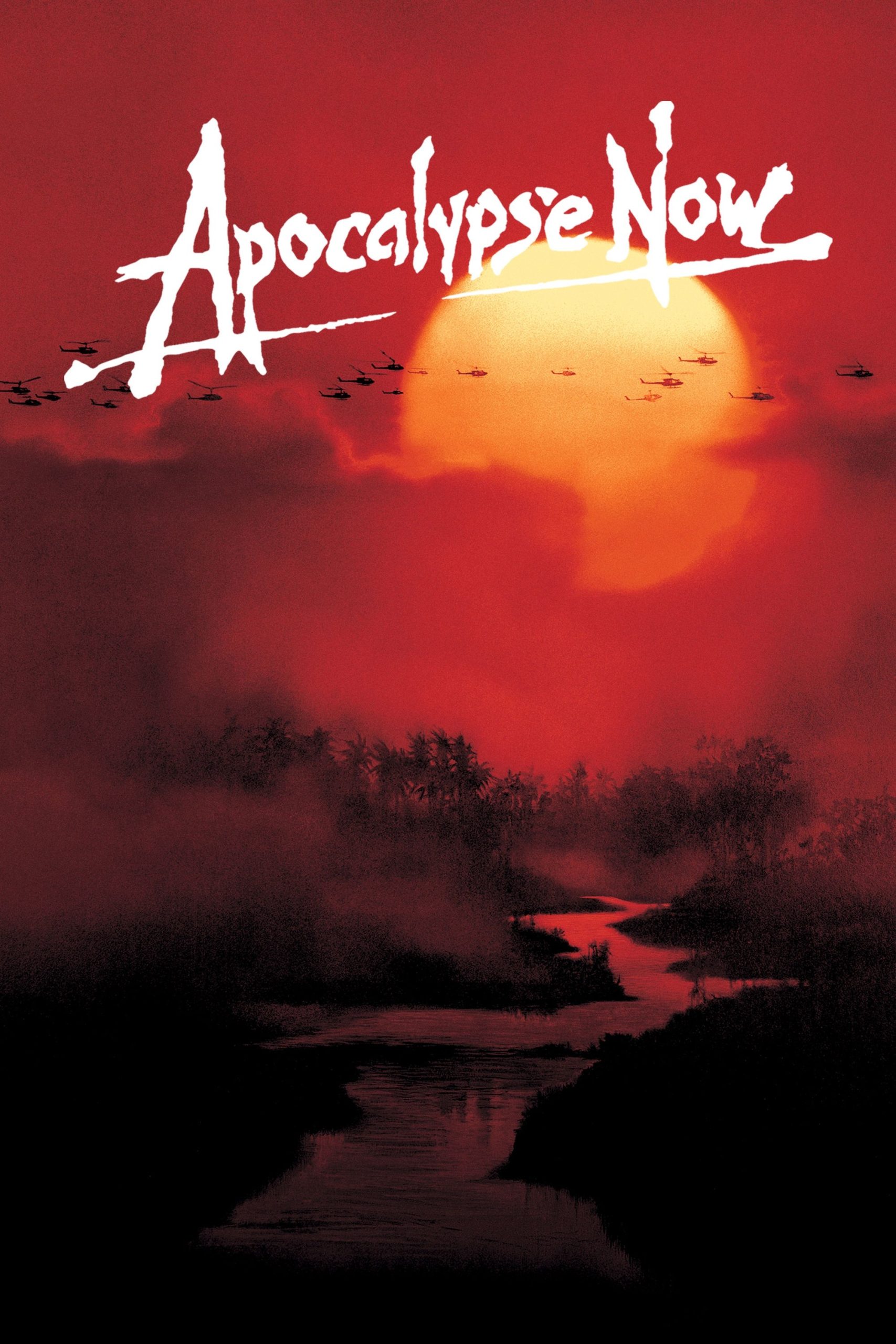
Quick Take (My Perspective): To me, Apocalypse Now is more than a war movie; it is a haunting, hallucinatory descent into the darkest corners of the human soul. I’ve always found it to be the ultimate cinematic fever dream that challenges my understanding of morality and madness every time I watch it.
Few films in cinematic history carry the haunting intensity and philosophical depth found in Francis Ford Coppola’s psychological war drama “Apocalypse Now.” Released in 1979, this towering entry in the war genre redefined how conflict, morality, and madness are depicted on screen. Coppola’s vision, both ambitious and fraught, transformed Joseph Conrad’s classic novella into a visually arresting journey through the heart of Vietnam, probing into the shadows of the human spirit.
Plot Summary
Set during the turbulent years of the Vietnam War, “Apocalypse Now” centers on Captain Benjamin L. Willard, played with steely resolve by Martin Sheen. Willard, a battle-weary intelligence officer, finds himself summoned for a secretive mission that is as morally ambiguous as it is dangerous. He is tasked with traveling upriver into the dense, treacherous jungles of Cambodia to locate and “terminate” the command of Colonel Walter E. Kurtz, a once-revered Green Beret officer rumored to have gone rogue.
The film charts Willard’s perilous journey aboard a Navy patrol boat, accompanied by a crew of young, inexperienced soldiers, each shaped by their distinct perspectives on war and survival. As they venture deeper into the heart of darkness, reality blurs. The hostile riverbanks pulse with threat, unpredictability, and madness. They encounter surreal set pieces, from a flamboyant air cavalry officer obsessed with surfing to a lavish USO playboy show punctuated by violence and desperation.
Each stop along the river serves as a microcosm of the larger chaos engulfing Vietnam. The search for Kurtz becomes less a military assignment and more an existential test for Willard, who is compelled to face his own sense of purpose, identity, and morality. At the journey’s end, Willard confronts Kurtz—a figure shrouded in myth, portrayed by Marlon Brando—who challenges not only Willard’s orders, but the very fabric of sanity with cryptic parables and chilling wisdom.
Warning: The preceding section avoids major plot twists and the fate of the central characters to preserve the film’s dramatic impact for first-time viewers.
Key Themes & Analysis
At its core, “Apocalypse Now” is a meditation on the abyss of war and the fragile boundaries between civilization and savagery. Coppola, adapting Conrad’s themes to the context of Vietnam, explores how conflict corrodes moral certitude, leading soldiers to confront their own primal instincts. The journey upriver serves as a potent allegory for a descent into the depths of human nature, where the line dividing heroism and horror rapidly dissolves.
The film’s visual storytelling is exceptional. Cinematographer Vittorio Storaro imbues each frame with expressive lighting—flaring sunsets, oppressive jungle green, and surreal smoke-wreathed battlefields. The infamous helicopter assault set to Wagner’s “Ride of the Valkyries” is justly celebrated for its scale and bravura, immersing audiences in the chaos and bravado that define the war’s contradictions.
Coppola’s directing is uncompromising, blending grand spectacle with subtle psychological insight. He masterfully sustains tension, using long takes, dreamlike sequences, and disorienting sound design to mirror Willard’s unraveling state of mind. Reported production difficulties—including an unpredictable jungle shoot and actors facing real-life turmoil—lend a sense of authenticity and immediacy to the performances.
The cast brings palpable gravitas. Martin Sheen’s portrayal of Willard is brooding and introspective; his voiceover narration grounds the story in existential reflection. Marlon Brando, despite minimal screen time, imbues Kurtz with hypnotic menace, his improvisational style generating some of the film’s most quoted lines. Robert Duvall, as Lieutenant Colonel Kilgore, provides one of cinema’s most iconic supporting turns, equal parts bravura and absurdity.
Thematically, “Apocalypse Now” interrogates the slippage between order and chaos, the impact of power exercised without accountability, and the enduring scars of imperialism. It resists easy answers, instead immersing viewers in ambiguity. The narrative’s use of music—from The Doors’ “The End” to the elegiac score—heightens the hallucinatory mood and deepens emotional resonance.
My Thoughts on the Historical Context: Vietnam as an Abyss
When I reflect on the year 1979, I see Apocalypse Now as a definitive cultural turning point for how the Vietnam War was processed by the public. Unlike the patriotic war films of previous decades, Coppola captured the chaotic, fragmented, and morally gray reality of a conflict that had no clear front line. I personally feel that the film’s “heart of darkness” isn’t just a literary reference to Joseph Conrad, but a direct mirror of the psychological scars left on a generation of soldiers. For me, the infamous “Ride of the Valkyries” scene perfectly illustrates the terrifying intersection of military bravado and the absurdity of modern warfare.
Fact Check: A Production Built on Real Chaos
One reason I find this film so authentic is that the production itself was famously as treacherous as the story it told. Here are a few facts that I believe add a layer of raw realism to the viewing experience:
-
The Heart Attack: Martin Sheen was under so much stress that he suffered a near-fatal heart attack during filming. The scene where Willard punches a mirror was actually unscripted; Sheen was genuinely intoxicated and injured himself, but he insisted on continuing the take.
-
Brando’s Improvisation: Marlon Brando arrived on set significantly overweight and having not read the script. This led Coppola to film him mostly in shadows and allowed Brando to improvise his cryptic, philosophical monologues, which I think created the hypnotic aura of Colonel Kurtz.
-
Real War Zones: The film was shot in the Philippines, and the helicopters used in the movie were actually on loan from the Philippine military, occasionally being called away mid-shoot to fight real insurgents nearby.
Why You Should Watch It
- It is a visually stunning and immersive cinematic experience that showcases the full spectrum of filmmaking artistry—from set design to evocative lighting and audacious camera work.
- The film’s thought-provoking narrative and complex characters invite deeper reflection on morality, leadership, and the enduring human cost of war, making it ripe for analysis and discussion long after the credits roll.
- Featuring legendary performances by Martin Sheen, Marlon Brando, and Robert Duvall, “Apocalypse Now” is a showcase of acting craft and unforgettable screen presence, with moments that have become embedded in pop culture history.
Review Conclusion
“Apocalypse Now” is not just a war film: it is a feverish odyssey through the heart of conflict—both external and internal. Coppola’s bold artistic risk-taking, coupled with memorable performances and haunting visuals, result in a film that continues to be studied, debated, and admired to this day. While it may challenge viewers with its ambiguity and intensity, those willing to confront its unsettling questions will find an enduring masterpiece that ranks among the greatest achievements in American cinema. For its artistic brilliance, emotional power, and cultural significance, this review awards “Apocalypse Now” a resounding 5/5 stars.
My Recommendations for Further Exploration
If you found the psychological intensity of Apocalypse Now as compelling as I did, I encourage you to explore these related works:
-
The Literary Source: I highly recommend reading “Heart of Darkness” by Joseph Conrad. Seeing how Coppola translated a 19th-century Congo novella into the Vietnam War era is a fascinating study in adaptation.
-
Internal Links: If you are interested in other films that explore the “human spirit under pressure,” be sure to read my reviews of [Apollo 13 (1995)] and [Argo (2012)]. For a different kind of atmospheric journey, check out my thoughts on [Arrival (2016)].
-
Documentary Recommendation: You must watch “Hearts of Darkness: A Filmmaker’s Apocalypse,” a documentary that chronicled the disastrous and miraculous making of this film. It changed the way I look at cinema forever.
If you want to explore this film beyond basic facts, you may also be interested in how modern audiences respond to it today or whether its story was inspired by real events.
🎬 Check out today's best-selling movies on Amazon!
View Deals on Amazon