
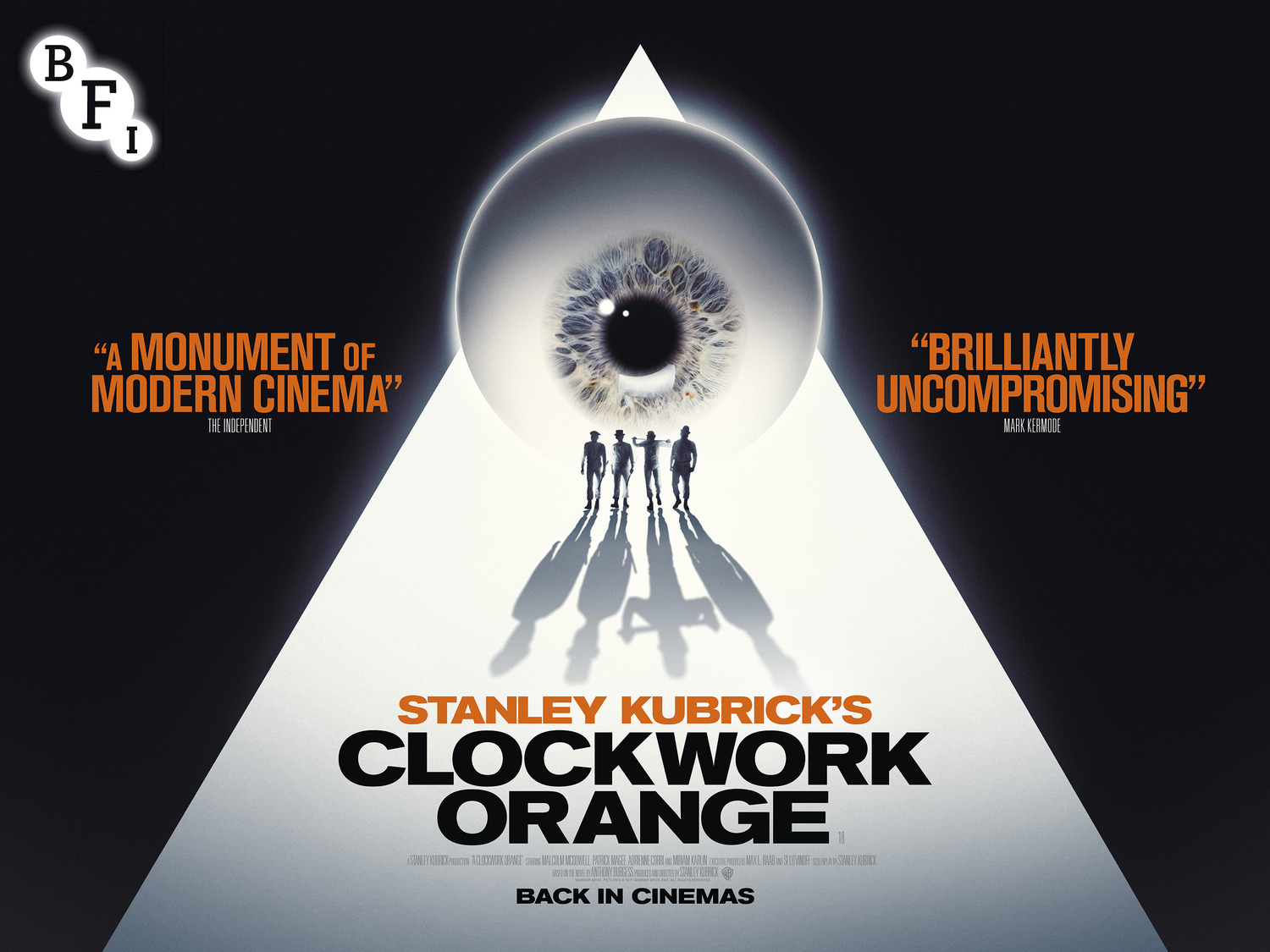
Few films have left as indelible a mark on the cinematic landscape as Stanley Kubrick’s A Clockwork Orange. Released in 1971 and adapted from Anthony Burgess’s novel of the same name, this provocative dystopian crime film continues to spark spirited debates about morality, free will, and the power of cinema itself. Kubrick, renowned for his precise visual style and fearless storytelling, delivers a genre-defying work that blends psychological drama, dark satire, and social commentary. Unapologetically bold and unsettling, A Clockwork Orange remains a touchstone for film aficionados and newcomers alike—challenging, entertaining, and haunting in equal measure.
Plot Summary
Set in a chillingly near-future Britain, A Clockwork Orange follows the misadventures of Alex DeLarge, a charismatic yet disturbingly violent teenager played with electric intensity by Malcolm McDowell. Alex leads a gang of “droogs” through a series of nightly escapades marked by theft, mayhem, and unspeakable acts—all presented with a disturbing mix of stylized visuals and disquieting classical music, most notably Beethoven’s compositions.
Alex’s world is paradoxically vibrant and bleak. Dressed in white overalls, bowler hats, and false eyelashes, the gang roams neon-lit streets perpetrating acts that both repel and mesmerize. But Alex’s reign doesn’t last forever. Eventually, betrayed by his cohorts and apprehended by the authorities, he is thrust into the hands of an authoritarian government seeking to curb crime through experimental psychological conditioning known as the Ludovico Technique.
The controversial procedure is designed to strip Alex of his free will, rendering him physically incapable of violence and, by extension, any choice between good and evil. Here, Kubrick sharply diverges from traditional narratives of redemption and punishment, forcing the viewer to question the ethics of state-imposed morality. As the story progresses, Alex’s eventual release into society brings further complications, both deeply ironic and tragic.
Warning: Major plot spoilers follow below.
Upon re-entering the world, Alex finds himself defenseless against those he once tormented and others who now exploit his vulnerability. The last act deftly explores whether true morality can exist without freedom of choice, culminating in a conclusion as provocative as the journey itself. The result is a film that refuses tidy answers, instead leaving the audience with challenging questions about violence, control, and humanity.
Key Themes & Analysis
A Clockwork Orange is a film rich with thematic complexity and artistic innovation. At its core, the movie scrutinizes the concept of free will versus societal control. Kubrick compellingly argues that a person deprived of the ability to choose is, in effect, deprived of his humanity. The government’s intervention, characterized by the Ludovico Technique, turns Alex into an automaton—a “clockwork orange”—appearing alive on the outside but mechanized within.
This examination of psychological manipulation is powerfully underscored by the film’s unique visual style. Kubrick employs wide-angle lenses, symmetrical framing, and a cold color palette to evoke an atmosphere that is both surreal and hyper-real. The set design mixes brutalist architecture with garish 1970s futurism, creating a timeless sense of unease. Music plays a seminal role: the juxtaposition of classical masterpieces, such as Beethoven’s Ninth Symphony, against scenes of chaos magnifies both the beauty and horror of Alex’s world. Wendy Carlos’s pioneering electronic score adds yet another layer of dissonant beauty, making the soundscape as arresting as the imagery.
Performance-wise, Malcolm McDowell’s turn as Alex is nothing short of iconic. With a magnetic yet chilling on-screen presence, McDowell navigates the contradictory facets of his character: youthful exuberance, sadistic glee, and ultimately, tragic vulnerability. The supporting cast, including Patrick Magee and Aubrey Morris, brings a satirical edge, embodying the bureaucratic absurdity that permeates Kubrick’s dystopian vision.
Kubrick’s direction is famously meticulous. His use of long takes, slow zooms, and elaborate set pieces builds an immersive experience that often feels theatrical. Dialogue is delivered in a stylized, invented argot called Nadsat—a hybrid of Russian, English, and Cockney slang—which further distances the viewer from the familiar and forces active engagement with the material. The language, while challenging at first, becomes a kind of musical leitmotif, drawing the audience into Alex’s warped perspective.
Beyond questions of free will and violence, A Clockwork Orange critiques the failure of institutional authority—parental, medical, and governmental. Kubrick’s satirical lens exposes the hypocrisy and incompetence of those in power, suggesting that efforts to “fix” society’s problems may, in fact, dehumanize individuals further. The film’s satirical edge is razor-sharp, blending dark humor with social critique in a way that influences filmmakers to this day.
Why You Should Watch It
- Groundbreaking Visual and Narrative Style: Kubrick’s innovative use of cinematography, set design, music, and language transforms the film into a truly unique viewing experience. Every frame is meticulously crafted for maximum impact, challenging the boundaries of what cinema can achieve.
- Enduring Relevance and Thought-Provoking Themes: Even decades after its release, the film’s exploration of free will, state power, and the ethics of reform feels startlingly pertinent. The questions raised by A Clockwork Orange remain urgent in contemporary discussions of criminal justice and personal freedom.
- Unforgettable Central Performance: Malcolm McDowell’s portrayal of Alex DeLarge is mesmerizing and unsettling, capturing the contradictions at the heart of the story. His performance anchors the film and provides a lens through which viewers can grapple with its complex moral landscape.
Review Conclusion
A Clockwork Orange is not a film for the faint of heart, but it is undoubtedly a milestone in cinematic history. Stanley Kubrick’s daring vision, coupled with an unforgettable central performance and an unflinching willingness to probe the darkest corners of human nature, ensures its place as a classic. The film continues to inspire, shock, and challenge viewers—asking difficult questions about violence, authority, and what it means to be truly human. Whether you’re a longtime admirer of Kubrick or experiencing his work for the first time, this movie demands and rewards your attention.
Star Rating: 4.5/5
🎬 Check out today's best-selling movies on Amazon!
View Deals on Amazon