
Plot Summary
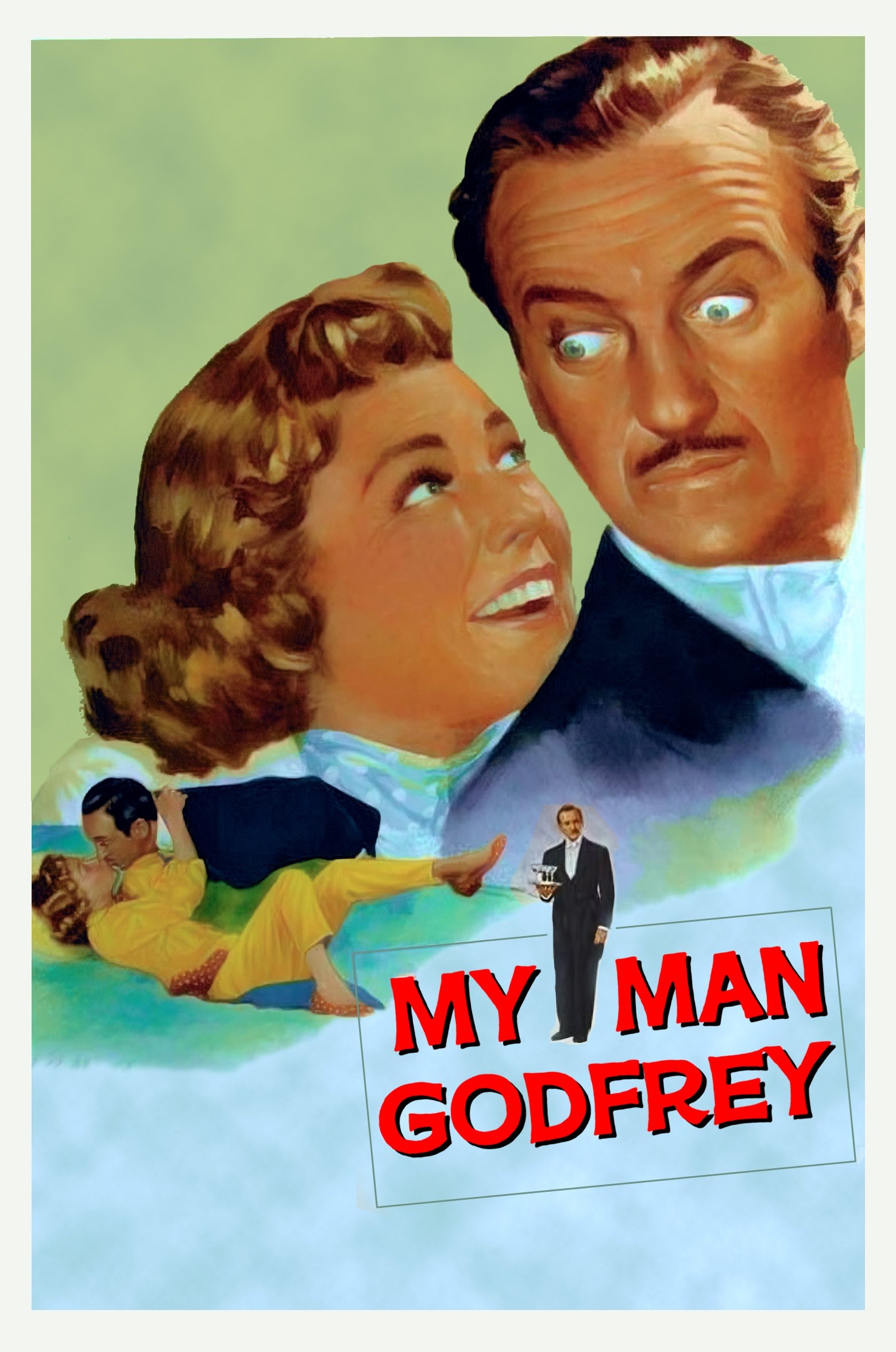
The first thing that swept me up watching My Man Godfrey was the comedic energy that barely lets up from the opening minutes. Rather than dropping me into a straightforward love story or a dry social critique, director Gregory La Cava crafts an elegant misadventure that feels fresh even after all these years. The premise is simple on its face—Godfrey is a “forgotten man” plucked from a Hooverville by the rich and impulsive Irene Bullock during a New York scavenger hunt among the wealthy elite. What follows delights me not just as a frothy screwball comedy but as a slyly subversive portrait of economic inequality and emotional awakening.
Godfrey, whose poised dignity belies the rags on his back, is swept into the decadent world of the Bullock family. Irene employs him as their butler, navigating her eccentric household of self-absorbed socialites. I was constantly struck by how La Cava lets the audience see Godfrey’s intelligence and composure clash with the privileged chaos around him. The Bullocks—each more idiosyncratic than the last—bring slapstick zing and satirical bite in equal measure. Although the story places Godfrey and Irene at its center, I found myself just as captivated by the orbiting figures: the slyly venal Cornelia, the childlike matriarch Angelica, and the sharp-tongued but world-weary Molly.
The real pleasure for me is in how the script’s wittiness delivers hefty doses of social observation without ever slowing the pace. There’s an unmistakable joy in seeing Godfrey upend the household’s expectations. While I’ll steer clear of the film’s third-act revelations (for those wishing to experience its clever twists unspoiled), I will note that the film’s comedic climax is as surprising as it is earnestly felt. If you’re sensitive to spoilers, know that there are layers yet to peel away; Godfrey’s quiet dignity and mysterious past become the keys to a wholly satisfying resolution that honors both its characters and its satirical roots.
Key Themes & Analysis
What always pulls me back to My Man Godfrey isn’t just its comedic timing or brilliant cast but the film’s audacious blend of social critique and romantic optimism. La Cava takes the classic screwball tropes—mistaken identity, class inversion, frantic pacing—and imbues each with a subversive edge. As a film buff, I’m repeatedly impressed by how relevant its themes remain, especially as it continually exposes the absurdities of the economic elite.
In Godfrey, I see everyman resilience played with remarkable grace by William Powell. Powell’s performance grounds the film emotionally and offers a nuanced rebuke to the shallow cynicism pervading the Bullocks’ circle. Irene, brought to effervescent life by Carole Lombard, is both capricious and genuine—her infatuation with Godfrey goes far deeper than comic affectation. Watching these characters, I felt the tension between old money frivolity and the deeper wounds wrought by the Great Depression; the film’s jokes about butlers and debutantes are never far removed from somber reminders of America’s “forgotten men.”
What truly sets My Man Godfrey apart for me is its deft choreography of mood—the rapid-fire screwball banter juxtaposed with moments of real pathos. La Cava’s direction, though seemingly breezy, is meticulously orchestrated. Dialogue snaps like whip cracks, but camera movements are fluid and unobtrusive, letting me savor every comic tableau and tense standoff. The mansion’s baroque interiors become a visual joke in themselves, reflecting the emptiness of the Bullocks’ privileged world. Joseph A. Valentine’s cinematography employs lush shadows and lively blocking that emphasize both opulence and emptiness, reinforcing the idea that no amount of luxury can mask personal or societal emptiness.
I find that screwball comedy, at its best, is about disorder upsetting the status quo. Here, Godfrey’s arrival doesn’t just bring laughs—he reveals everyone’s pretense and, in his quiet competence, asks the timeless question: What do we owe each other as human beings? The supporting cast, too, astonishes me every time: Alice Brady’s scatterbrained matriarch, Eugene Pallette’s beleaguered patriarch, Mischa Auer’s scene-stealing protégé—but it’s the way these exaggerated performances always circle back to something very real that makes the whole story sing. The result is a film that not only lampoons wealth and privilege but extends a real sympathy toward those abandoned by society.
My Thoughts on the Cultural Impact & Legacy
When I reflect on where My Man Godfrey sits in the landscape of American cinema, I’m struck by how boldly it stands apart from other screwball comedies of the 1930s. On a personal level, it’s one of those films that shaped the way I appreciate satire—teaching me that comedy can carry a moral weight without losing its buoyancy. Its impact radiates in countless ways: this isn’t just a beloved genre piece, but also a landmark in the history of ensemble performances and social commentary on screen.
What resonates most with me is how the film predates—and perhaps influences—the blending of genres that became commonplace decades later. The fusion of sharp social critique with farcical elements is a template I see echoed in later romantic comedies and even modern satires like The Apartment and Trading Places. More than that, I believe Godfrey ushered in a new respect for the so-called “comedic” roles, elevating them to dramatic heights that actors and audiences still demand today.
The Depression-era context is impossible for me to ignore. Watching the film today reminds me that these anxieties about wealth, class, and kindness don’t vanish with time. The melancholy that lingers beneath the film’s laughter is what I find most profound; I see in Godfrey’s journey a call for compassion that never feels trite. It’s rare that a film walks this tonal tightrope with such assurance—perhaps that’s why, despite dozens of viewings, I discover something new each time. As a curator, nothing excites me more than sharing with audiences the realization that a comedy from 1936 can feel as alive and urgent as any modern drama. So whether you’re seeking laughter, a history lesson, or a lesson in empathy, this film delivers all three in spades.
Fascinating Behind-the-Scenes Facts
Diving into the lore of My Man Godfrey, I uncovered production tales that made me appreciate the finished film even more. To start, the dynamic between William Powell and Carole Lombard was nothing short of electric. I find it fascinating that Powell had divorced Lombard just three years prior, and yet he personally vouched for her casting as Irene. According to production reports, their real-life friendship injected a genuine warmth (and a few comedic sparks) into their on-screen chemistry—proof, if you ask me, that sometimes professional respect trumps personal history. This unlikely pairing gives the film an authenticity and magnetism rarely found in manufactured studio romances.
Another anecdote that always sticks with me involves the meticulous crafting of the Bullock mansion’s interior. The art department reportedly faced daunting challenges in assembling the film’s lavish sets during the Depression. They scoured estate sales and repurposed older backlot materials, managing to create an environment that looked both impeccable and slightly unmoored from reality. To me, this behind-the-scenes creativity doesn’t just reflect resourcefulness—it subtly reinforces the theme of excess and disposability embedded in the story itself.
Lastly, I love that My Man Godfrey made Oscar history as the first— and still the only—film to receive Academy Award nominations in all four acting categories yet fail to garner a Best Picture nod. That odd quirk highlights the high regard contemporaries had for its performers, and I often wonder whether this set the stage for the screwball genre’s ascent during Hollywood’s golden era. For me, this extraordinary recognition underscores just how well this ensemble worked together, achieving something special even by the standards of classic cinema.
Why You Should Watch It
- The performances, especially from William Powell and Carole Lombard, showcase the highest caliber of comedic and dramatic acting in Hollywood’s golden age.
- The film’s sharp social commentary on class and compassion feels just as relevant today as it did in 1936.
- The irresistible blend of comedy and satire—La Cava’s direction strikes a rare balance between timeless laughter and poignant truth.
Review Conclusion
If I were to distill why My Man Godfrey endures for me, it would be because it never underestimates the intelligence or empathy of its audience. For all its hilarious set pieces and sparkling dialogue, the film quietly suggests that dignity and humor can coexist—that the greatest disruptions to our lives might also be our salvation. I am continually moved by the ways it finds joy amid hardship and wisdom amid chaos, and I can’t help but recommend it to anyone who cares about cinema’s power to entertain and illuminate in equal measure. My star rating: 5/5.
Related Reviews
- The Awful Truth (1937) – I’m always drawn to Leo McCarey’s knack for balancing screwball situations with genuine emotion. Like My Man Godfrey, this classic explores fractured relationships among the upper crust but never loses sight of the human heart beneath the farce.
- Ninotchka (1939) – The deadpan wit and political undercurrent in Lubitsch’s romantic comedy feel like a spiritual cousin to Godfrey’s blend of effervescence and social satire. Greta Garbo’s transformation mirrors the personal awakenings I cherish in Godfrey.
- Holiday (1938) – For viewers who relish stories of self-discovery within privileged circles, Cukor’s film, starring Cary Grant and Katharine Hepburn, offers a sparkling yet pointed critique of societal expectations—much like the journey Godfrey embarks on.
- Sullivan’s Travels (1941) – As a film that directly satirizes Hollywood and explores the worth of comedy during times of hardship, Preston Sturges’s masterpiece resonates with the lessons I find in Godfrey about laughter, suffering, and hope.
For readers looking to go deeper, these perspectives may help place the film in a broader context.
🎬 Check out today's best-selling movies on Amazon!
View Deals on Amazon