
Plot Summary
Whenever I revisit “My Fair Lady,” I catch myself humming the musical numbers long after the credits roll. That’s the power of George Cukor’s direction—it pulses in every frame of this dazzling musical romance. At its heart, I see the story as a playful collision of class, language, and identity, all woven through the journey of Eliza Doolittle, a Cockney flower girl whose boisterous spirit shakes up the world of the fastidious Professor Henry Higgins. For me, the delight lies less in plot twists than in the transformation of character, and how every minor moment radiates with wit, warmth, and the razor-sharp banter of two people learning to see—and hear—each other anew.
Without revealing the entire tapestry, I can say that the film’s magic isn’t built on high stakes or dramatic surprises, but on the incremental growth between Eliza and Higgins. Watching Eliza’s introduction into high society, guided (and sometimes bullied) by Higgins, I found myself torn between laughter and discomfort. The story draws out her struggle for dignity in a world skeptical of her value, and I marveled at how rich and layered every exchange became. The central journey isn’t just about enunciation or manners—it’s about self-worth and the courage to claim your own voice.
Spoiler alert: One of the film’s key emotional payoffs comes late, resolving the question of whether Eliza can ever be more than a project to Higgins, or if he’s capable of genuine respect. The elegance with which Cukor toys with this emotional tension, without resorting to clichés, makes the conclusion all the more satisfying. Even after knowing the ending, I savor the journey each time for how deftly it celebrates self-invention and the complexity of human connection.
Key Themes & Analysis
Each time I dive into this film, I’m struck by how it’s less a Cinderella story and more a sly critique of the society that perpetuates such myths. Class mobility, identity, and the superficiality of social status—these themes pulsate through every scene. I see “My Fair Lady” as a commentary on the arbitrary boundaries that keep people in their place, and how language itself becomes both a weapon and a gateway. Eliza’s accent is her social cage; her transformation becomes a rebellion against a rigid class system.
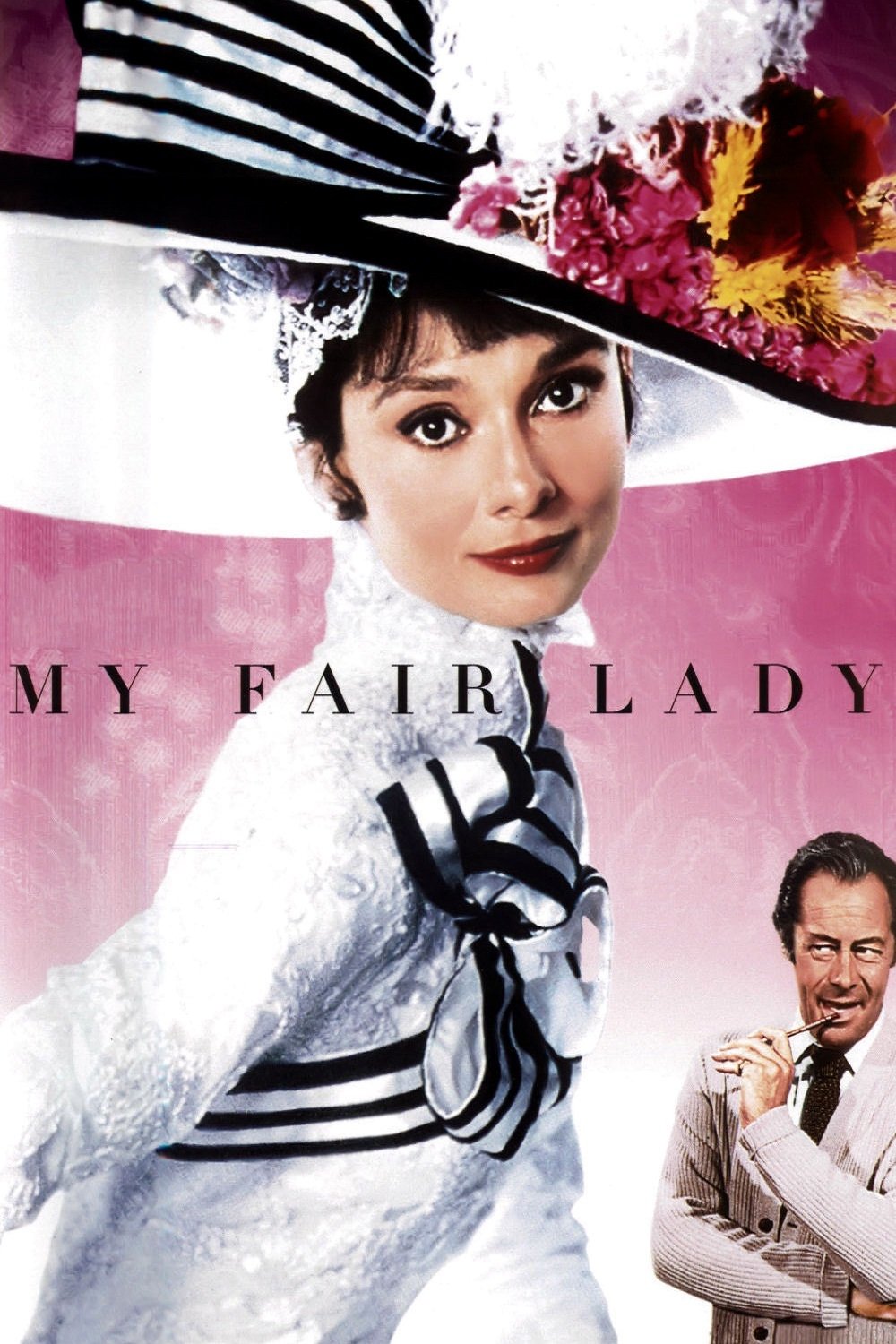
What’s so remarkable is how Audrey Hepburn brings Eliza to life with heart and ferocity. I never tire of watching her navigate the brash world of Higgins, played by Rex Harrison with the perfect blend of arrogance and vulnerability. Harrison’s performance, especially, is a masterclass in subtlety—a brilliant execution of a character whose own self-assurance is at odds with his emotional ignorance. Their chemistry, though often prickly, brings out the stormy path of personal growth in a world hostile to change.
I have enormous admiration for Cukor’s direction. He doesn’t just frame the story as musical spectacle—he settles the camera so that the actors’ faces become the canvas. The restrained cinematography by Harry Stradling Sr. bathes London in opulent color and life, and Cecil Beaton’s costume designs flirt with extravagance without overshadowing the characters. Scenes like the Ascot Gavotte, which always makes me smile, are marvels of comedic timing and visual wit. The film’s choreography and staging feel simultaneously massive and intimate, where every backdrop serves the arc of Eliza’s self-discovery.
Beyond the songs and setpieces, I see the film’s gender politics as especially compelling. The dynamic between Eliza and Higgins—formidable personalities vying for recognition—mirrors broader struggles for agency. Eliza demands to be heard on her own terms, and I find the nuances in her journey as exhilarating now as I did on my first viewing. The interplay of Pygmalion myth and modern ideals gives “My Fair Lady” a philosophical resonance often missing from lighter musicals.
And then, of course, there’s the music. From the riotous “With a Little Bit of Luck” to the fiercely poignant “I Could Have Danced All Night,” every melody lingers with a purpose. I’m always left awestruck by how the film’s musical language deepens the narrative, expressing longing, frustration, and triumph with irrepressible verve. The score isn’t just catchy—it’s character-driven, each lyric a window into the soul.
I would argue that what makes “My Fair Lady” enduring isn’t just its craft, but how it explores the paradox of transformation—how we long to change and yet fear losing what makes us whole. The film asks: Is becoming what someone else wants truly freedom? Or is it merely another prison? As I watch Eliza wrestle with these questions, I see flashes of universal truth in her struggle.
My Thoughts on the Cultural Impact & Legacy
Every time I try to articulate why “My Fair Lady” feels essential, I circle back to the sheer scale of its influence. Personally, I see it as a cornerstone not just of the movie musical, but of cinematic storytelling itself. Its fusion of biting social satire and heartfelt character drama kicked open new doors for what musicals could be in mainstream cinema. I regularly encounter echoes of its DNA in films that blend comedy with social critique—whether through the sharp dialogue, the balancing of spectacle and intimacy, or the way complex female protagonists are poised at the center of their own narratives.
The film’s aesthetic—those lush Edwardian gowns and grand, symmetrical compositions—inspired decades of costume dramas. As someone who curates and analyzes film, I see “My Fair Lady” as a kind of stylistic template for the ambitious musicals that followed, from “Cabaret” to “Chicago.” Its willingness to let characters struggle, to resist pat endings, made it a touchstone for viewers who craved more than simple escapism from their moviegoing experiences.
What matters most to me, though, is how the film champions transformation as both liberation and a source of anxiety. Eliza’s journey aligns with countless stories of self-invention in cinema, but rarely with such layered ambivalence and empathy. Each time I show this film to a new audience, it prompts a conversation about power, voice, and the price we pay to “belong.” That relevance never fades, and I find myself returning to “My Fair Lady” to interrogate how culture trains us to mold ourselves in the image of others.
It’s no exaggeration to say that “My Fair Lady” helped redefine the limits of what movie musicals could aspire to. As a curator, it’s a film I return to in order to discuss not just its artistry, but its social commentary and its continuation of the grand tradition of adapting theater to screen. To me, the legacy of “My Fair Lady” is the way it reimagines the musical as a space for emotional honesty, challenging its audience as much as it entertains.
Fascinating Behind-the-Scenes Facts
The creation of “My Fair Lady” brims with intriguing stories that deepen my appreciation for the film. Perhaps most famously, Audrey Hepburn was cast as Eliza over Julie Andrews, who originated the role on Broadway. The studio’s strategy was to leverage Hepburn’s burgeoning star power, but Hepburn’s singing voice was largely dubbed by Marni Nixon—a decision that became a lightning rod for controversy at the time. I’ve always been fascinated by this crossroads of practicality and artistry: Hepburn’s nuanced acting carries the film, yet the blended vocals spark debates over authenticity versus cinematic magic.
Another behind-the-scenes detail I find compelling: Rex Harrison famously insisted on singing his numbers “live” instead of pre-recording. His approach, which was unheard of in this era of meticulous musical production, lends Higgins’ songs an improvisational, speech-like cadence unlike anything captured in other musicals of the day. To adapt, the crew engineered a specially designed wireless microphone hidden in Harrison’s tie, which I believe contributed immensely to the raw immediacy of his performance.
And for technical prowess, I’m ever in awe of the massive Ascot scene. The crowd choreography required hundreds of extras, all in Beaton’s color-coordinated costumes, moving in perfectly timed, near-statuesque motions. The logistics of keeping this ballet of bodies synchronized—without losing the scene’s comedic undertones—is a testament to Cukor’s precision and Beaton’s vision. Even having seen it dozens of times, I marvel at the sequence’s visual wit and subtle satire of upper-class rigidity.
Why You Should Watch It
- The performances—especially Hepburn’s multidimensional Eliza and Harrison’s singular Higgins—set the benchmark for screen chemistry and character evolution.
- Its blend of social commentary, visual artistry, and unforgettable music delivers an experience that is both thought-provoking and deeply entertaining.
- The film’s groundbreaking production and direction represent a masterclass in adapting theater to cinema, resonating with audiences for generations.
Review Conclusion
As I close the curtain on yet another viewing, I’m once more convinced: “My Fair Lady” stands tall as a pillar of classic cinema—gorgeously staged, emotionally incisive, and resonant with truths about identity and transformation. Even with its blend of wry humor, extravagant style, and pointed social critique, the film never loses its beating human heart. If you hunger for a film that intertwines dazzling spectacle with real emotional stakes, this is essential viewing.
My rating: 4.5/5. The film is not just a relic of the past; it’s a living, breathing meditation on who we are, who we wish to become, and what we risk to get there.
Related Reviews
- “The Sound of Music” – Much like “My Fair Lady,” this film turns on a woman’s struggle for self-definition within a constraining social order. Its lush visuals and celebrated music make it a perfect companion for those drawn to heartfelt, character-driven musicals.
- “Gigi” – For viewers fascinated by the transformation of a female protagonist against a backdrop of opulent European society, this Lerner and Loewe musical offers a similarly witty, bittersweet lens on social mobility and romance.
- “Cabaret” – I recommend this film for those interested in musicals that break the mold, fusing stylish direction with biting social critique. The fact that “Cabaret” advances the tradition started by “My Fair Lady”—merging musical storytelling with urgent political and emotional questions—makes it a vital next step.
- “Pygmalion” (1938) – As the original screen adaptation of Shaw’s play, “Pygmalion” offers fascinating parallels; it’s instructive for anyone compelled by the themes of class, transformation, and language manipulation that inform “My Fair Lady.”
For readers looking to go deeper, these perspectives may help place the film in a broader context.
🎬 Check out today's best-selling movies on Amazon!
View Deals on Amazon