
Plot Summary
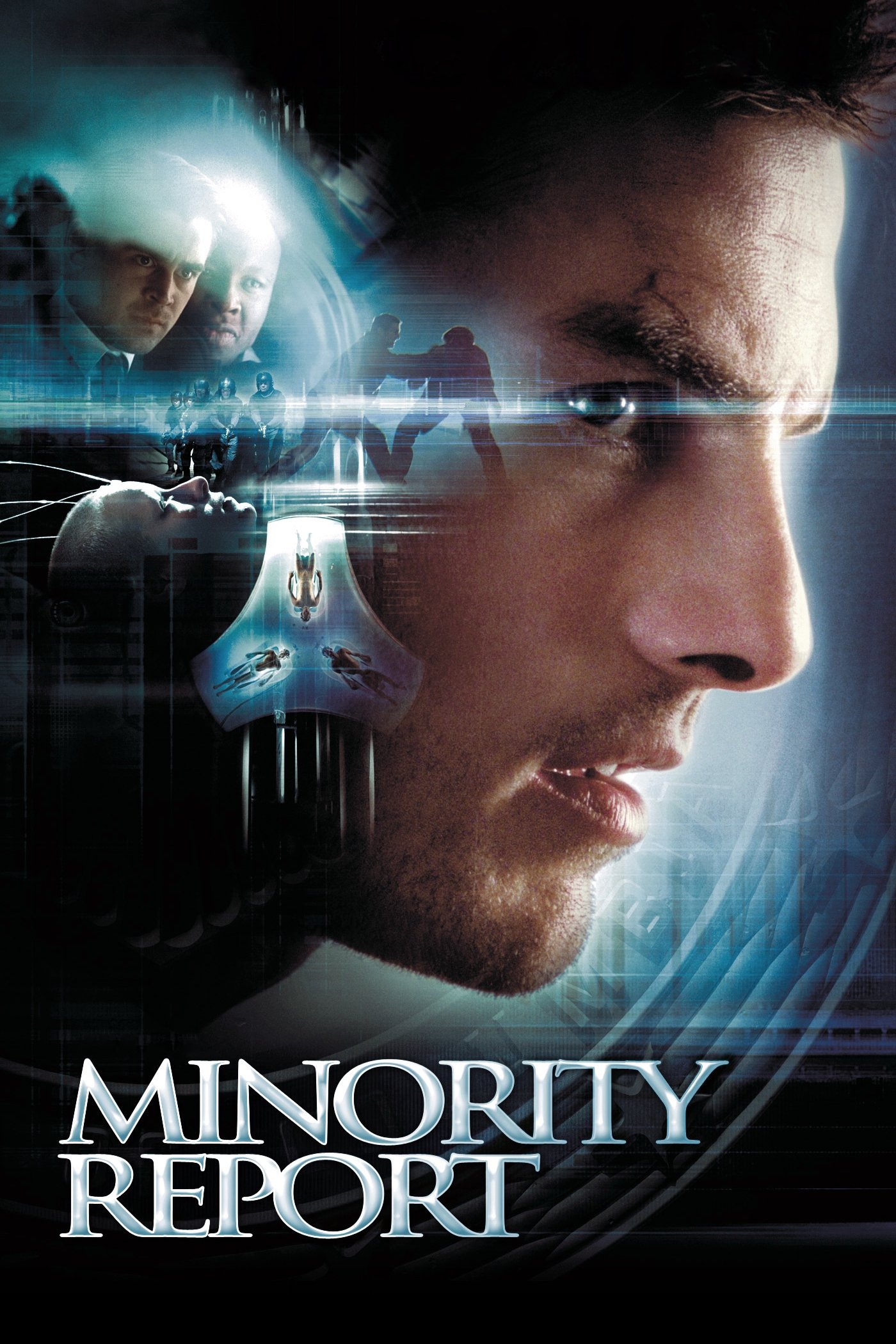
I never forget my first encounter with Minority Report, directed by Steven Spielberg. It struck a nerve in the way few science fiction thrillers do. The movie unfolds in a dazzlingly imagined 2054 Washington D.C., where predictive policing, enabled by psychic “Precogs,” promises elimination of murder—before it even occurs. Tom Cruise plays John Anderton, the chief of this elite PreCrime unit, whose unwavering belief in the system is challenged the moment he’s accused of a crime he’s yet to commit. Watching the walls close in on Anderton, I felt an urgent sense of paranoia and unease. Every technological advance or surveillance drone ratcheted up my discomfort, pulling me into a future that felt equal parts fascinating and suffocating.
Despite its breakneck pace, the plot is less about adrenaline than it is about the murky ethical territory of justice, fate, and free will. Spielberg masterfully teases out suspense with a cat-and-mouse chase that’s always one step ahead of the viewer. I found myself questioning whether the system’s omniscience was reassuring or terrifying. As Anderton races to clear his name, unraveling a web of conspiracy and moral ambiguity, I realized how little separates those who enforce the law from those who are trapped by it. (No major spoilers here, but be warned—a few critical twists lurk deeper in the narrative, each challenging what I thought I knew about the direction of both the story and the future it projects.)
Key Themes & Analysis
For me, Minority Report is a meditation on the cost of certainty, the fragility of justice, and our uneasy relationship with technology. Few sci-fi films have left me chewing so persistently on questions of determinism versus free choice. The entire premise—predicting and preventing crime before it happens—pushes the boundaries of civil liberties. Watching Anderton’s belief system crumble, I felt a personal resonance with moments of my own doubt in institutions designed to protect us. Spielberg’s technique—his kinetic camera movements, the washed-out blue and gray palette—embodies the film’s moral ambiguity. Scenes unfold in frenetic, hand-held shots that keep me disoriented, never quite sure whom or what to trust.
When it comes to performances, Tom Cruise delivers a surprisingly nuanced turn as Anderton. I was most drawn to his ability to alternate between battered idealist and desperate fugitive with a vulnerability that never feels forced. Samantha Morton’s portrayal of Agatha, the most visionary of the Precogs, left an indelible mark. There’s a haunted stillness to her, a reminder of the human cost beneath all the technological shininess. Supporting actors like Max von Sydow imbue the film with gravitas, challenging me as a viewer to never take any character’s motives at face value.
Cinematographically, I found the film’s aesthetic choices—especially the use of high-contrast lighting and nearly monochrome color grading—prompting me to see the future as chillingly beautiful and achingly cold. Janusz Kamiński’s cinematography seems to strip the world of warmth; every window and reflective surface underscores the sense of constant surveillance. The technology depicted—gesture-based computer controls, iris recognition, spider-like surveillance robots—felt thrillingly futuristic, but also uncomfortably plausible. I saw in Spielberg’s direction a deliberate effort to make the audience complicit, not just observers but potential subjects of the PreCrime gaze.
Perhaps the element that sits with me longest is the film’s insistence that certainty breeds complacency, and complacency breeds abuse. Throughout, I’m reminded of how every innovation—no matter how intended—carries with it the seeds of unintended consequences. The ending, which avoids giving easy answers, only intensifies the lingering sense that freedom and safety cannot coexist without friction.
My Thoughts on the Historical & Social Context
2002 feels like a lifetime ago now, but I remember the world’s anxiety after 9/11—how security escalated and the trade-off between safety and privacy shifted almost overnight. I see Minority Report as a product of that very moment, a cinematic echo of collective fears about surveillance, loss of privacy, and unchecked authority. For me, the PreCrime system was never just allegorical; it was Spielberg holding up a mirror to a society increasingly willing to surrender freedom in exchange for the illusion of safety. Watching it now, in an era defined by facial recognition, AI, and near-constant data monitoring, I’m struck by how prophetic the film’s questions have become.
On a personal level, I breathed in the film’s warning about blind trust in technology. I grew up in a time when optimism about progress was almost a given, but Minority Report challenges that optimism, asking us what might be lost along the way. It’s fascinating to me how the film’s “precogs”—humans exploited for the good of all—reflect deeper questions about who really pays for the sins a society tries to erase. The story feels even more urgent today, when our digital footprints are mined in ways we barely understand, and algorithms make decisions about our lives that once relied on human judgment.
For the audience in 2002, this movie offered not just dazzling action or futuristic cool, but a challenge to comfort and complacency. Looking back, I think Spielberg captured a crossroads in American cultural consciousness—when technology’s promise was seductive, and the price wasn’t yet fully clear. Its relevance has only grown, as the real-world debate over privacy, preemptive justice, and surveillance continues to intensify. What once seemed speculative now feels uncomfortably near at hand.
Fact Check: Behind the Scenes & Real History
There’s a wealth of behind-the-scenes detail that I find irresistibly intriguing when it comes to Minority Report. For instance, I learned that Spielberg brought together a board of real-life futurologists, scientists, and technology experts—“The Think Tank”—a full two years before filming started. Their job? To plausibly invent the world of 2054. That’s why I was floored by how authentic and eerily prescient the technology in the film feels. The gesture-based computer interfaces, for example, not only looked cool on screen but have become a blueprint for real-life tech designers working on touchless and AR interfaces. It’s wild to think that the movie directly inspired elements of today’s smartphone and tablet design.
Another detail I find fascinating is Spielberg’s commitment to a lived-in, functional future. Rather than going for laser guns and improbable gadgets, practical effects and modernized current technologies ground the film in reality. The personalized advertising that follows Anderton as he flees—scanning his irises and projecting hyper-specific messages—was a chilling novelty in 2002, but it’s a part of daily online life now. I remember reading about how Cruise’s “data gloves”—designed by John Underkoffler—were prototyped in the film and later actually built in research labs. The seamless blend of design and storytelling makes the world immersive without descending into cliché.
As for the origins, I love that the film was adapted from a Philip K. Dick story, but Spielberg and screenwriter Scott Frank deviate significantly from the original plot. The moral ambiguity, emotional depth, and spectacular action sequences are layered atop Dick’s more cerebral and ambiguous narrative. I personally appreciate that the adaptation chooses an emotionally resonant journey for Anderton rather than a cold logic puzzle; it humanizes a film that could have leaned purely into concept.
Why You Should Watch It
- It’s a rare sci-fi film that combines thrilling action with genuinely challenging ideas about freedom, fate, and technology.
- The performances—especially Tom Cruise’s haunted intensity and Samantha Morton’s otherworldly presence—anchor the film in real emotion, not just spectacle.
- The film’s visual style, along with its prophetic vision of future tech, offers a world that feels both imaginative and uncomfortably plausible.
Review Conclusion
Few films have kept me thinking so long after the credits rolled as Minority Report. The combination of Spielberg’s directorial vision, a pulse-racing plot, and performances laced with urgency and doubt make for a cinematic experience that’s both exhilarating and troubling. What resonates most for me is the film’s unwillingness to settle for easy answers; every promise of progress is shadowed by questions of ethics, cost, and humanity. I recommend it to anyone who seeks science fiction that matters—cinema that’s not just about dazzling the eyes, but about opening the mind to vital debates about our own future. My rating: 4.5/5. The only reason I hold back from a perfect score is for the rare moment where the action-movie machinery threatens to overwhelm the subtler, quieter doubts the story raises—but those moments are fleeting in a film that’s otherwise as urgent and complex as any modern sci-fi drama.
Related Reviews
- Blade Runner (1982) – No other film captures the philosophical, noir-infused tone of Minority Report quite like Ridley Scott’s adaptation of another Philip K. Dick story. Its vision of a morally ambiguous future filled with artificial intelligence and blurred lines of humanity resonates strongly with Spielberg’s world. I recommend it for its similarly immersive atmosphere and rich exploration of what it means to be human amid rapid technological progress.
- Children of Men (2006) – Alfonso Cuarón’s dystopian thriller is, for me, a spiritual cousin to Minority Report. Its near-future setting and relentless tension create a profound sense of urgency about the choices societies make when gripped by fear. Both films use the thriller structure to probe deeper matters of consequence, ethics, and hope in desperate times.
- Gattaca (1997) – For anyone interested in personal agency versus systemic control, Gattaca is an essential follow-up. The film’s haunting depiction of genetic discrimination and the price of perfection ties back to Minority Report’s question of whether our fate is ever fully our own. I find it equally provocative, with a stripped-back visual style that points to the dangers lurking beneath even the cleanest of futures.
- Enemy of the State (1998) – If what hooked you was the surveillance paranoia and nail-biting chase, Tony Scott’s political thriller belongs on your watchlist. The film’s rush through the labyrinth of high-tech monitoring feels like a less futuristic but equally compelling exploration of privacy’s erosion.
If you want to explore this film beyond basic facts, you may also be interested in how modern audiences respond to it today or whether its story was inspired by real events.
🎬 Check out today's best-selling movies on Amazon!
View Deals on Amazon