
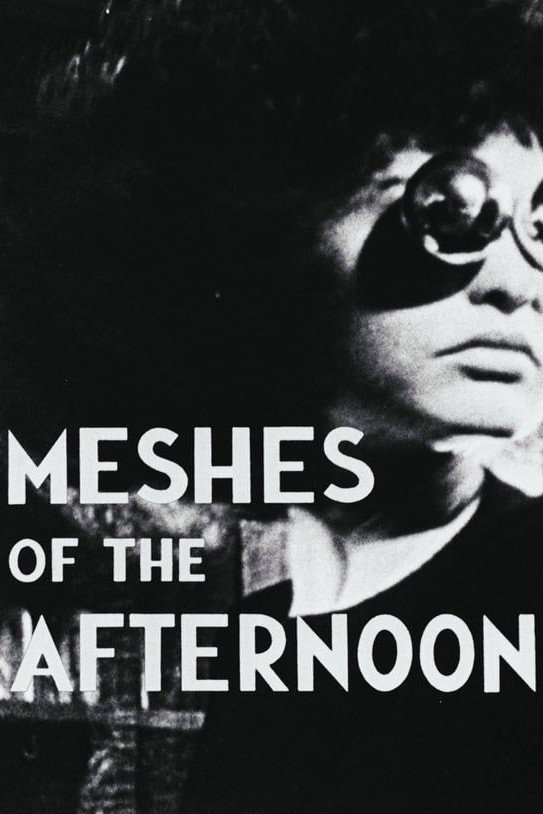
Plot Summary
If I’m completely honest, I still remember my first experience with Meshes of the Afternoon as something akin to falling into someone else’s half-remembered dream. Directed by Maya Deren and co-directed by Alexander Hammid, this 1943 avant-garde short instantly shattered any neat expectations I had about narrative film. Rather than laying out a clear-cut story, it loops like a restless mind, using repetition and visual cues to tug at subconscious anxieties and desires. I’d caution anyone who prefers explicit storytelling that spoilers are almost impossible here: the unfolding is so abstract that revealing “major secrets” feels beside the point.
What I will share is that the film follows a woman—played by Maya Deren herself—who drifts through a domestic space as objects, symbols, and identities morph and circle back on themselves. A single flower, a bread knife, and a mysterious figure with a mirror face recur in a ritualistic rhythm. Each return seems at once familiar and disorienting, as if I myself have been snatched into a repeating fever dream. The plot is less about what happens than about how it feels—the way one’s house in a vivid nightmare is never quite one’s house, and each turn down a corridor brings me face-to-face with recognition and dread in equal measure.
Key Themes & Analysis
Watching Meshes of the Afternoon, I always delve headlong into a deep well of psychological unease and poetic symbolism. For me, the most powerful theme is the fractured identity of the protagonist. The repetition of key props—especially the knife, the flower, and the glass of water—are freighted with significance, and each time Deren’s character encounters them, I feel her confusion and anxiety intensify. The mirror-faced figure is, in my interpretation, a brilliant embodiment of self-confrontation and the unknown aspects of our own personalities.
Visually, this film continually mesmerizes me. The cinematography, with its sharp contrasts and obsessive close-ups, makes the ordinary feel uncanny. Every staircase becomes mythic; every shadow seems alive. Deren’s innovative use of camera angles and subjective perspectives—such as tracking shots of a key dropping or the relentless climb up stairs—make me aware of just how elastic film can be. Each frame is loaded with intention; I find myself drawn into that sense of increasing inevitability alongside the protagonist.
On an even deeper level, I’m struck by how Deren blends elements of Surrealism and psychoanalysis. The recurring loops play like visual mantras, pulling me into the character’s cyclical inner turmoil and, by extension, asking me to confront pieces of my own subconscious. Her choices as a director—especially in the editing room—emphasize this: cuts don’t just move the narrative forward, they shatter it, showing different iterations of the central woman as she observes herself, sometimes in the third person, sometimes as a participant. This fragmentation creates a sense that reality itself is breaking under the pressure of memory and desire.
The acting, especially Deren’s performance, is less about dialogue or realism and more about physical presence. Every gesture feels choreographed, almost ritualistic. When I see her repeatedly entering spaces, touching objects, or fleeing from unseen threats, I feel every movement is a wordless communication of inner conflict. The other characters—who at times seem more like specters than people—add to the sense of isolation and self-division.
As for the soundtrack, the original 1943 cut was silent. The later addition of Teiji Ito’s haunting score in the 1950s only underscores the film’s dreamlike logic, heightening the emotional stakes without subjecting the imagery to a particular mood. That ambiguity means I’m left to sift through the images myself, a process that feels more intimate and resonant than most films ten times as long.
Ultimately, for me, the core of Meshes of the Afternoon is about the inexpressible tension between autonomy and entrapment—the way domestic spaces, interpersonal rituals, and even our own habits can become prisons. The film never offers simple answers, and I love that about it.
My Thoughts on the Historical & Social Context
What always fascinates me about Meshes of the Afternoon is how deeply it reflects both its moment in history and something undeniably timeless. Created during World War II, the film comes from a period when Hollywood studios churned out escapist fantasies and propaganda, yet Maya Deren dared to point the camera inward, toward the psychological reality of a woman alone in her own home. I think about how, at a time when women were entering the workforce in unprecedented numbers and the world was in upheaval, Deren’s film quietly, subversively suggests that the battlefront isn’t only ‘out there’ but also inside ourselves.
From my perspective, Meshes is an act of personal and artistic resistance. While the mainstream culture of the 1940s often positioned women as helpmates, objects of desire, or peripheral figures, Deren places her own body, emotions, and dreams at the center. I see this as radical not just for the era but even by today’s standards—and it’s no wonder the film remains a touchstone in both feminist film criticism and experimental cinema circles.
To me, Meshes of the Afternoon speaks directly to ongoing social anxieties about alienation, agency, and gendered experience. There isn’t a direct political message, but I can’t watch it without thinking of how its sense of stifling repetition echoes both the literal “housewife’s trap” and the broader human experience of trying—sometimes vainly—to break free from patterns that are both self-made and socially imposed. That’s why, decades later, I see new relevance: the themes of psychological fragmentation, anxiety about identity, and the subtle violence of everyday routine are as urgent now as they were then.
Fact Check: Behind the Scenes & Real History
Whenever I dig into the making of Meshes of the Afternoon, I’m continuously astounded by the resourcefulness and creativity on display—almost all achieved outside the constraints (or comforts) of Hollywood. The film was made on a shoestring budget in Deren and Hammid’s own Los Angeles home, with Deren’s personal belongings used as props. Every time I rewatch, I marvel at how the limitations of independent filmmaking actually strengthened the film’s sense of intimacy and strangeness.
One fact that always sticks with me is that Deren took on multiple roles: writer, director, actor, editor, even producer. This wasn’t simply a labor of love—it was a necessity. The lack of outside funding or studio approval meant she had complete creative control, and I think that uncompromising vision is apparent in every frame. The film’s experimental use of time and perspective, for example, was achieved with clever editing and practical in-camera effects rather than costly special effects. I find this kind of innovation, born of necessity, so inspiring.
Another detail I love: the later score, composed by Teiji Ito—who would become Deren’s third husband—was added years after the film’s original release. This post-hoc collaboration means that audiences today experience a different emotional texture than Deren’s original 1943 audience, which saw the film as a silent piece. I’m always intrigued by how this reshapes the film’s resonance, showing that even classics can evolve over time.
There’s also an often-overlooked historical detail: Deren’s creative influences. Though she was sometimes associated with the Surrealist movement, she was adamant that her work was distinct from the “dream logic” of European counterparts like Buñuel. She described the film as being about “the inner realities of an individual who invents himself.” I see this insistence as crucial; the film isn’t copying imported Surrealism, but carving out a new American avant-garde, rooted as much in Deren’s own life and the specifics of her time as in abstract theory.
Why You Should Watch It
- It is a landmark of personal, independent filmmaking—proof that you don’t need major studios or big budgets to make profoundly original cinema.
- The film’s dreamlike narrative and visual experimentation offer a rare, deeply immersive experience that invites you to interpret its mysteries for yourself.
- Its place in both women’s cinema and avant-garde history makes it essential viewing for anyone interested in the intersection of art, identity, and cinematic technique.
Review Conclusion
If I could only pick one short film to encapsulate everything experimental cinema is capable of achieving, I would choose Meshes of the Afternoon almost every time. The sheer power of Maya Deren’s vision—the intimacy, the sense of feverish repetition, the haunting images that burn into my mind long after viewing—it never fails to move me. There are moments where I feel lost in the film’s abstraction, but that’s precisely what keeps me returning: I want to peel back its layers, to piece together my own meaning from its fragments.
For anyone who loves cinematic puzzles, who relishes an invitation to analyze and reflect, this is a film that rewards and challenges in equal measure. And most of all, it stands as a beacon of what’s possible when an artist refuses to compromise. My rating: 5/5.
Related Reviews
- Un Chien Andalou (1929, dir. Luis Buñuel & Salvador Dalí) — I recommend this because it set the stage for much of surrealist cinema, employing disturbing visual metaphors and a similar disregard for linear storytelling. If Meshes’s dreamlike logic captivated you, this earlier, more chaotic vision will resonate.
- La Jetée (1962, dir. Chris Marker) — This post-war French short feels spiritually linked to Meshes in its nonlinear approach and obsession with memory, identity, and time. Its haunting use of still photographs creates an atmosphere of uncanny repetition and psychological depth that I find just as engrossing.
- Persona (1966, dir. Ingmar Bergman) — I see Bergman’s masterpiece as a kindred spirit to Meshes for its focus on psychological fragmentation, intimate female experience, and the interplay between reality and imagination. Watching both films side by side offers a stunning transatlantic dialogue about identity and the self.
- Wavelength (1967, dir. Michael Snow) — This experimental Canadian feature pushes even further into abstraction, using a single zoom shot to explore the relationship between physical space and temporal experience. If the spatial and temporal disorientation of Meshes fascinated you, Wavelength is worth the mental investment.
If you want to explore this film beyond basic facts, you may also be interested in how modern audiences respond to it today or whether its story was inspired by real events.
🎬 Check out today's best-selling movies on Amazon!
View Deals on Amazon