
Plot Summary
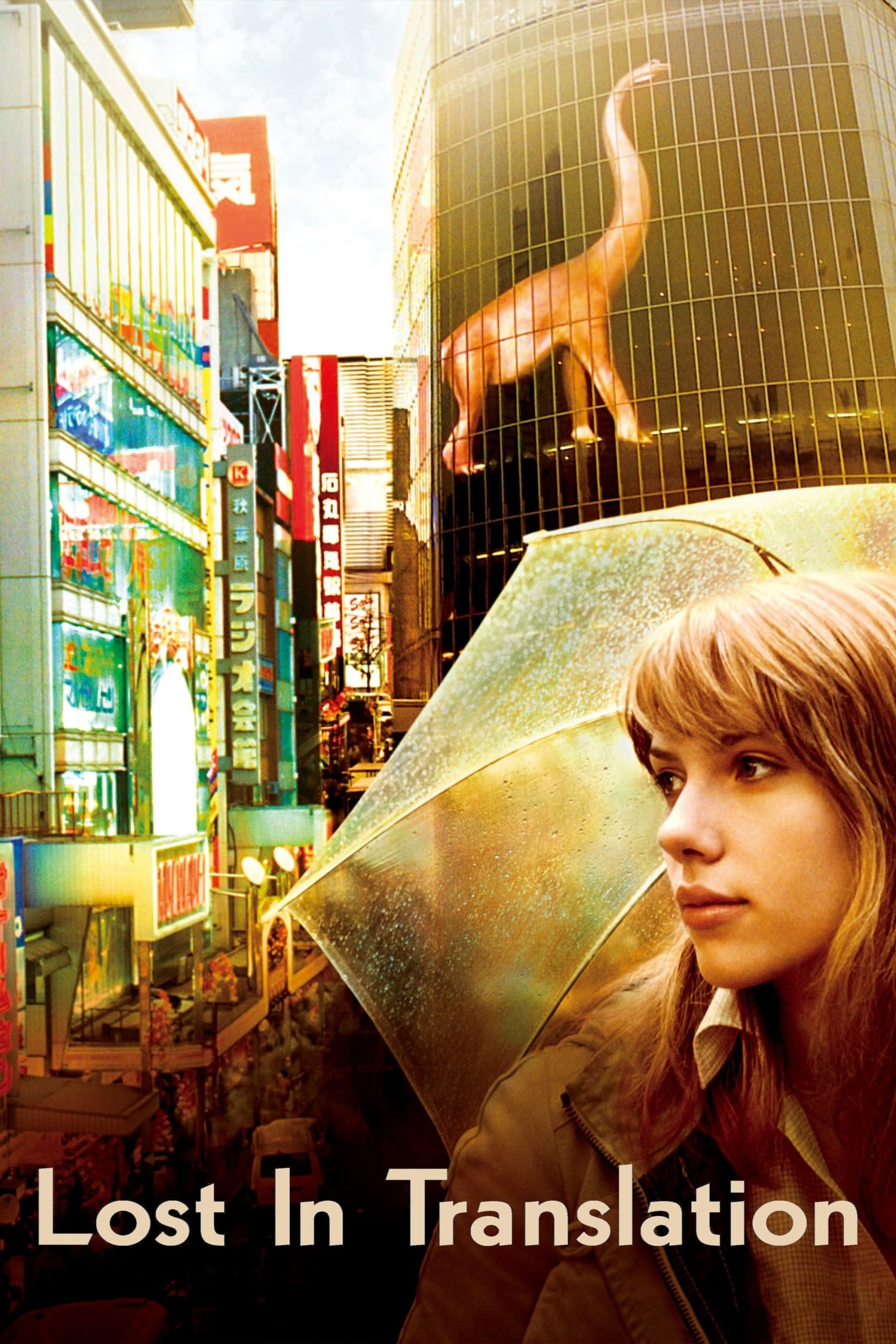
When I first experienced Sofia Coppola’s Lost in Translation, I immediately recognized that beneath its deceptively minimalist exterior lay an invitation to step into someone else’s existential jet lag. The film, released in 2003, elegantly traverses the comedy-drama genre under Coppola’s subtle yet striking direction. I watched as Bill Murray’s washed-up movie star Bob Harris landed in neon-lit Tokyo for a whiskey commercial, only to quietly collide with Scarlett Johansson’s Charlotte, a young woman left at emotional loose ends while her photographer husband works. They meander through the city, their insomnia mirroring their inner sense of dislocation.
Rather than relying on melodrama or contrived plot twists, the narrative unfolds through fleeting glances, silences, and moments suspended in the haze of a city that feels both alien and beautiful. Coppola’s story thrives in the spaces between words, capturing the emotionally charged connection forged between two strangers adrift in a foreign land. The movie isn’t out to bombard me with exposition; rather, it relies on nuance, on what’s unsaid but deeply felt. If you’re wary of spoilers, I’ll refrain from the specifics of the characters’ choices; suffice it to say, the film’s closing moments are justly famous for their ambiguity and the emotional weight left lingering long after the credits roll.
Key Themes & Analysis
Almost every frame of Lost in Translation pulses with a sense of isolation. I was immediately struck by how the film uses Tokyo—its vastness, its relentless motion—as a backdrop not just for culture shock, but for internal reckoning. Themes of alienation, intimacy, and the search for meaning quietly dominate the film’s landscape. What resonated with me most was how Coppola eschews sentimentality in favor of something far more delicate: the awkward comedy of genuine human vulnerability.
Some of the strongest moments flow not from dialogue but from cinematographer Lance Acord’s lingering shots. Neon reflections and impersonal hotel interiors frame Bob and Charlotte’s isolation, yet these visual choices also create an intimate cocoon for their growing friendship. The city’s soundscape—at once overwhelming and strangely soothing—puts their emotional states in sharp relief. Often, the loudest statements are made by the deft, unobtrusive use of silence or distant city noise. I appreciate how these aesthetic touches never feel forced; they simply let the characters exist, unjudged and unhurried.
As for the acting, I can’t overstate the subtlety Bill Murray brings to Bob Harris. His performance is a masterclass in restraint: a flicker of frustration here, a dry aside there, hinting at a sea of regrets just beneath the surface. Scarlett Johansson, then still early in her career, lends Charlotte a kind of luminous melancholy—she’s present, vulnerable, and entirely believable as someone straddling the chasm between youth and adulthood.
It would be easy to reduce this film to a mere story of platonic companionship, but I see it as a far more ambitious meditation. The obstacles aren’t dramatic; they’re woven through small choices, missed connections, and the realization that sometimes the people who change us most are those we know the least—and for the briefest time.
My Thoughts on the Cultural Impact & Legacy
Looking back, I realize Lost in Translation has become a cultural touchstone for a reason. When I reflect on its legacy, I see a film that helped redefine how American cinema represented global cities. It put Tokyo into western pop culture not as an exotic punchline, but as a character with depth, vibrancy, and contradictions. I think its quiet, observational style opened up a space for smaller, more introspective films in an era increasingly dominated by spectacle and bombast.
For me as a curator, the film marked a shift: audience tastes were ready for stories built on emotional nuance, ambiguous resolutions, and the poetry of missed connections. The film’s DNA is apparent in countless subsequent “slow cinema” pieces and in work by directors who prioritize mood and interiority over easy answers. Its soundtrack—ethereal and evocative—remains one of the most influential in modern indie cinema. I watched it become a template for exploring identity and belonging against the backdrop of unfamiliar spaces. Personally, it resonates today because its questions never go out of style: What do we mean to each other, even if only for a moment? And how do we find ourselves in a world that sometimes seems designed for alienation?
Critically, the film’s success (winning Coppola a Best Original Screenplay Oscar) was, to me, a harbinger: American film was evolving, and a wider palette of voices and aesthetics was being welcomed. In many ways, Lost in Translation taught me—and inspired my programming focus—to value “in-between” stories, those that thrive on tone and mood instead of rigid plot mechanics. That’s why I continue to champion it as a vital work for anyone interested in what cinema can achieve on a deeply human scale.
Fascinating Behind-the-Scenes Facts
Every time I revisit Lost in Translation, I find myself drawn to the stories behind its creation—production details that mirror the very themes of improvisation and serendipity that the film explores.
One detail I love sharing is that many of Bill Murray’s lines were improvised. Sofia Coppola reportedly wrote the character of Bob Harris specifically for Murray, but even then, his famously elusive nature meant she wasn’t sure he’d show up until the cameras rolled. Once on set, Murray embraced the role so thoroughly that several scenes—especially those involving Japanese television and the awkward encounters in the hotel—were created on the fly, his deadpan reactions capturing the confusion of being out of one’s element.
Another fact that fascinates me is how the production operated on a modest budget and an unconventional shooting schedule. Coppola and her cinematographer often filmed in real Tokyo locations without permits. That hotel bar? It’s the actual New York Bar at the Park Hyatt Tokyo, chosen because of its panoramic nighttime views and slightly removed ambiance. I love how this guerrilla-style filmmaking lent the movie an authentic spontaneity; the city’s hustle, the street noise, and the sense of not quite belonging were all heightened by the cast truly living in the spaces they performed in.
Lastly, there’s the matter of the film’s now-legendary ending. The whispered words between Bob and Charlotte were never revealed to the crew—or even written into the script. Coppola encouraged Murray and Johansson to share something personal, knowing that the unknowable quality would give the film’s last scene an almost mythic status among fans. This embrace of ambiguity is, to me, the perfect encapsulation of the film’s ethos.
Why You Should Watch It
- For its nuanced performances that convey a rare emotional honesty, capturing the intricacies of human connection in ways that are understated yet unforgettable.
- Because Sofia Coppola’s direction turns Tokyo into both a playground for the senses and a mirror for the soul, making every frame feel lush and immersive.
- To experience a film that lingers long after viewing, prompting reflection on the universal search for meaning, companionship, and understanding in a rapidly shifting world.
Review Conclusion
Each time I revisit Lost in Translation, I find myself moved by the same quiet ache—a sense that some stories are meant to leave questions hanging in the air. Coppola’s film doesn’t just document loneliness; it invites me to see it, hear it, and even cherish it as part of the modern human condition. The chemistry between Murray and Johansson builds a bridge over cultural barriers and personal regrets, grounded in performances that are both naturalistic and poetic. I value how the film’s handheld visuals and ambient soundtrack amplify this sense of immersion.
Is it perfect? For me, it comes impressively close. Its willingness to trade narrative certainty for emotional honesty is its greatest strength. I believe it’s a touchstone for indie cinema and a masterpiece of mood and subtle storytelling. My rating: 4.5/5 stars.
Related Reviews
- In the Mood for Love (2000): If you found the atmosphere and emotional restraint of Lost in Translation absorbing, Wong Kar-wai’s film offers an equally intoxicating study of two strangers united by longing in a world bursting with color and silence.
- Columbus (2017): This meditative indie drama, set in the architectural wonderland of Columbus, Indiana, similarly explores transient connections and unspoken feelings through poetic cinematography and gentle pacing.
- Her (2013): Spike Jonze’s introspective romance uses modern technology as the setting but, like Coppola’s film, asks what it means to connect and be seen. Both films thrive on tone, melancholy, and the poignancy of brief companionships.
- Before Sunrise (1995): Richard Linklater’s classic is a natural companion piece, emphasizing the fleeting beauty of unscripted encounters and conversations that shift lives in imperceptible ways.
For readers looking to go deeper, these perspectives may help place the film in a broader context.
🎬 Check out today's best-selling movies on Amazon!
View Deals on Amazon