
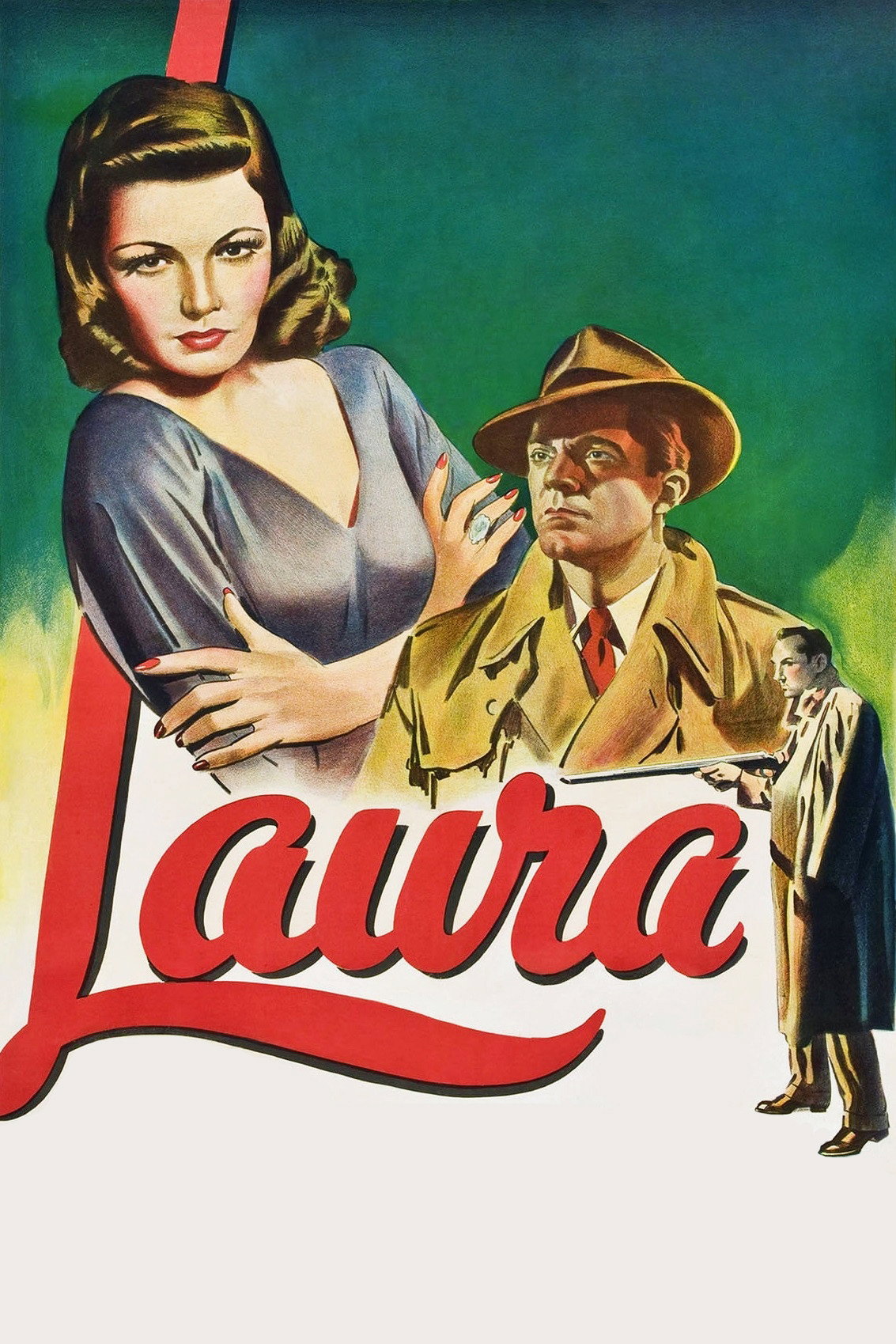
Plot Summary
Stepping into Otto Preminger’s legendary noir, I felt immediately ensnared by a subtle sense of unease and elegance woven throughout every shadowy frame. Set against the backdrop of sophisticated Manhattan society, the story orbits around the mysterious murder of Laura Hunt, a woman whose charisma and beauty have every character—and viewer—utterly riveted. I followed Detective Mark McPherson as he waded through the tangled skein of Laura’s relationships with the urbane columnist Waldo Lydecker, the caddish Shelby Carpenter, and a web of other suspects colored by envy and desire. Though I’m careful to sidestep major twists—since experiencing their full impact is integral—let me affirm: this film deepens its intrigue with every glance, each offhand line of dialogue, and the ghosts that linger in Laura’s apartment. Even for those who pride themselves on outsmarting murder mysteries, the way “Laura” spills its secrets left me in genuine suspense.
Key Themes & Analysis
Obsession and idealization pulse at the heart of my interpretation of “Laura.” Watching these characters, I saw not only a classic whodunit but an incisive study of how people project their desires onto others, molding them into idealized visions rather than confronting reality. Gene Tierney’s Laura is both a living woman and a myth spun in the minds of those who loved her—or claimed to. That duality, the film argues, is treacherous: the more the men around Laura romanticize her, the more dangerous and distorted their feelings become. I was struck by how Preminger, through gliding camera movements and lush interiors, rendered Laura as almost spectrally present even when absent from the screen. She haunts both the narrative and my imagination, a cipher for beauty, success, and vulnerability.
The cinematography stood out to me with its bold use of shadow and composition, echoing Laura’s dual existence as both dream and reality. The iconic portrait looming over the living room felt, to me, less like a plot device and more like a silent character—beautiful, unreachable, perpetually watched. Practically every shot was meticulously crafted, with mirrors and doorways framing the action, reflecting how boundaries in relationships and between truth and deception are blurred. Joseph LaShelle’s Oscar-winning cinematography left a lasting impression. Through his lens, I found the narrative’s ambiguity heightened by the literal interplay of light and dark, a motif I’ve rarely seen deployed so deftly.
As a critic, what moved me the most was the understated depth of the performances. Clifton Webb’s Waldo Lydecker tempted me to alternate between admiration and suspicion with each arch line reading. His portrayal demonstrated how bitterness and longing can flourish beneath a veneer of sophistication. Dana Andrews’ McPherson, meanwhile, drew me in precisely because he was so at odds with the refined world he investigates; watching him navigate Laura’s rarefied circle, I felt the tug-of-war between cynicism and vulnerability that underpins classic film noir. Their chemistry with Tierney—whose portrayal of Laura balances magnetism with a quiet sadness—brought the film’s emotional stakes directly into my own living room.
Director Otto Preminger’s touch is everywhere, but unlike the hard-edged, cynical worldviews that characterize other noirs of the same period, he brings a sense of languor and erotic tension that charged the film’s quietest moments. In my analysis, Preminger’s use of slow dissolves, overlapping voices, and long takes underscored a potent atmosphere of uncertainty—where trauma and desire are inextricably entwined. When I rewatched it, I realized how many visual cues subtly foreshadowed character motivations; a hand resting a moment too long on an object, a lingering gaze at Laura’s portrait, a precisely chosen musical cue. These touches elevated the film above a simple murder mystery and rendered it, for me, an enduring exploration of gender, longing, and the destructive power of illusion.
My Thoughts on the Historical & Social Context
When I think about why “Laura” resonated so powerfully with audiences in 1944, I’m reminded of the tensions simmering just beneath the surface of American life during World War II. While the country fixated on overseas conflict, at home there was a deep craving for escapism—but also, paradoxically, an appetite for darker stories that reflected uncertainty and anxiety. I see “Laura” as a film born directly from those contradictions. For women, the story of Laura represented both the ideal and the danger of feminine independence: she’s career-driven and admired, yet the very qualities that make her magnetic also place her at risk. To me, this connects directly to how women’s roles were shifting in the workforce and in society at large while men went off to war. Laura’s image as a “modern woman”—self-sufficient yet envied, desired yet isolated—feels like a mirror to those 1940s intersections of ambition and vulnerability.
I also can’t escape thinking about how the film’s lens on high society and its undercurrents of elitism reflect the era’s preoccupation with social status. Watching it today, I feel the sharp edges of class distinctions and the way those hierarchies insulate both privilege and cruelty. I think “Laura” continues to matter because it refuses to make things simple: the characters’ motivations are messy, intrusive, and irreducible to easy moral judgments. This ambiguity speaks volumes about the complexity of human relationships, regardless of whether it’s 1944 or today. For me, the film’s impeccable style—its glamorous costumes and Art Deco interiors—gives way to a much darker reality beneath the surface. That duality mirrors a society grappling with its own fractured sense of security, romance, and shifting cultural norms. “Laura” lets me explore those fissures, both as a time capsule of its era and as a living, breathing story today.
Fact Check: Behind the Scenes & Real History
Diving into the making of “Laura,” I uncovered a few fascinating insights that amplify my appreciation for what’s on screen. First, the casting of Laura Hunt wasn’t straightforward at all. The studio initially cast Rouben Mamoulian to direct, with actress Vera Caspary’s own pick, but studio politics led to Otto Preminger’s rise and a search for a different leading lady. It was only after a series of auditions that Gene Tierney landed the role by delivering both the mystique and emotional depth needed to embody Laura. I find it remarkable that Tierney, later considered iconic in this part, was at first viewed as a risky choice—her star wasn’t yet fully risen.
Another revelation struck me: the famous portrait of Laura isn’t a painting at all. When I learned the “painting” that dominates so many scenes was actually a stylized photograph of Tierney retouched to look painterly, it gave me new respect for the creative problem-solving on this film. That detail subtly reinforces the theme of illusion—the Laura that so many characters obsess over is, quite literally, an artificial image. It’s a brilliant move that deepens my reading of the film’s preoccupation with perception versus reality.
I also discovered that the original ending in several script drafts was reportedly far more conventional and lacked the quiet ambiguity that I found so haunting. Preminger fought against studio demands for a neat conclusion. As a result, the final cut preserves a sense of emotional openness and ambiguity. Knowing this makes me even more appreciative of Preminger’s refusal to compromise artistically, allowing the audience to carry the film’s questions after the credits roll.
Why You Should Watch It
- For a masterclass in film noir atmosphere and tension—every lighting choice and camera angle delivers a visual lesson in building suspense and ambiguity.
- To experience some of the most memorable performances in classic Hollywood, especially Clifton Webb’s razor-sharp turn as the acerbic, enigmatic Lydecker.
- If stories about obsession, identity, and the danger of ideals fascinate you, Laura offers a compelling, intelligent meditation still relevant in our image-obsessed age.
Review Conclusion
Returning to “Laura” always reinforces for me why certain films endure. Its labyrinthine plotting and haunting mood transcend genre and era, inviting me to reconsider the line between reality and fantasy—and what happens when we cross it. With unforgettable performances, lush visuals, and a story that continues to provoke questions rather than answer them, I rate it a resounding 5/5. If you’re searching for a noir that offers both thrills and thematic resonance, this is a gold standard I return to—and recommend—again and again.
Related Reviews
- “Double Indemnity” (1944): If you’re drawn to the interplay of romance and deception, this twisted noir offers a similarly incisive take on obsession, with Barbara Stanwyck and Fred MacMurray sparking off each other in a world defined by fatal attraction and existential dread. I find its mood and visual language meaningfully echo Laura’s gloom and allure.
- “Rebecca” (1940): Hitchcock’s gothic masterpiece, like “Laura,” revolves around a woman whose presence lingers even in absence, haunting the minds of those who loved her. The atmosphere of hidden motives and psychological manipulation feels closely related to Laura’s blend of elegance and menace.
- “The Big Sleep” (1946): Bogart and Bacall infuse this Chandler adaptation with an unmatched chemistry and narrative complexity. For me, it captures the same crosscurrents of temptation and secrecy, set against a jazzy, morally murky universe where no one is ever quite what they seem.
- “Notorious” (1946): Watching Bergman and Grant navigate intrigue and dangerous romance reminded me of Laura’s potent mix of sophistication and suspenseful emotional stakes. These films make a fascinating double feature for any fan of character-driven mysteries.
If you want to explore this film beyond basic facts, you may also be interested in how modern audiences respond to it today or whether its story was inspired by real events.
🎬 Check out today's best-selling movies on Amazon!
View Deals on Amazon