
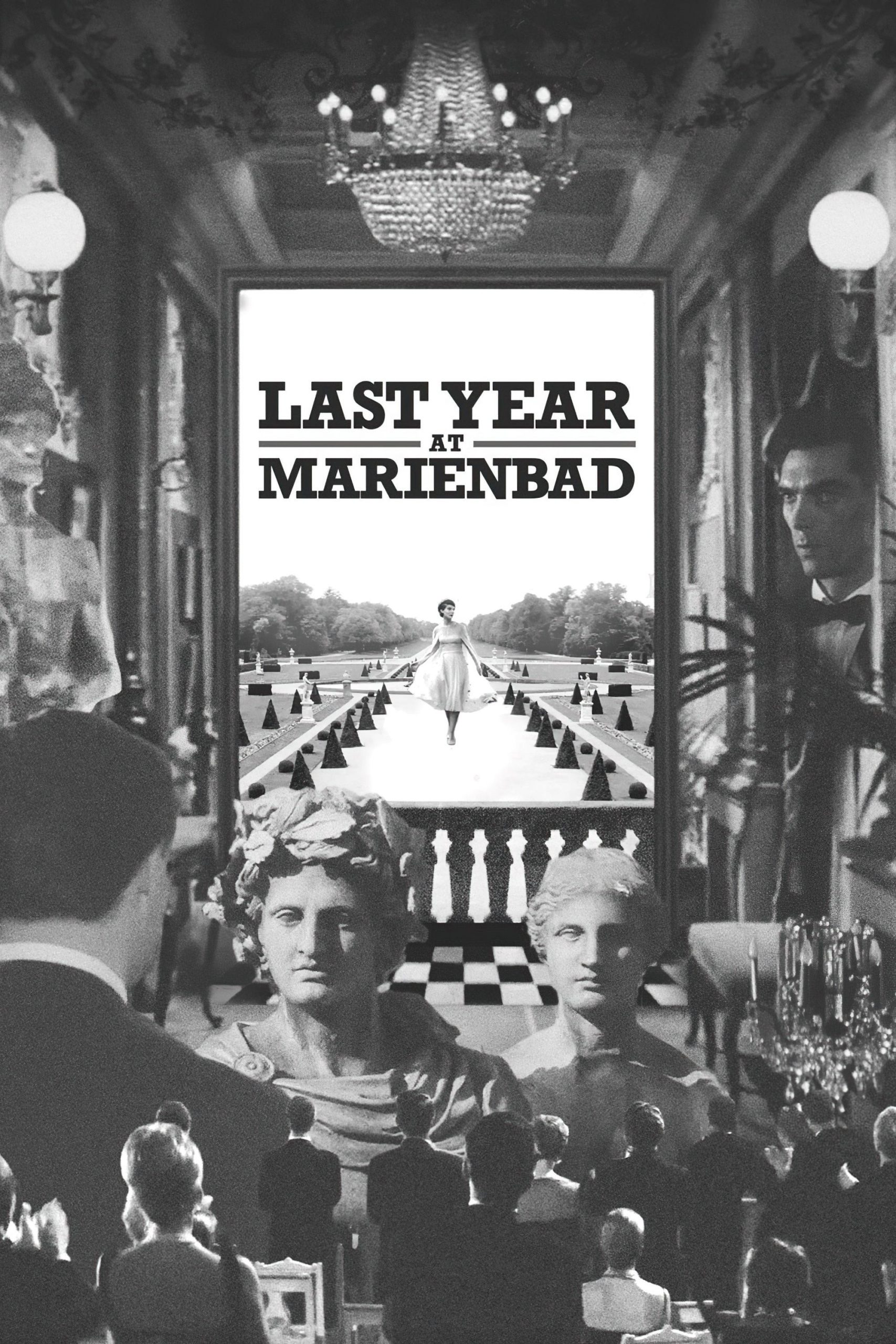
Plot Summary
I’ve rarely been so immediately drawn into a cinematic labyrinth as I was with the opening moments of Alain Resnais’ work in 1961. Dropped into the ornate, echoing corridors of an opulent European hotel, I felt like an interloper myself—uncertain of time, reality, and even my own memory. The film, commonly labeled as an enigma in the realm of art-house cinema, presents a fractured narrative that circles obsessively around one man’s attempts to convince a woman that they met and fell in love the previous year at Marienbad. Names are never clarified; chronology is slippery if not irrelevant. What stood out to me immediately was how the entire story acts as a kind of hypnotic dance between remembrance and denial. Each conversation—a repeat with slight, jarring variations—forced me to question whether the events ever happened at all, or if they exist solely in the storyteller’s imagination.
If you wish to avoid plot spoilers, be aware: the specifics of what actually happened in Marienbad remain deliberately ambiguous throughout the film. I found myself in a perpetual state of uncertainty, echoing the disorientation of the characters. There’s no hand-holding here; just an entrancing, repetitive exchange between the elusive ‘X’ and the enigmatic ‘A.’ Every detail—from their loaded glances to the surreal garden statuary—invites me to scrutinize my own perceptions. The film is not about solving a riddle, but rather immersing oneself in the experience of memory, desire, and the haunting persistence of the past.
Key Themes & Analysis
What fascinated me instantly about Last Year at Marienbad was its ability to evoke a sense of emotional unease using little more than suggestion and atmosphere. At its core, I interpret the film as a meditation on the fragility of memory and the inexorable search for meaning when facts dissolve in the wake of longing. The way Resnais constructs the film—almost like a waking dream, with scenes looping and blurring together—made me question not just the reliability of memory, but also the truth of lived experience.
For me, Resnais’ direction is the real protagonist here. Every tracking shot, every subtly shifting camera movement glides through halls and mirrors as though seeking evidence, but reveals only more ambiguity. Each tableau is meticulously composed, echoing the aesthetic of a living statue garden—formal, stylized, and eerily suspended in time. The pronounced stillness of the hotel’s guests, who sometimes seem frozen in mid-gesture, only underscores the sense that time itself is on hold while these two souls search for a connection.
I could not help but focus on the impact of Delphine Seyrig’s remarkable performance as ‘A.’ Her voice is measured and cool, yet every understated expression conveys a world of interiority: confusion, seduction, suspicion. Opposite her, Giorgio Albertazzi’s ‘X’ is relentless in his certainty, but there’s a desperate edge that hints at the possibility his memories might be nothing but romantic delusion. This push-and-pull of certainty versus doubt is skillfully emphasized by Alain Robbe-Grillet’s screenplay, which makes each line of dialogue feel like a fresh attempt at creating—or rewriting—truth.
Cinematography, handled by Sacha Vierny, is aggressively stylized. Strong use of shadow, geometric framing, and recurring visual motifs made me feel like I was inhabiting a surreal world governed by the rules of memory instead of reality. The film’s use of sound is just as innovative: organ notes fluctuate between ominous and ecclesiastical, and the soundscape periodically disorients with its echoes and silences. Every technical element seems to serve the theme of memory’s subjectivity: even the repetition of scenes, which shift subtly each time, teased me to look for clues while ultimately revealing only how elusive the truth really is.
But it’s not just a technical puzzle box. To me, the film articulates a larger existential reflection on love, regret, and the way our most passionate experiences are both shaped and erased by time. There is something profoundly melancholic in its exploration of unresolved desire. Rather than ask, “What is true?” I kept coming back to, “Why does truth matter at all, if memory itself is the most powerful force shaping our reality?”
My Thoughts on the Cultural Impact & Legacy
Whenever I revisit Last Year at Marienbad, I’m reminded of why it stands as a cornerstone of European cinema and why I constantly recommend it to cinephiles looking for challenging, poetic works. For me, the film didn’t just introduce a new language of cinema; it shattered long-held conventions about how stories should be told on screen. Watching Resnais and Robbe-Grillet dissolve the boundaries between reality and imagination was like witnessing modernist literature leap onto celluloid.
From my perspective as a curator, this movie didn’t just redefine the boundaries of narrative structure—it staged a revolution in audience engagement. Before Marienbad, most films guided viewers along clear plotlines with set character arcs and tidy resolutions. After Marienbad, ambiguity became an aesthetic choice, making room for films that invite—not dictate—meaning. I’ve seen its echo not only in the French New Wave and in the works of directors like Chris Marker and Ingmar Bergman, but also in the dreamlike cinema of David Lynch and even in mainstream explorations of memory like Christopher Nolan’s “Memento”. The ripples reach far beyond art-house circles—this is a film that unlocked new possibilities for what movies could be about and how they could make us feel.
I keep returning to Marienbad as an example of how boldly cinema can confront the problems of memory and identity. To this day, critics, scholars, and filmmakers still debate what “really happened” in the story; for me, the enduring fascination comes from how the film encourages each viewer to bring their own experience to its surface. In a world obsessed with “explaining” film, I love that Marienbad still revels in the unknown, refusing to give up its mysteries in exchange for easy answers. That, to me, is its greatest and most lasting legacy.
Fascinating Behind-the-Scenes Facts
Every time I look deeper into the making of Last Year at Marienbad, I’m struck by just how much care and experimentation went into rendering its unique atmosphere. One of the most compelling facts I discovered is that Resnais and screenwriter Alain Robbe-Grillet shot the film without a finalized script. Instead, Robbe-Grillet would write descriptions of scenes—sometimes mere suggestions rather than concrete directions—leaving much of the interpretation in Resnais’ hands. That collaborative ambiguity directly fed into the dreamlike, uncertain tone: even the cast sometimes had to invent their own motivations, which I think only heightened the actors’ sense of alienation and mystery.
Another detail that absolutely stood out to me was the selection of shooting locations. The film was shot at several grand, historic châteaux around Munich—including Schloss Nymphenburg and Schloss Schleissheim. Resnais insisted on these locations not only for their opulent beauty but for their natural symmetry and stillness; as a result, every room feels almost too perfect, like a memory that’s been endlessly polished. The meticulous set design—mirrors, labyrinthine gardens, subdued color palettes—was a deliberate choice to blur the line between reality and unreality. I felt this deeply in every visual frame.
I also found it fascinating that the actors were directed to move in highly controlled, almost puppet-like ways. Delphine Seyrig, in particular, received direction on how to walk, stand, and even pause in conversation to emphasize the uncanny detachment that defines the film’s emotional tone. These directorial choices contribute to the film’s air of suspended time and psychological tension, making even minor gestures powerfully resonant.
Why You Should Watch It
- The film creates a hauntingly surreal atmosphere that immerses you in the complexities of memory, desire, and time—making for an experience unlike anything else in cinema.
- Its narrative structure and visual innovation continue to influence and inspire directors and writers across genres, making it a touchstone for understanding the evolution of modern film language.
- Watching Marienbad is a masterclass in cinematic ambiguity—an invitation to interpret, question, and ultimately participate in the creation of meaning, which I find endlessly rewarding as a viewer.
Review Conclusion
Whenever I try to sum up my reaction to Last Year at Marienbad, I’m always left searching for comps that can truly compare to its hypnotic mastery. For me, this film is the ultimate meditation on the power of memory, the ambiguities of love, and how cinema itself can bend reality to reveal deeper emotional truths. Yes, it’s challenging—deliberately so—but that’s precisely why it endures. Every frame, every enigmatic exchange, every looping moment feels like a puzzle that was made just for me to solve, again and again. In an era overwhelmed by literalism, watching Marienbad feels almost revolutionary.
I rate the film a 5 out of 5. It’s a cinematic experience I return to every few years, always finding something fresh and provocative among its shadows.
Related Reviews
- “Persona” (1966, Ingmar Bergman): I recommend this film for its equally abstract narrative structure, psychological depth, and its exploration of identity and memory. Much like Marienbad, Persona challenges the viewer’s perception of reality and character, making it an ideal companion piece for those who crave intellectual engagement in cinema.
- “Hiroshima Mon Amour” (1959, Alain Resnais): If you found the narrative innovations and thematic obsessions of Marienbad compelling, you’ll be fascinated by Resnais’ earlier work. This film delves into memory, trauma, and ephemeral connection with the same poetic resonance and avant-garde style.
- “Mulholland Drive” (2001, David Lynch): For viewers interested in cinema that bends logic and narrative, Lynch’s dreamlike masterpiece offers another heady exploration of memory, illusion, and the blurred boundaries between dream and reality. It’s another film that rewards close, repeat viewing and active participation.
For readers looking to go deeper, these perspectives may help place the film in a broader context.
🎬 Check out today's best-selling movies on Amazon!
View Deals on Amazon