
Plot Summary
I can still remember the suffocating tension I felt during my very first viewing of La Haine. Director Mathieu Kassovitz’s unwavering grip on the urban thriller genre stunned me from the first frame. Set over the course of just 24 hours in the Parisian suburbs, the film ushers viewers into a raw and relentless world that feels as immediate now as it did in 1995. I was drawn into the lives of three close friends—Vinz, Saïd, and Hubert—each of them restless and reactive, haunted by the aftermath of a police riot that left their community smoldering. What struck me most is how the story never tries to romanticize their reality. Instead, it offers an unblinking, almost claustrophobic window into a day shaped by mounting anger, tension, and disillusionment. I found myself following their movements, from grimy rooftops to interrogating city streets, feeling the city thrum below the surface with unresolved rage.
The plot pulses with understated suspense, rarely using conventional devices to push me forward. It’s not so much what happens, but the sense that something could happen at any moment—that held me in its grip. Every conversation is loaded, every chance encounter potentially transformative. Vinz seethes with fury and pride, clutching a gun like a talisman against the injustices coursing through their lives. Saïd uses humor and bravado to navigate constant humiliation. Hubert, both weary and wise, yearns for escape, but also shoulders the burden of keeping his friends grounded. I was spellbound by how Kassovitz frames these characters on the edge—teetering between hope and despair—without ever lapsing into melodrama or sentimentality. Warning: The final act will leave a lasting chill, but I’ll spare you the specifics, as its unblinking conclusion deserves to be experienced in real time.
Key Themes & Analysis
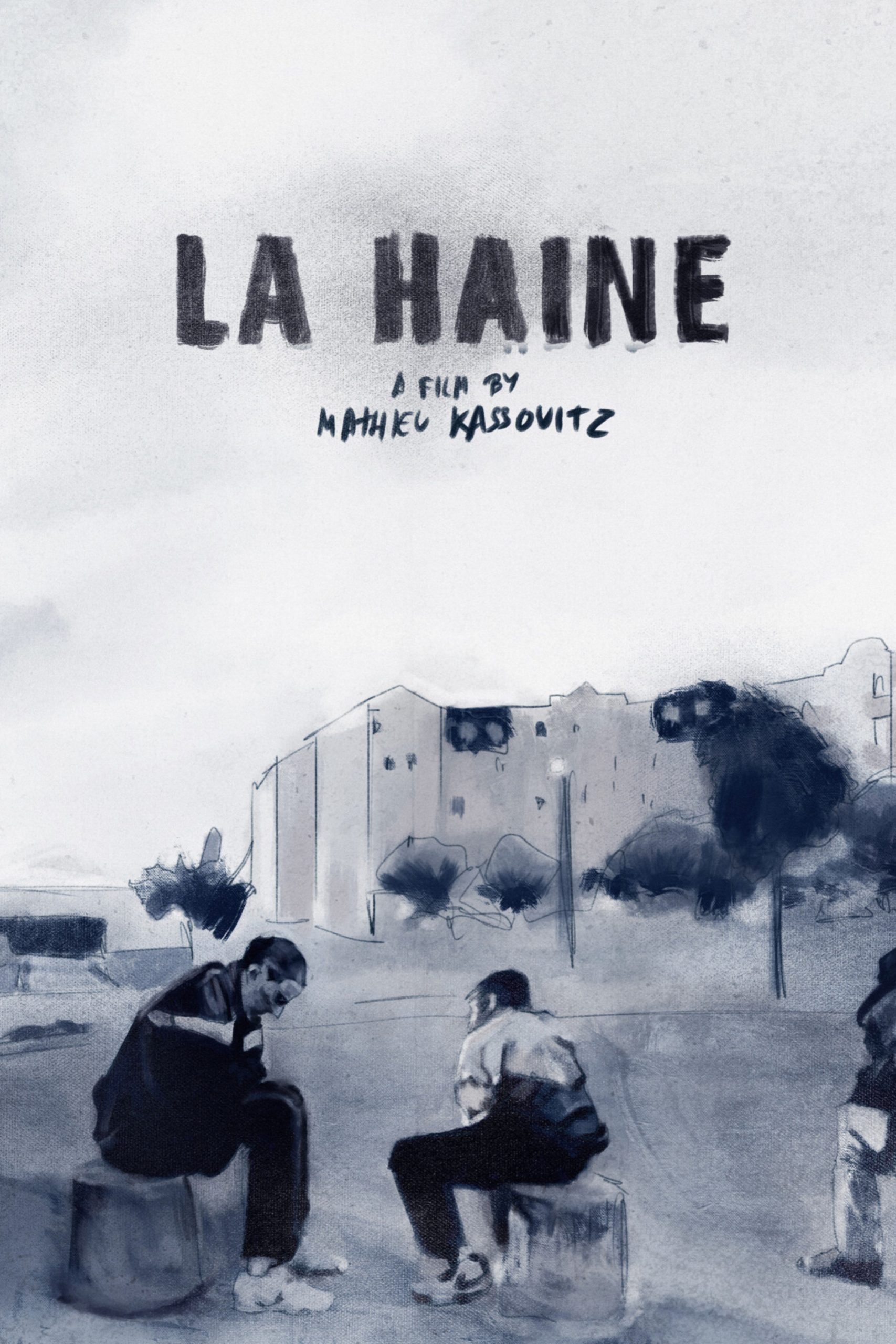
From its opening moments, I knew La Haine was more than gritty realism—it was a statement. What stayed with me was the way Kassovitz leverages the camera to place me inside the suffocating pressure cooker of the French banlieue, confronting me with the relentless cycle of violence, institutional neglect, and societal alienation. The choice to shoot in high-contrast black and white isn’t just an aesthetic flourish; it becomes integral to how I processed the film’s ideas. The monochrome palette strips life of glamour, forcing me to read every line etched in the actors’ faces, every shadow lurking in abandoned stairwells. There’s a bleak poetry to the visuals—a sense that the world has lost its vibrancy, mirroring the deadened hopes of its inhabitants.
I couldn’t shake the film’s core message: the destructive drip-feed of hatred and the impossibility of escape within a system rigged against you. The banlieue isn’t just a backdrop; it’s its own character, alive with tension, but also scarred by poverty, suspicion, and the specter of violence. I found myself reflecting on Kassovitz’s deft navigation of these issues—not sensationalizing, but also refusing to comfort. He achieves this through a fusion of stylized tracking shots and lean, almost documentary-like naturalism. The scenes between the three leads—often marked by rough banter and palpable frustration—crystallize how violence becomes both defense and disease: passed down, internalized, impossible to shake off.
The performances astounded me with their authenticity. Vincent Cassel’s portrayal of Vinz is a masterwork. He manages to be both incendiary and heartbreakingly vulnerable, a young man desperate to assert himself against a world that sees him as disposable. Saïd Taghmaoui’s Saïd, with his sardonic energy, gave the film moments of levity that masked deeper wounds, while Hubert Koundé’s Hubert brought a soft-spoken gravitas that became the moral backbone of the trio. Each performance radiates a fierce physicality—I could sense the exhaustion and alertness beneath every gesture.
Beyond dialogue, Kassovitz employs technical flourishes that reinforce my sense of anxiety. His use of kinetic editing and sound design kept me on edge, vibrations of helicopters lining the soundtrack, underscoring the constant threat of surveillance and control. What lingers is the repetition of small acts of humiliation, bigotry, and resistance—the cumulative effect of an “us versus them” climate where hope feels like an act of defiance. The film doesn’t offer tidy resolutions, but I found that refusal is, itself, a deliberate provocation—a challenge to me as a viewer to reconsider my own complicity and assumptions about justice, violence, and marginalization.
Ultimately, what I take from La Haine is the piercing clarity with which it confronts cycles of violence and prejudice. It’s difficult, even painful at times, to sit within the unresolved space Kassovitz creates. But I’ve never been able to look away.
My Thoughts on the Cultural Impact & Legacy
Reflecting on why La Haine continues to matter to me, I keep returning to its enduring relevance. I honestly think few films have so thoroughly shaken both the French film industry and the global consciousness. For me, La Haine marks a seismic shift in the way cinema can challenge social norms. I’ve witnessed its impact echo through contemporary filmmaking, especially in how directors approach stories set on society’s margins—with clarity, empathy, and an insistence on asking uncomfortable questions.
I’m personally drawn to how Kassovitz shattered the longstanding mythologies of Paris as a city of light and romance, instead revealing its neglected suburbs as landscapes charged with pain and dignity. La Haine, for me, did not just humanize the “other”—it helped launch an entire genre of European urban dramas that view marginalized subjects not as statistics, but as uniquely complex individuals. That approach changed the lens I bring to social-issue cinema. The film’s urgent storytelling, buoyed by its bold style, inspired future filmmakers like Ladj Ly (Les Misérables) and Jacques Audiard (A Prophet) to explore similar spaces with unflinching honesty.
La Haine has been a reference point in film studies, but for me as a film curator and critic, it’s much more than that. It redefined what national cinema could be: oppositional, immediate, and global in its resonance. Its stark representation of police-community tensions and institutionalized racism was way ahead of its time, even predicting conversations we’re still wrestling with today around the world. I honestly believe the film’s willingness to listen as much as to condemn is what keeps it urgent—even decades since its debut. When I program or discuss films dealing with social realities, I inevitably measure their impact against what La Haine achieved. Its voice is still one I return to, both as inspiration and as a provocation.
Fascinating Behind-the-Scenes Facts
I’ve always been fascinated by the journey behind La Haine’s blistering authenticity, and I’ve unearthed a few gems over the years. Perhaps the most intriguing to me is that Kassovitz drew inspiration from real-life events: the 1993 death of Makomé M’Bowolé in police custody catalyzed not just the script’s genesis but its unwavering sense of urgency. I find it remarkable that this real-world pain so directly shaped the script’s emotional core, not as exploitation but as a mode of bearing witness.
Another detail that stands out is the dynamic energy among the three leads. Their lived-in camaraderie is no accident. During production, Kassovitz had Cassel, Taghmaoui, and Koundé live together in the suburb of Chanteloup-les-Vignes for several weeks. This immersive approach, while logistically challenging, forged the organic chemistry I found so convincing. It also helped the actors better understand the rhythms of daily life in the banlieue—a process that spills over into every gesture and line in the finished film.
I was also struck by stories of technical experimentation on set. Since the production budget was limited, the film’s iconic opening riots were cleverly constructed using newsreel footage and tightly choreographed extras. Multiple sequences had to be shot on-the-fly, demanding fast thinking from the crew and a willingness to embrace spontaneity. That sense of immediacy bleeds into the viewing experience; every shot feels perched on the cusp of chaos, adding to my own sense of unease and anticipation throughout.
Why You Should Watch It
- An unfiltered look at the consequences of violence and social neglect—this is not a film that sanitizes or sugarcoats, and I find that honesty both necessary and bracing.
- Groundbreaking performances from a charismatic trio, whose chemistry and ferocity make the characters unforgettable long after the credits roll.
- A masterclass in black-and-white cinematography and kinetic filmmaking—the technical achievement is worth seeing on its own, but it also deepens the film’s emotional punch.
Review Conclusion
La Haine isn’t just a film I admire; it’s one I return to whenever I want to be reminded of why cinema matters. Its unyielding honesty and propulsive style make it a lightning bolt of a movie—one that’s as vital now as it was nearly three decades ago. Whether you’re drawn by its exquisite craft, its scorching social conscience, or the bravura performances at its heart, I can think of few works more deserving of your time. I give it 5/5 stars for its artistry, impact, and enduring power to provoke and move me.
Related Reviews
- Les Misérables (2019): I recommend this film for viewers interested in modern French social dramas that echo La Haine’s confrontational realism. Like La Haine, Ladj Ly’s film is set in the Parisian suburbs and pulses with a sense of immediacy and moral conflict.
- City of God (2002): For those fascinated by urban chaos and coming-of-age stories, Fernando Meirelles’ Brazilian masterpiece draws on similar themes of youth, violence, and institutional failure, presenting them through a unique Rio de Janeiro lens.
- A Prophet (Un Prophète) (2009): I think audiences impressed by La Haine’s blend of sociopolitical insight and pulse-pounding storytelling will find much to admire in Jacques Audiard’s prison-set drama, which likewise explores the struggle for identity and respect in a hostile world.
- Do the Right Thing (1989): Spike Lee’s incendiary Brooklyn tale is a personal favorite for its exploration of racial tension, community, and heatwave-induced unrest. Its tonal boldness and iconic style make it a natural companion for fans of La Haine.
For readers looking to go deeper, these perspectives may help place the film in a broader context.
🎬 Check out today's best-selling movies on Amazon!
View Deals on Amazon