
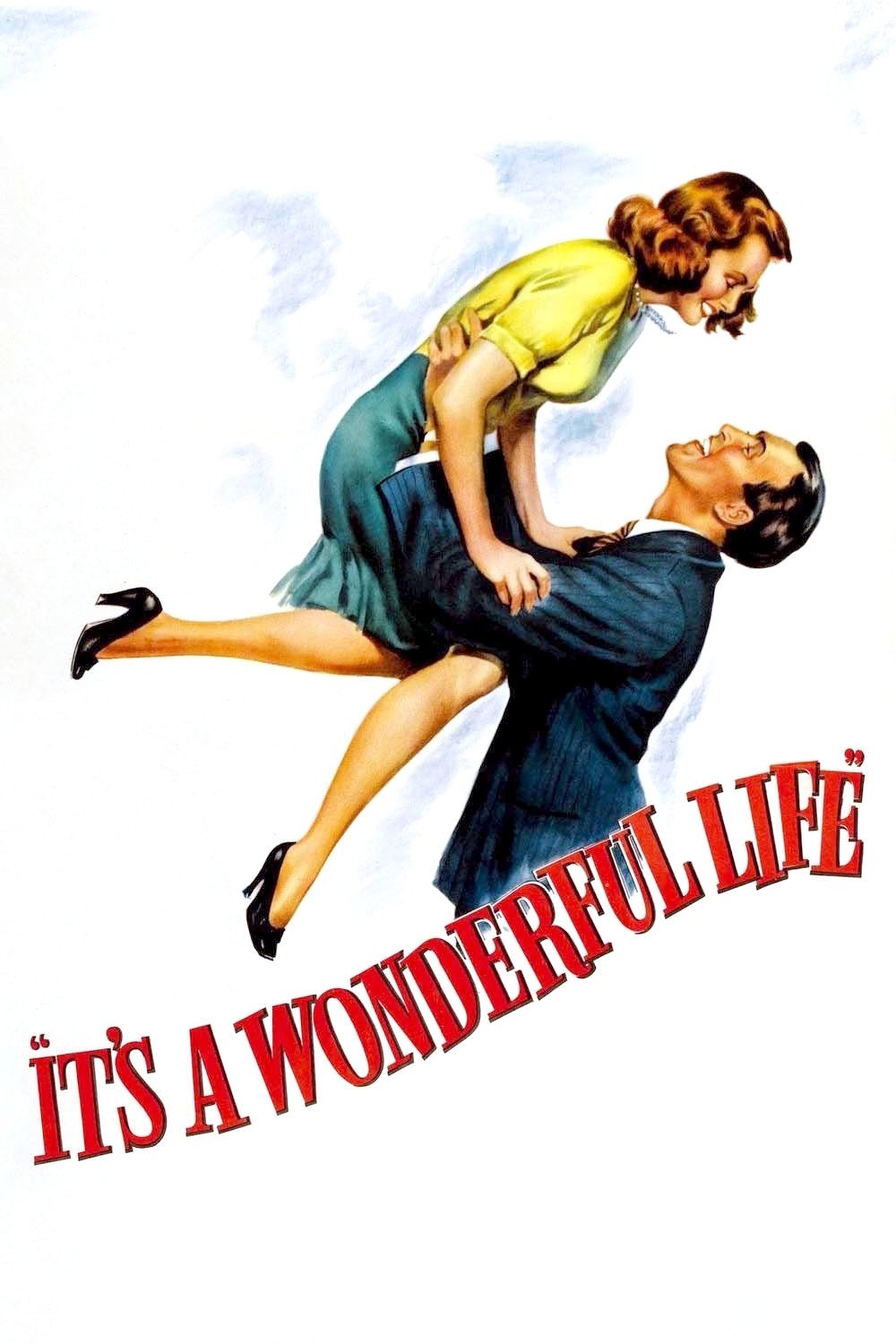
Plot Summary
I remember the first time I watched “It’s a Wonderful Life,” I was struck by how gently it drew me into the ordinary world of George Bailey, a man much like any of us—someone who dreams of adventure but finds himself rooted in small-town routine. The film, directed by Frank Capra, uses the lens of a fantastical fable to reveal the tremendous weight of everyday kindness. Set in fictional Bedford Falls, it begins with George’s beleaguered spirit reaching what feels like an emotional rock bottom on Christmas Eve. The narrative, while told through the device of a guardian angel named Clarence, is rooted in the real heartbreaks and miniature triumphs of a working man. I was fascinated by how the movie unspools George’s life in flashbacks, letting me see every sacrifice he makes for family and community. His journey is shaped not by grand gestures, but by consistently doing what is right, often at personal cost.
For those who want to avoid significant spoilers, I won’t reveal the exact nature of George’s turning point, but I will say that Capra masterfully builds tension and empathy. Every missed opportunity and personal crossroads feels intimate, almost as if I’m wandering the streets of Bedford Falls myself. The film teases magical realism with Clarence’s intervention, yet its emotional core stays grounded in small acts of decency: a prevented tragedy here, a word of comfort or a loan there. Even as the story edges toward despair, I felt hope shimmering just out of reach. The ending—part fantasy, part affirmation—remains memorable without ever feeling saccharine.
Key Themes & Analysis
What continually draws me back to “It’s a Wonderful Life” is its enduring meditation on personal worth and community interdependence. The story, to me, is an exploration of how every life—however humble—casts ripples that shape others’ destinies. I find the film’s greatest strength in the way it contrasts individual dreams with collective responsibility. George aches to escape Bedford Falls for adventure, education, and something grand. Each time his own ambitions rise, circumstances and his innate empathy pull him back. This push-and-pull between self-interest and altruism is at the movie’s heart.
From a cinematic perspective, Capra’s direction infuses each scene with emotional clarity. I appreciate his use of soft lighting and intimate close-ups, especially during moments of crisis. It gives the film a gentle, almost storybook quality, especially when compared to post-war realism creeping into American cinema at the time. James Stewart’s portrayal of George Bailey is a revelation—his performance, at turns tentative, angry, and gently humorous, wrings authentic feeling from every scene. I’m always moved by how Stewart’s facial expressions alone reveal George’s internal struggle; he’s both Everyman and uniquely himself.
The supporting cast, especially Donna Reed as Mary, crafts a network of emotional support around George. Reed’s Mary is not merely a domestic ideal; I read her as a moral anchor, resourceful and emotionally intelligent. Even antagonists like Mr. Potter (Lionel Barrymore) embody more than villainy; Potter is the personification of unchecked greed, the opposite pole of George’s communal ethos.
The movie’s black-and-white cinematography is quietly innovative: snowfall becomes a symbol for uncertainty and emotional coldness; the romantic walks under lamplight ooze warmth and hope. I’m impressed by the way Capra uses settings—the drafty Bailey home, Potter’s austere office, the festively cluttered bank lobby—to echo characters’ internal states. Capra’s ability to tether big emotional concepts to tight domestic spaces is, in my view, unmatched.
Ultimately, “It’s a Wonderful Life” cuts to the existential bone of its subject: Am I making a difference? The answer, gently and insistently, is yes. Even those who feel invisible or unimportant—like George—leave invisible threads of decency and care through their communities. I view the film’s fantasy elements not as escapism, but as creative ways to explore the universality of doubt and redemption—ideas that resonate with me even in today’s fragmented, cynical world.
My Thoughts on the Historical & Social Context
Watching “It’s a Wonderful Life” while thinking about 1946 America always feels like peering into a very particular moment in history. The movie was released just as World War II ended; the wounds of loss, dislocation, and change were still sharp. When I imagine how audiences then must have perceived George Bailey’s struggle—with duty, self-sacrifice, and the gentle but relentless erosion of individual dreams—I see the film’s relevance double in strength. The national mood in that post-war winter was wary but hopeful; Capra’s film speaks directly to that blend of anxiety and yearning.
I find the movie’s economic themes striking, especially considering the rise of suburbanization and the American Dream mythology after the war. George’s moral victories aren’t tied to spectacular wealth or individual achievement but to sustaining a sense of neighborhood and collective well-being. In my view, the film’s quiet critique of capitalism—through the greedy, unchanging presence of Mr. Potter—contrasts with Hollywood’s more triumphalist stories of the era.
On a more personal note, I think the film resonates now because we, too, wrestle with questions of value and belonging amid uncertainty. The sense of economic anxiety, of feeling left behind or unseen, makes Capra’s central message feel as urgent to me today as it must have in the shadow of war and the onslaught of modernity. When George stands on that metaphorical ledge, he’s every person on the brink, wondering if their life has mattered. The answer the film gives—rooted in empathy and social bonds—remains, for me, a stirring encouragement to persist, to connect, to choose kindness when the world feels indifferent.
Fact Check: Behind the Scenes & Real History
I’ve always been fascinated by the rarely-discussed production journey behind “It’s a Wonderful Life.” One of the most striking facts I’ve uncovered is that the film was, surprisingly, a box office disappointment on its initial release. Despite its now-legendary status, audience response was initially muted, and the movie’s reputation as an all-time classic only solidified decades later, largely due to repeated television broadcasts starting in the 1970s. That reversal of fortune underscores, for me, how deeply a film’s meaning can shift as cultural values evolve.
Another detail that stands out is the technical ingenuity required for its wintery Bedford Falls atmosphere. The dramatic snow scenes so integral to the film’s mood were achieved through an innovation by special effects artist Russell Shearman. He developed a unique blend of foam, sugar, and water—rather than using painted cornflakes (the old standby)—to create snow that could fall and sound realistic on camera. This breakthrough won an Academy Award for Technical Achievement and forever changed “snow” in Hollywood cinema. As someone attuned to how cinematic magic is engineered, I see this as a brilliant marriage of mood and craft.
On the historical side, I’ve dug into how the story’s source material, “The Greatest Gift,” was a short story by Philip Van Doren Stern. While the film adapts Stern’s basic premise—a man shown what life would be like had he never existed—it expands on the original text, especially in detailing George’s community impact. Stern’s story, written in 1943, had a more overtly spiritual tone, whereas Capra’s adaptation grounds its fantasy elements in social themes and the realities of post-war America.
Why You Should Watch It
- The film offers a profoundly hopeful meditation on the significance of an “ordinary” life, reminding me that unseen acts of kindness can have far-reaching effects.
- James Stewart’s performance as George Bailey remains, in my eyes, one of the most moving portrayals in classic American cinema—raw, earnest, and deeply human.
- The movie’s blend of emotional realism, fantasy, and technical innovation makes it an experience both timeless and fresh, whether you’re watching it for the first or fiftieth time.
Review Conclusion
Reflecting on “It’s a Wonderful Life,” I am always struck by its power to combine the sentimental with the deeply philosophical. For me, this is more than a holiday tale—it’s a gentle but radical statement about the human need for connection, empathy, and self-worth. Capra’s direction and Stewart’s luminous performance are just part of why I find myself returning to Bedford Falls, again and again, searching for reassurance that everyday goodness really does matter. In my estimation, the film’s lasting influence is a tribute to its refusal to simplify either despair or hope—the story acknowledges both, then points toward a redemption grounded in community. It’s a cinematic tonic for cynicism and isolation.
My rating: 5/5 stars. This film is, quite simply, essential viewing.
Related Reviews
- “A Christmas Carol” (1951): I recommend this British adaptation because it similarly employs supernatural intervention to guide a protagonist toward self-realization. Both films explore themes of regret, redemption, and the social consequences of individual actions, though “A Christmas Carol” layers in a biting critique of class disparity.
- “To Kill a Mockingbird” (1962): I consider this film a spiritual cousin in its strong sense of community and moral courage. Like “It’s a Wonderful Life,” it’s viewed through the lens of retrospective storytelling and foregrounds the idea of individual integrity shape-shifting an entire town.
- “The Shop Around the Corner” (1940): This romantic comedy, with its intertwining of everyday yearnings and the search for significance, echoes Capra’s tone and warmth. I see thematic parallels in how modest aspirations and quiet decency are celebrated in a close-knit community.
- “Field of Dreams” (1989): Recommended for its magical realism and its meditation on regret, legacy, and reconciliation. The film, like Capra’s classic, poses big existential questions about the value of ordinariness and the invisible ties that bind families and generations.
If you want to explore this film beyond basic facts, you may also be interested in how modern audiences respond to it today or whether its story was inspired by real events.
🎬 Check out today's best-selling movies on Amazon!
View Deals on Amazon