
Plot Summary
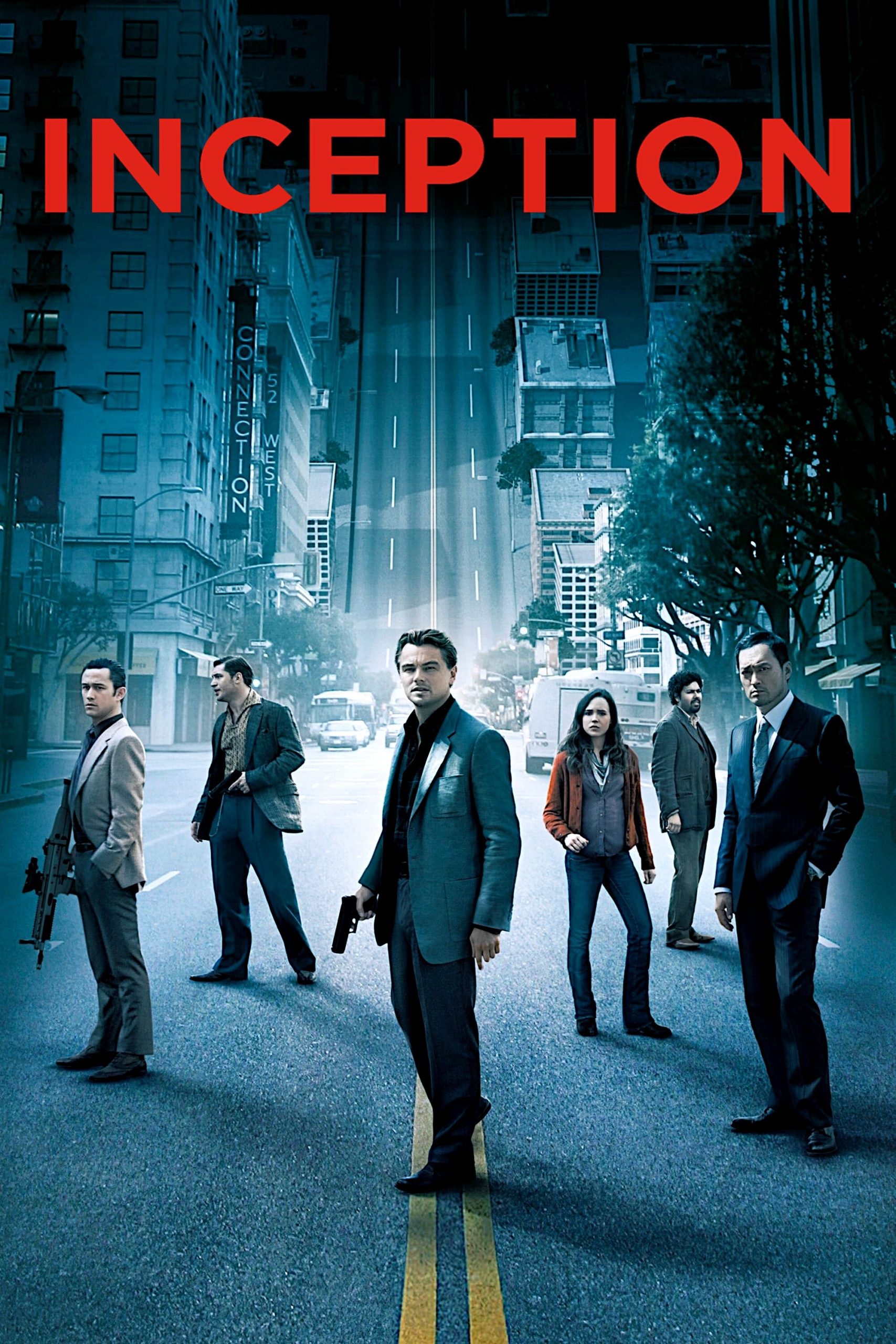
Walking out of the theater after seeing Inception for the first time, I remember feeling simultaneously exhilarated and deeply unsettled, as though I’d just been awakened from a dream I wished I could remember in more detail. The visionary director Christopher Nolan created this psychological sci-fi thriller, plunging me and millions of others into a labyrinth of overlapping dreams within dreams. At its surface, Inception follows Dom Cobb, a skilled “extractor” played by Leonardo DiCaprio, whose job is to infiltrate people’s subconscious worlds to steal their well-kept secrets. However, Nolan doesn’t let viewers settle for anything as simple as a typical heist. Instead, the story spirals deeper when Cobb is tasked not with extraction, but with “inception”—the delicate art of planting an idea so deeply in someone’s mind they believe it originated with them.
What keeps me coming back to Inception is that the line between reality and reverie is always in flux. Nolan weaves a plot that is both structurally ambitious and satisfyingly cerebral, stacking threads of action, emotion, and philosophy. From the tense corporate subplots to Cobb’s troubled relationships and his search for redemption, every scene pulses with the question: can we ever truly know the difference between what’s real and what’s imagined? For those who wish to avoid spoilers, I’ll only say that each layer of the dream world comes equipped with its own dangers, rules, and mind-bending visuals. The closer Cobb and his dream team get to their goal, the more the boundaries of consciousness erode, leaving both characters and audience gasping for solid ground.
Key Themes & Analysis
I’ve always seen Inception as a film less interested in dazzling with its conceptual fireworks than in exploring the architecture of grief, memory, and obsession. While Nolan’s signature style immediately stands out—in his use of shifting timeframes, non-linear scriptwriting, and bombastic practical effects—what’s lodged in my mind is how the narrative implicates us all as dreamers. The notion that our memories, however unreliable, define the reality we cling to is something I dwell on every time I revisit the film.
One of the boldest themes is the danger and allure of escapism. Cobb’s yearning to rewrite his past, to nest within dreams where lost love is briefly resurrected, resonates with my own anxieties about letting go. I see Nolan prompting viewers to question how our personal histories—real or imagined—shape our waking lives, for better or worse. And then there’s the ethical minefield: is it right to manipulate another’s subconscious, even for noble causes? After more than a decade, I still mull over whether the ends justified the means in Cobb’s moral universe.
Visually, the film is a playground for the senses. Wally Pfister’s cinematography turns urban landscapes into shifting puzzles, with Paris folding in on itself and hotel corridors twisting mid-fight sequence. These effects aren’t just technical marvels; they play an integral role in making the fragility of the dream world feel tactile, immediate, and precarious. As I watch spinning tops and falling vans defy gravity, I sense how the mechanics of dreams allow impossible architecture—and maybe impossible emotions—to make sense, if only for a moment.
The acting is another layer where Inception excels. DiCaprio brings raw vulnerability to Cobb, a man tormented by choices past and hopes future. Joseph Gordon-Levitt, Ellen Page (now Elliot Page), Tom Hardy, Ken Watanabe, and Marion Cotillard bring dimension and wit to characters who, in lesser hands, could have become mere chess pieces in a cerebral game. For me, Cotillard’s portrayal of Mal stands out: she is not simply a femme fatale, but a haunting embodiment of desire’s power to shape—and destroy—our reality.
Hans Zimmer’s score is nothing short of iconic. The pulsing, time-stretched brass (inspired by Édith Piaf’s “Non, je ne regrette rien”) imbues every dream layer with a tension that feels at once cosmic and personal. When sound and image coalesce so perfectly, it’s impossible not to feel swept along in the film’s undertow.
My Thoughts on the Historical & Social Context
When I recall the cultural landscape of 2010, I remember how rapidly technology was shifting the fabric of our daily routines—smartphones were ubiquitous, social networks had begun to redefine identity, and debates about the effects of digital immersion dominated the mainstream. I think Inception struck a chord because it arrived at the precise moment when people were questioning the reliability of memory, the authenticity of their digital footprints, and the meaning of shared experience in an increasingly virtual age. For me, Cobb’s dilemma is not just about personal grief but about how much of ourselves we’re willing to lose in fabricated realities—be they dreams or digital spaces.
The film’s obsession with subconscious manipulation feels eerily prescient, especially as I watch society struggle with misinformation, curated feeds, and “fake news.” I see clear parallels in how ideas, once planted, can take root so deeply that it becomes nearly impossible to trace their original source. The ethical gray areas of Cobb’s job mirror current ethical debates about targeted advertising, algorithmic nudges, and social engineering. What makes Inception timeless is not its science, but its stakes: it asks me repeatedly what I’ll sacrifice to hold onto a version of the truth that brings comfort, however illusory.
On another level, Nolan’s cross-cultural casting and international settings—jetting from Tokyo skyscrapers to snow-capped alpine fortresses—reflect the increasingly globalized world audiences were inhabiting. I think Inception’s box office success worldwide is a testament to how its questions about reality, loss, and hope resonate regardless of language or background.
Today, over a decade later, I’m still haunted by how the film refuses any easy answers. In an era of “deepfakes” and blurred boundaries between fact and fiction, Inception feels more relevant to me than ever.
Fact Check: Behind the Scenes & Real History
There are a number of behind-the-scenes stories that fascinate me, showing just how ambitious Nolan’s vision was for this film. First, the revolving corridor fight sequence is a jaw-dropping technical achievement. Rather than relying entirely on digital tricks, Nolan built a massive rotating hallway for Joseph Gordon-Levitt to perform his own stunts. Watching that scene, I appreciate the visceral, gravity-defying tension precisely because it was created through physical ingenuity, not just post-production magic.
Another aspect that always impresses me is how Nolan spent nearly a decade fine-tuning the screenplay. He first penned a treatment for Inception in 2001, just after finishing Memento, but shelved it because he felt he lacked the experience to direct a project of such complexity. I’m struck by his patience and creative discipline—qualities reflected in the layered narrative that emerged years later.
One final production nugget that I find essential is the casting of Cobb. Before DiCaprio signed on, the role was considered for several other leading men, including Brad Pitt and Will Smith. While I can imagine alternate realities with those actors, DiCaprio’s blend of charisma and haunted desperation feels irreplaceable to me. It’s a reminder that even in a film obsessed with multiple realities, the right casting choice can define how a story lingers in the cultural consciousness.
As for the historical underpinnings, Inception is not based on a true story or historical event. Instead, it draws on the rich lineage of dream theory—from Freud to Jung to the science of lucid dreaming—while taking creative liberties that ground its world in emotional truth rather than strict factual accuracy.
Why You Should Watch It
- Inception’s intricate narrative layers encourage me to engage with it as a puzzle I can’t resist solving, even on repeat viewings.
- The jaw-dropping visuals and practical effects stand up to scrutiny, creating dreamscapes that still wow me more than a decade later.
- This is a rare blockbuster that challenges my intellect and emotions, offering both thrilling spectacle and genuine philosophical depth.
Review Conclusion
Whenever someone asks me for a film that’s equal parts adrenaline rush and intellectual challenge, I point them instantly to Inception. Nolan invites me to question the boundaries of my own reality, compelling me to face the ways in which memory, regret, and hope shape every decision I make. Each watch brings new insights; the film’s commitment to practical effects and emotionally charged performances means it never feels dated. My recommendation is enthusiastic and enduring: Inception is a rare cinematic achievement that rewards both the senses and the mind. I personally give it 4.8 out of 5 stars.
Related Reviews
- Interstellar (2014) – I find Interstellar thrives on many of the same impulses that make Inception so compelling: it’s a visually stunning exploration of time, memory, sacrifice, and love, directed by Christopher Nolan. The personal stakes for its characters and the philosophical undertones create a viewing experience I see as both epic and intimate.
- Shutter Island (2010) – For those drawn to DiCaprio in roles that probe psychological trauma and unreliable perception, Shutter Island offers a suspenseful, mind-bending narrative that left me second-guessing what I’d seen until the last moment. Its examination of reality versus delusion makes it a natural companion piece to Inception.
- Eternal Sunshine of the Spotless Mind (2004) – Though the tone is distinctly more melancholic and romantic, this film’s journey through memory manipulation, subconscious longing, and the desire to rewrite the past resonates deeply for me alongside Inception’s themes. It’s a beautifully inventive take on how our minds shape our lives.
- Memento (2000) – Nolan’s earlier masterpiece about memory, identity, and narrative structure is essential viewing for anyone captivated by Inception’s intricate storytelling. Watching Memento always reminds me how Nolan’s fascination with fragmented timelines and unreliable narrators shaped his later work.
If you want to explore this film beyond basic facts, you may also be interested in how modern audiences respond to it today or whether its story was inspired by real events.
🎬 Check out today's best-selling movies on Amazon!
View Deals on Amazon