
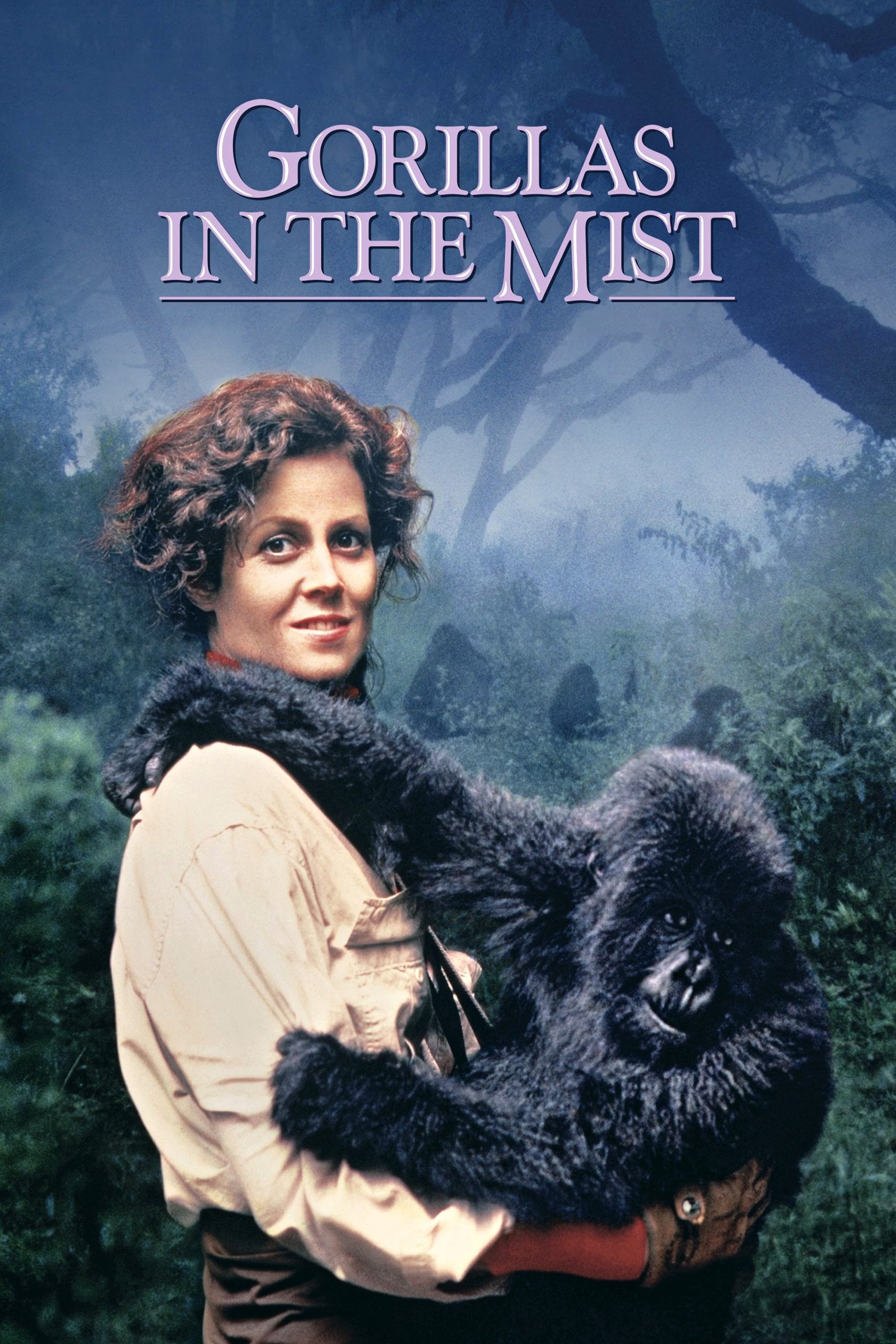
Plot Summary
I remember the first time I watched Michael Apted’s biographical drama about Dian Fossey, and how utterly transported I felt—not just deep into the rain-soaked jungles of Rwanda, but into a life that vibrated with fierce compassion and complicated obsession. The story follows Dian Fossey (played with daunting vulnerability by Sigourney Weaver) as she leaves behind the predictability and comforts of her American life to work directly with mountain gorillas in Central Africa. Driven by her unwavering determination, she battles both the dangers of the wild and the entrenched human forces that threaten the survival of the very creatures she’s devoted herself to understanding.
What struck me about the film’s progression is its subtle layering of tension, not just between humanity and nature, but also inside Dian herself. The film never reduces her to a one-dimensional hero; instead, I saw her wrestling with isolation, her interactions growing more intense as the stakes climb. As the narrative unfurled, a haunting intimacy built between Dian and the gorillas—one that felt fragile, otherworldly, and always at risk. I appreciated how the film balanced stretches of tranquil observation with moments where the dangers from poachers, bureaucratic forces, and personal doubts weighed heavily, propelling the story forward without relying on sensationalism.
Spoiler Warning: While I’ll avoid revealing pivotal events, I will mention that the latter part of the film does not shy away from showing how devotion can tip perilously toward obsession, putting Fossey on a collision course with forces that would not yield to her idealism. For me, these final stretches resonated most powerfully, challenging my own ideas about the costs and consequences of passion-driven activism.
Key Themes & Analysis
Throughout Gorillas in the Mist, I continually came back to the theme of empathy extended beyond the human species. Watching Sigourney Weaver inhabit Fossey’s fierce protectiveness, I found myself believing in the possibility—if not the practicality—of bridging the gulf between humans and animals. Weaver’s performance is stunningly raw: there’s no gloss on her righteous anger or her sometimes abrasive single-mindedness. In her scenes with the gorillas, she radiates a joy and kinship that feels so authentic I occasionally forgot I was watching an actor, not an ethologist at work.
The cinematography, for me, transforms the film into a meditative exploration of both danger and beauty. John Seale’s camera lingers on the misty forests, the dappled light, and the quiet, steady movements of the animals. These visual choices anchor the viewer in Fossey’s perspective, making each moment in the jungle feel tactile and immediate. I think Apted’s direction wisely avoids the usual exoticizing pitfalls; instead of mythologizing Africa, he focuses on the intricate webs of connection and threat that define both animal and human worlds.
I also found a compelling tension in how the film crafts its antagonists. Rather than demonizing just the poachers, it casts a critical gaze on Western bureaucracy, local corruption, and the messy compromises that conservation work entails. Characters like Bryan Brown’s Bob Campbell are more than simple foils—they bring nuance, illustrating how commitment can collapse under the weight of reality. Every time I rewatch, I’m reminded how the film interrogates the ambiguities of activism, especially when driven by a single personality.
Above all, I couldn’t ignore the film’s underlying question: What is the true cost of devotion—to others, to oneself, and to the mission at hand? Watching Fossey’s relationships with humans deteriorate as her love for the gorillas deepens, I felt the film was holding up a mirror to any cause pursued with total, uncompromising intensity. It left me pondering whether true change is ever possible without embracing both idealism and its shadow, disillusionment.
My Thoughts on the Historical & Social Context
Reflecting on Gorillas in the Mist as a product of the late 1980s, I can’t help but see its message as both a product and a critique of its time. The film arrived at a moment when environmental awareness was beginning to permeate the mainstream Western consciousness; the same decade that saw the rise of global campaigns against animal cruelty and habitat destruction. To me, Fossey’s story embodies the era’s urge to personalize environmentalism, to turn advocacy into heroism.
There’s something essential in the way the film translates global environmental discourse into one woman’s stubborn, flawed journey. For contemporary audiences hungry for icons, particularly female ones, Fossey was presented as a kind of activist template—complex, passionate, and quick to anger but doggedly unwilling to back down. Watching the film now, in a world rife with climate grief and renewed calls for indigenous and local voices in conservation, I feel compelled to reevaluate that framing. Does heroic individualism advance the cause, or does it sometimes eclipse collective effort?
I also find it remarkable how relevant the film’s message still feels. Instead of feeling dated, the dilemmas at the heart of Gorillas in the Mist—balancing advocacy with respect for other ways of living, questioning exploitative tourism, and confronting the brutality of poaching—are just as urgent today. The film’s power lies not only in spotlighting the beauty and tragedy of the gorillas’ plight but in challenging me, decades later, to examine my own responsibility in global environmental stewardship. As awareness of ecological interconnectedness grows, the film’s question of what we’re willing to sacrifice remains heartbreakingly unresolved.
Fact Check: Behind the Scenes & Real History
There’s a wealth of behind-the-scenes detail that enhances my appreciation for Gorillas in the Mist. One fact that always stays with me is how the production team chose to film with real mountain gorillas on location in Rwanda’s Volcanoes National Park. Instead of relying on animatronics or staged sets, the filmmakers collaborated with local guides and used real animal behaviorists to help facilitate the unforgettable scenes between Weaver and the gorillas. This resulted in those nearly wordless, breathtaking sequences where Fossey builds trust with the primates, and it’s clear to me that this authenticity can never be faked in a studio.
Another element I find endlessly fascinating is how Sigourney Weaver herself prepared for the role. She didn’t simply read scripts or memorize lines—she immersed herself in Dian Fossey’s writings and journals. The commitment extended to spending real time observing the gorillas up close, replicating some of Fossey’s own techniques for gaining acceptance within ape families. That deep research infuses every gesture and spoken line with a sense of lived experience that I find especially rare in biographical films.
When comparing film and fact, I noticed that while the movie captures much of the essence of Fossey’s struggle, it does compress and alter certain events for dramatic effect. Fossey’s personal relationships, especially with local communities and colleagues, were far more complicated and, at times, more hostile than the film suggests. While the screenplay paints some of her adversaries and allies in broad strokes, the real Dian operated in a much grayer, at times controversial, space. This doesn’t detract from the movie’s emotional truth, but it does remind me that the line between advocacy and antagonism can be thinner than the story sometimes allows.
Why You Should Watch It
- The film offers a singular, immersive encounter with one of the most remarkable conservation stories in modern history, transporting viewers into the heart of the Rwandan wilderness alongside unforgettable animal and human characters.
- Sigourney Weaver’s performance is a masterclass in method acting—her portrayal of Dian Fossey is at once nuanced, passionate, and deeply moving, setting a new benchmark for biographical storytelling.
- The cinematography and location footage provide a rare, intimate look at endangered wildlife; every scene is charged with both wonder and urgency that will move viewers to empathy and reflection.
Review Conclusion
Whenever I think back on my strongest cinematic experiences, Gorillas in the Mist reliably sits near the top. It’s not just because it’s visually enthralling or structurally tight, but because it trusts the audience to grapple with difficult questions about heroism, loss, and the boundaries of our compassion. Watching Weaver’s Dian Fossey struggle, love, and sometimes fail is a reminder that important change always comes with moral complexity. The film’s unwavering focus on environmental activism, matched by its remarkable performances and technical achievements, invites more than admiration—it demands introspection.
This is not the kind of film I can watch passively—each viewing pushes me to confront the costs of advocacy, the ambiguities of intervention, and the pressing need to protect our world’s most vulnerable creatures. For all its imperfections and the places where fact blends with fiction, I believe this movie is essential for anyone who wants to understand not just Dian Fossey’s particular story, but the broader struggle for conservation in the face of indifference and exploitation.
Rating: 4.5/5
Related Reviews
- The Jane Goodall Story (2010, TV Documentary): Watching Gorillas in the Mist always reminds me of how transformative it is to witness real-life primatologists step into the unknown. I recommend this immersive docudrama because, like Apted’s film, it explores the tension between scientific discovery and personal sacrifice. The authenticity and quiet reverence for its subject make it a natural companion, offering a layered perspective on what it takes to build bridges between species.
- The Constant Gardener (2005): While not about wildlife specifically, this John le Carré adaptation gripped me with its lush African landscapes and deeply personal dive into activism and political conflict. Its commitment to showing the costs and compromises of doing good in challenging environments connects thematically and emotionally with Gorillas in the Mist. Both films use stellar performances and location shooting to drive home urgent social commentary without resorting to didacticism.
- Out of Africa (1985): I’m drawn to this film whenever I crave a sweeping love letter to the African continent that doesn’t shy away from exploring the complexities of cross-cultural encounters. Sydney Pollack’s epic shares with Gorillas in the Mist its sense of place, its focus on strong women confronting adversity, and its reverence for the tangled relationship between humans and the wild.
- Grizzly Man (2005): Werner Herzog’s exploration of Timothy Treadwell’s obsessive bond with bears struck me as the spiritual cousin to Fossey’s journey. Both films interrogate the thin line between fascination and fixation—raising probing questions about the risks and responsibilities of trying to live amongst wild animals. The candid, sometimes uncomfortable lens Herzog adopts serves as a counterpoint to Apted’s narrative approach and will intrigue viewers compelled by the psychological dimensions of nature documentaries.
If you want to explore this film beyond basic facts, you may also be interested in how modern audiences respond to it today or whether its story was inspired by real events.
🎬 Check out today's best-selling movies on Amazon!
View Deals on Amazon