
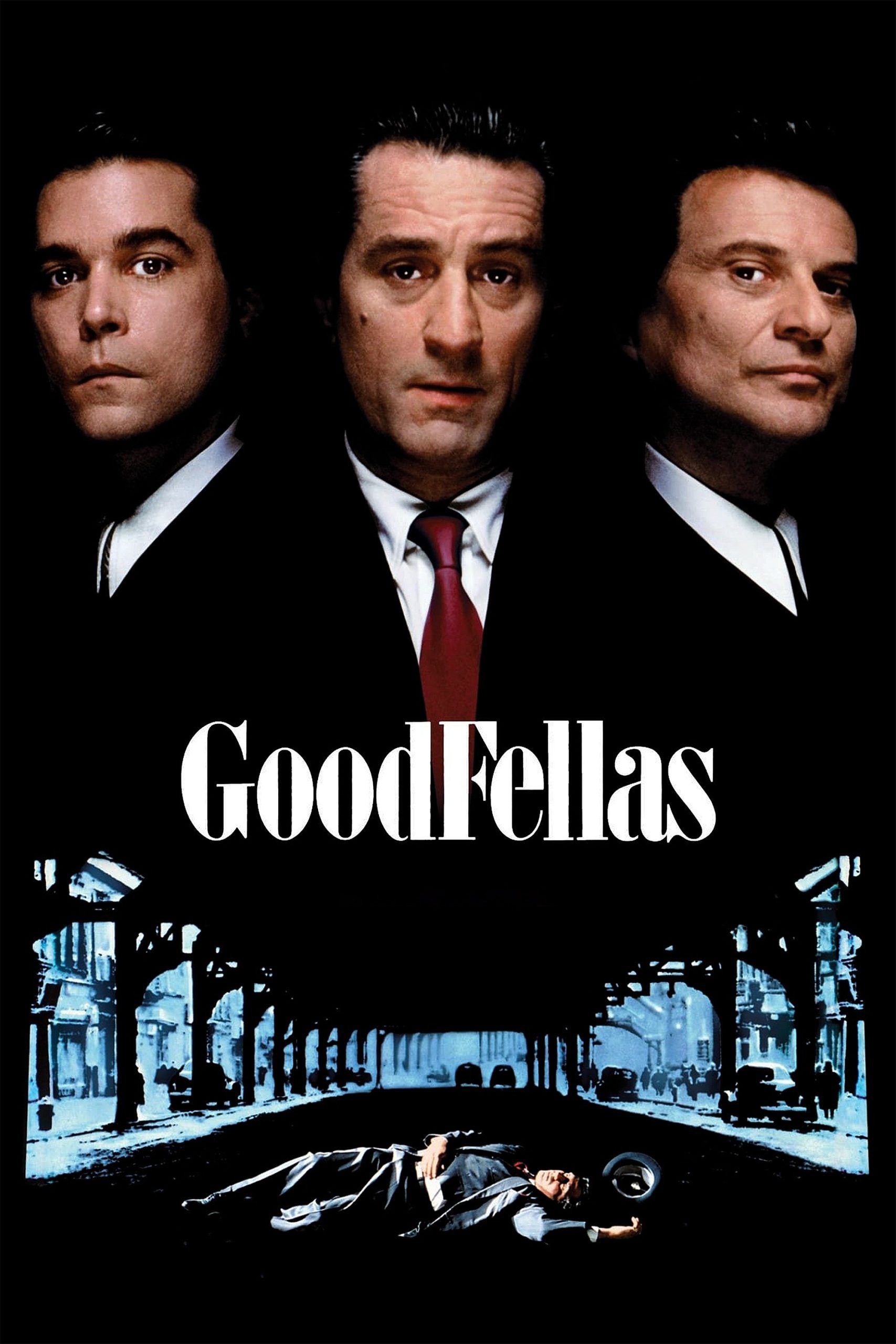
Plot Summary
When I first experienced Goodfellas, what captivated me most wasn’t just the mobsters or the violence — it was the electrifying sensation of being pulled into an entirely different world, one pulsing with danger, moral ambiguity, and a sense of irresistible camaraderie. Martin Scorsese brings the gangster genre to life with such kinetic energy that I found it impossible to look away.
Set in the gritty outskirts of New York, I followed the journey of Henry Hill, a young man lured by the allure of the mafia’s glamour and brotherhood. The way the story unfolds — charting Henry’s evolution from a wide-eyed adolescent to an established player — made me feel like I was peering through a window into a parallel existence, one where the lines between right and wrong blur with dazzling seduction. There’s so much to say about the rhythm of this film: it swings between moments of loyalty and betrayal, indulgence and fear, so fluidly that I found myself empathizing with characters who live well beyond the boundaries of law and order.
Without delving into major spoilers, I will say that the film offers a deeply immersive look at the internal and external perils of a life tethered to organized crime. Each step forward for Henry seems to come with its own price tag. As his friendships and sense of self begin to unravel, the narrative draws us into an unrelenting spiral, full of both exhilaration and tragedy. The first time I watched Goodfellas, what lingered with me wasn’t simply the violence, but the intimacy — the way the film captures the cost of loyalty, ambition, and the intoxicating pull of belonging to something greater than oneself.
Key Themes & Analysis
What always stands out to me about Goodfellas is the film’s unflinching gaze into the seductive heart of organized crime. Unlike so many other gangster tales that romanticize the lifestyle or cast the mob in a heroic shadow, Scorsese exposes the intoxicating joy and the lethal danger in equal measure. He doesn’t judge — he invites. I found myself mesmerized by the luxurious parties, the sense of impunity, and the deeply rooted codes of silence and loyalty; yet, at every turn, I saw the dark undercurrent threatening to pull everyone under.
The cinematography, courtesy of Michael Ballhaus, elevates Scorsese’s approach. The film’s most famous tracking shot — that exhilarating, seemingly endless journey through the Copacabana nightclub — always feels to me like a hallucination, a visual metaphor for how effortlessly these men slip past society’s rules. The camera glides as if intoxicated itself, drenching the viewer in the extravagance and adrenaline of Henry’s world. It’s one of those rare moments in cinema where style and theme become indistinguishable: I feel the rush right alongside the characters.
Scorsese’s direction is relentless. He employs jump cuts and freeze frames to keep me perpetually off balance, accelerating the narrative in ways that echo Henry’s own fragmented psyche. Every gesture and tonal shift, every casual aside from the narrator, builds my uneasy sense of complicity. This effect is heightened by the soundtrack, which stitches together hit after hit from the era. Songs like “Gimme Shelter” and “Layla” aren’t just background noise—they’re seismic pulses that underscore the emotional contradictions in every scene.
For me, the beating heart of Goodfellas lies in the performances. Ray Liotta as Henry is both charismatic and haunted; I could never quite tell whether I should like him, loathe him, or simply fear for his soul. Joe Pesci delivers a performance that is, in my opinion, pure cinematic dynamite—his Tommy DeVito veers from hilarious to terrifying in a heartbeat. Robert De Niro, as Jimmy Conway, radiates quiet menace, making even the simplest gestures feel loaded with implication. Beyond the central trio, the supporting cast (especially Lorraine Bracco as Karen) breathe unpredictable life into the narrative, reminding me that everyone in this world, whether criminal or innocent, must navigate impossible choices.
But what struck me most on rewatching Goodfellas recently was how the film interrogates the American Dream itself. The aspirations for wealth, respect, and power are universal, yet in this context, they become corrupted—achieved through violence and subterfuge, but still deeply understandable. That is its most honest trick: making me recognize facets of myself, my ambitions, and the world I live in—even within such an unforgiving underworld.
My Thoughts on the Cultural Impact & Legacy
Looking back, I realize that few films have left as deep an impression on me as Goodfellas. This movie redefined the vocabulary of the gangster film; it sweeps away old myths and replaces them with brutal, unvarnished reality, punctuated by moments of wit and tenderness. Every time I revisit it, I see its fingerprints all over subsequent crime dramas—from the intimate voiceovers to the ensemble storytelling and the focus on family (both literal and metaphorical).
What made the biggest impact on my appreciation for cinema was the way Goodfellas showed me that a film could be both fiercely entertaining and ruthlessly honest. I saw echoes of its influence in everything from The Sopranos to the works of later directors who dared to blend dark humor, violence, and pathos in unexpected ways. I can still feel how the film’s tightrope walk between horror and absurdity, intimacy and spectacle, reverberates in the genre today.
As a curator and critic, I often reflect on how Scorsese’s choices shaped my standards for what crime cinema could accomplish. Before Goodfellas, gangster films tended to worship power or damn their subjects from a distance. Scorsese’s unwavering empathy, and his insistence on seeing these characters as flawed, searching, and deeply human, is something that still moves me. Whenever I discuss cinematic legacy, I come back to Goodfellas as a watershed — a film that not only reframed my expectations, but also reshaped the landscape, making room for hybrid narratives and moral complexity.
Its enduring resonance comes from how it never lets me forget the cost of its characters’ choices. This is more than a period piece or a slice of pulp fiction; it’s a living testament to the way American mythologies are constructed and destroyed, one lie and dream at a time. For me, that makes Goodfellas not just a great crime film, but an indispensable document of American cinema.
Fascinating Behind-the-Scenes Facts
I’ve always been captivated by the stories that swirl around the making of Goodfellas. A few behind-the-scenes details reveal just how much precision and daring shaped every frame.
1. The Casting of Joe Pesci and the “Funny How?” Scene: I find it incredible that one of the film’s most shocking and memorable scenes—the “Funny how?” exchange—was inspired by a story Joe Pesci experienced personally, working in a restaurant. Scorsese and Pesci decided to improvise large parts of it, telling the rest of the cast to react in real time, without knowing what Pesci would say. That raw unpredictability is what makes the sequence so electric; I can see the actors’ authentic discomfort, and it still raises goosebumps every time I watch.
2. The Legendary Copacabana Tracking Shot: Technically, the three-minute unbroken shot that follows Henry and Karen into the Copacabana wasn’t just a flourish; it was born of necessity. The film crew lost access to the main entrance, and Scorsese devised the now-iconic backdoor route to keep the narrative flow. They rehearsed the choreography meticulously; I admire the logistical wizardry—every movement, every timing of waiters and extras—flows like a living organism, drawing me completely into Henry’s world.
3. Lorraine Bracco’s Preparation: I was fascinated to learn that Lorraine Bracco insisted on meeting the real Karen Hill before filming. Bracco’s research, and her refusal to play Karen as a mere victim, are evident in every beat of her performance. She gives Karen an edge, a hunger, and a vulnerability that add layers to the narrative, reminding me that even the supporting characters are given depth and complexity.
Why You Should Watch It
- It redefines the gangster genre with authenticity, wit, and relentless energy, offering a fresh perspective that transcends cliché.
- The performances—especially by Pesci, Liotta, and De Niro—are unforgettable, delivering raw emotion and complexity rarely seen in crime cinema.
- The direction, cinematography, and soundtrack work together in perfect harmony to immerse you in a world that’s as intoxicating as it is dangerous.
Review Conclusion
When I think of cinematic excellence, I inevitably return to Goodfellas—not because it’s flawless, but because it’s so alive, so vivid, so unwilling to settle for easy answers. Scorsese delivers a masterclass in storytelling: every frame pulses with life, every performance etches itself into my memory. It is a film that demands to be revisited, challenged, reread.
If you care about cinema that dares to unsettle as much as it entertains, I can’t recommend Goodfellas highly enough. For its artistry, honesty, and enduring resonance, I give it 5 out of 5 stars.
Related Reviews
- Carlito’s Way – Brian De Palma’s atmospheric crime drama is, in my mind, the perfect companion to Goodfellas. It delves into the complex psychology of a man trying to escape his criminal past, blending kinetic energy with moral ambiguity that echoes Scorsese’s work.
- Casino – Another electrifying entry from Martin Scorsese, this film explores greed, power, and betrayal within the Las Vegas mob. The sprawling narrative, unflinching violence, and razor-sharp performances make it essential for anyone who was drawn to Goodfellas’ style and substance.
- The Irishman – When I want a more meditative take on crime and loyalty, this recent Scorsese epic offers a reflective, often somber, counterpoint to the feverish pace of Goodfellas, exploring the consequences of a lifetime spent inside the world of organized crime.
- Donnie Brasco – What sets this film apart for me is the emotional conflict at its core—an undercover agent infiltrating the mafia, wrestling with loyalty and identity. It’s gripping, raw, and anchored by powerhouse performances, making it a natural pick for those captivated by Goodfellas.
For readers looking to go deeper, these perspectives may help place the film in a broader context.
🎬 Check out today's best-selling movies on Amazon!
View Deals on Amazon