
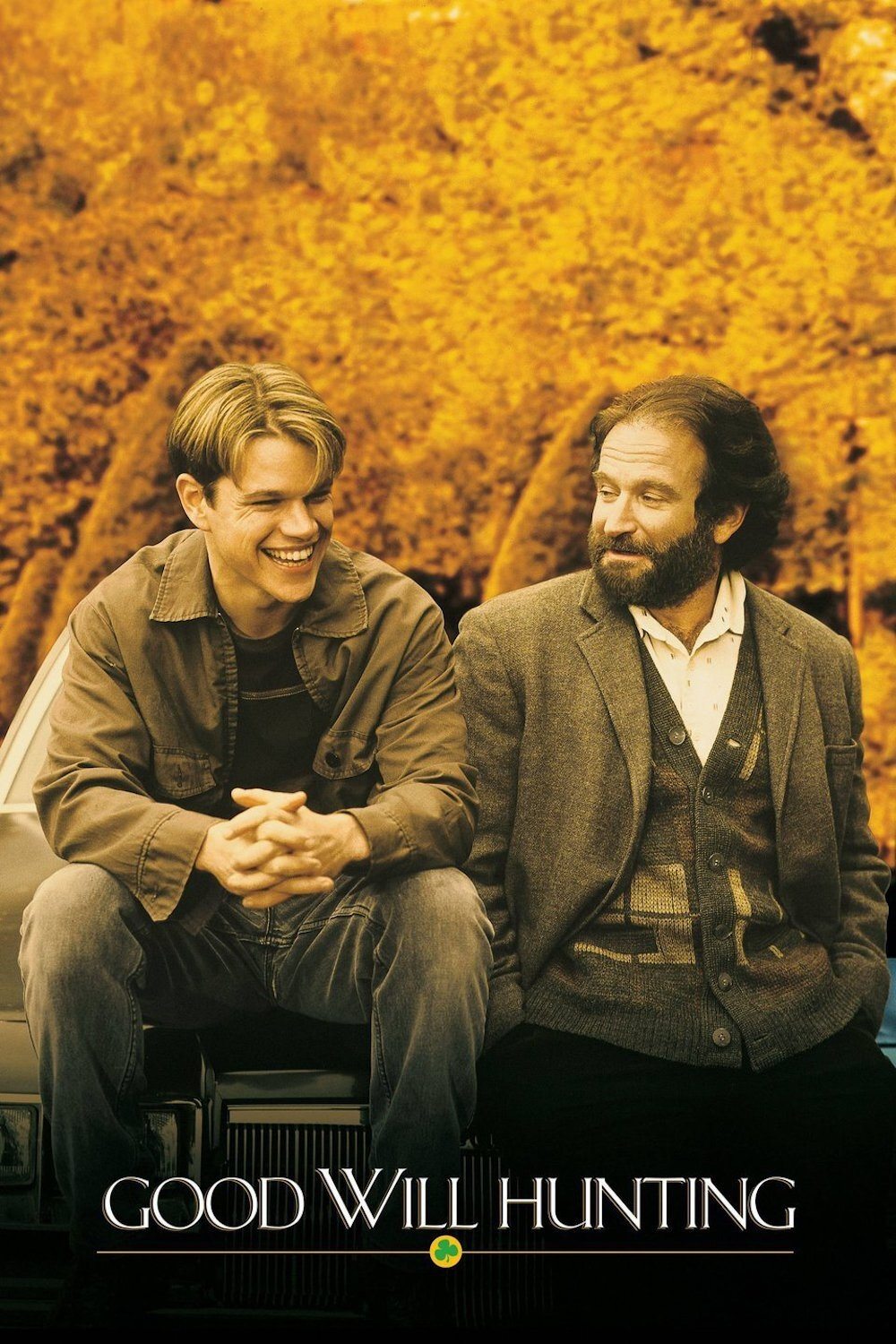
Plot Summary
Looking back, the first time I watched “Good Will Hunting,” I remember feeling an almost physical empathy with the film’s wounded genius, Will. The movie drew me in by making intellect itself feel dangerous and volatile—so unlike the sanitized brainiacs of other, more buttoned-up dramas. Set in late-90s Boston and guided by Gus Van Sant’s understated, soulful direction, the film lives at the charged intersection of class, trauma, and the hunger for connection. As someone who has always been captivated by stories that examine the price of genius, I found myself invested in a world where brilliance could just as easily be a burden as a gift.
At its core, I’d say “Good Will Hunting” is less about solving a math problem than it is about solving the puzzles of the heart. Matt Damon, in a role that still feels like a career-defining leap, becomes Will—a young janitor at MIT who harbors a talent for mathematics that outstrips even the university’s lauded professors. Yet what kept me watching wasn’t the specter of the next big equation or high-IQ twist, but the quiet, almost combative therapy sessions between Will and Robin Williams’ Sean Maguire. The push and pull emotionally between these two men—both scarred, both hiding enormous pain—imbues the film with an earnestness that I rarely see in Hollywood narratives about genius.
While the plot spins out from Will’s explosive confrontation with authority and trauma, it never lets the audience off with easy answers. There’s a romance subplot with Minnie Driver’s Skylar that always struck me as more than a token love story; the uncertainty, the self-sabotage, and the messiness all ring painfully true. Instead of building toward a neatly resolved Hollywood ending, which I won’t spoil here, the film asks the audience to recognize that healing and growth are neither linear nor guaranteed. I admire how it resists the temptation to tie up every loose thread, respecting both its characters and the complexity of real-life transformation.
Key Themes & Analysis
Every time I revisit “Good Will Hunting,” I’m struck by how the film makes emotional vulnerability its most dynamic force. It’s tempting to view it as another entry in the “troubled genius” subgenre, but I see Gus Van Sant’s handling as an almost radical act of empathy. The central theme isn’t the triumph of willpower or intellect. Instead, it’s about how admitting need—and accepting love—is vastly harder than solving advanced calculus or decrying class injustice.
I’ve rarely seen cinematic therapy sessions resonate as powerfully as those between Matt Damon and Robin Williams. Williams, unmooring himself from comedy for a role full of resigned heartbreak, gives Sean Maguire a calming gravity. The chemistry between Damon and Williams is the film’s heartbeat, elevating dialogue that could easily read as contrived in lesser hands. The infamous “It’s not your fault” scene is the axis around which the whole film turns; I still feel the raw ache of that moment, a scene that treats catharsis as something earned rather than granted.
To me, Van Sant’s choices behind the camera are as quietly radical as the script. He keeps Boston alive as a character, lingering on stoops, alleyways, and barrooms to ground the film in a city shaped by its social divides. What hits hardest is the way he frames Will’s isolation—never as mere loneliness, but as aggressive defensiveness stitched into his every gesture. Not once does Van Sant let the film lean into the patronizing tones that so often infect stories about gifted “outsiders”. Instead, the film listens; it absorbs rage, banter, and heartbreak in equal measure.
Another strength is in the supporting performances. Ben Affleck’s Chuckie, for me, is as essential as any supporting character in a coming-of-age story. Chuckie’s ribbing and loyalty are not comic relief, but proof that true friendship is sometimes the scaffolding on which hope is built. Minnie Driver, too, handles Skylar with a charisma that never lets Will off the hook for his emotional cowardice. These aren’t stock characters orbiting the protagonist; they exert genuine gravitational pull.
Above all, what I carry most from the film is the idea that forgiveness—of others, of self—requires not superhuman strength, but the day-to-day courage to show up for a better tomorrow. Genius, in the world of “Good Will Hunting,” is ultimately less important than humanity. Cinematically, it’s a masterclass in restrained storytelling, with Van Sant refusing melodrama in favor of awkward, beautiful truth.
My Thoughts on the Historical & Social Context
Reflecting on 1997 when this film debuted, I see how it emerged right as Hollywood was rediscovering gritty, intimate drama. The late-‘90s felt, culturally, like an era on a precipice—before cynicism fully consumed blockbuster filmmaking and just as indie films were finding serious mainstream traction. For me, “Good Will Hunting” resonates as a film deeply aware of its class politics. It captures a blue-collar Boston that was underrepresented in the slick cinema of its time, serving both as homage and critique.
From my vantage point, the story’s skepticism of authority and the tension between institutional power (universities, psychiatrists, the elite) and lived experience still ring true today. Even now, I see so many young people—especially those navigating their own trauma—struggling to reconcile their gifts with systems that value compliance over growth. In that sense, the film’s emphasis on therapy as not just healing, but liberation, feels ahead of its time. It’s striking, too, how mental health is addressed with a rawness and seriousness that few mainstream films had attempted before. To me, that sets it apart even as we continue to ask how class, trauma, and talent intersect in contemporary society.
I doubt a story like Will’s would be told quite the same way in today’s landscape, not simply because of the changing politics of representation, but because audiences now tend to expect more explicit interrogations of race and privilege. The film’s focus is narrow—almost myopic—in its privileged view of masculinity and pain, but at the time, it felt like a revelation. I continue to return to it for that very reason: for the questions, not the answers.
Fact Check: Behind the Scenes & Real History
There’s something about “Good Will Hunting” that still feels miraculous, considering its improbable journey to the screen. From my own research, I learned that Matt Damon and Ben Affleck wrote the initial screenplay in their early twenties, essentially as a gamble to launch their own acting careers. The process itself was arduous—at one point, I discovered that production studios tried to pressure the duo into changing the story’s fabric, even suggesting a shift into an over-the-top thriller. The final product is proof that creative control in the hands of passionate, invested artists can lead to something rare and authentic.
Another fascinating detail I came across involves Robin Williams’ casting. I always found it poetic that Williams was not the first choice for Sean Maguire; the role was initially considered for stars like Morgan Freeman and even Robert De Niro. But Williams, with his profound ability to combine levity and gravitas, transformed Sean into the film’s emotional lodestone. I can’t imagine anyone else delivering lines like “It’s not your fault” with such aching sincerity.
On the production side, one of the most enchanting things I learned was how the Massachusetts locations gave the film its backbone. Many scenes were shot in real South Boston neighborhoods, not the scrubbed sets of California. That’s why, to me, every street corner and dive bar feels alive. You can sense, in the film’s grainy late-90s palette, a texture that can’t be faked by production design alone.
Why You Should Watch It
- You’ll encounter film performances—in particular from Matt Damon and Robin Williams—that remind you why acting can matter so deeply.
- If you crave stories that weigh intellect against emotional survival, this film balances head and heart with extraordinary depth.
- The film’s honest exploration of trauma, friendship, and found family is both moving and enduring, offering comfort and challenge in equal measure.
Review Conclusion
I’ve returned to “Good Will Hunting” many times, and every viewing leaves me a little humbled and a bit more hopeful. The film succeeds not because it solves the mystery of genius or trauma, but because it sits quietly with the messiness of both. This is a rare drama where the greatest victories are measured in tears shed, walls broken, and the smallest risks taken for love or self-acceptance. If you care about movies that pay more attention to wounds than to wins, this is as good as it gets. My final verdict: 4.5/5 stars.
Related Reviews
- “A Beautiful Mind” (2001) – Like “Good Will Hunting,” this film explores the intersection of genius and psychological struggle. I see it as a kindred spirit in its focus on the triumphs and tragedies of the mind, delving into the cost of brilliance and the necessity of support.
- “Dead Poets Society” (1989) – Robin Williams delivers another unforgettable performance here. If you’re moved by films that champion vulnerability and mentorship, this one poetically parallels the teacher-student dynamic at the heart of “Good Will Hunting.”
- “Ordinary People” (1980) – For those who crave honest depictions of therapy and family trauma, this film’s direct emotional approach and restrained direction evoke a similar atmosphere to what I admire in Van Sant’s film.
- “Manchester by the Sea” (2016) – This drama resonates with me as a modern successor—both are New England-set films that refuse sentimental platitudes in examining grief, guilt, and masculine vulnerability.
If you want to explore this film beyond basic facts, you may also be interested in how modern audiences respond to it today or whether its story was inspired by real events.
🎬 Check out today's best-selling movies on Amazon!
View Deals on Amazon