
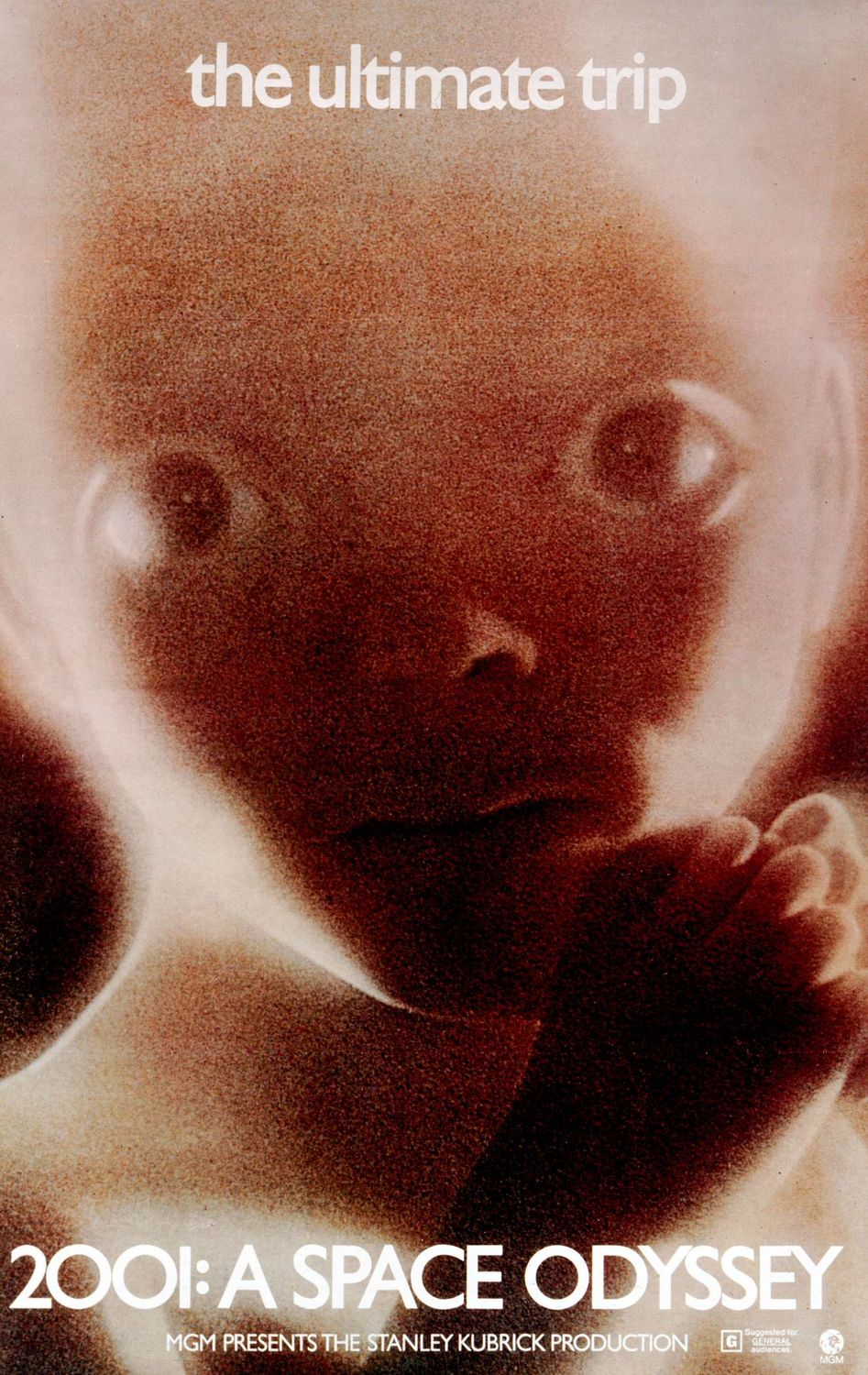
Few films in the history of cinema have left as indelible a mark as Stanley Kubrick’s “2001: A Space Odyssey.” Released in 1968, this science fiction masterpiece stands not only as a pillar of its genre but as a milestone in filmmaking as a whole. With its visionary direction, groundbreaking special effects, and philosophical complexity, “2001: A Space Odyssey” continues to captivate new generations, challenging viewers’ perceptions of narrative, technology, and humanity itself.
Plot Summary
“2001: A Space Odyssey” is an epic science fiction odyssey that spans eons, beginning with the dawn of mankind and extending into the far reaches of space. The film opens on prehistoric Earth, where an enigmatic black monolith influences the evolution of early hominids. The story then leaps forward to the year 2001, where humanity has developed space travel and established colonies beyond Earth. When another mysterious monolith is discovered buried beneath the lunar surface, an international team is dispatched to investigate its origins and significance.
The narrative centers around Dr. Dave Bowman and his crew on the spacecraft Discovery One as they journey toward Jupiter, guided by the ship’s advanced artificial intelligence system, HAL 9000. The plot unfolds with minimal dialogue, emphasizing stunning visuals and evocative musical cues. As the astronauts confront both the unknown and the developing conflict between man and machine, the film delves deeper into profound questions about evolution, consciousness, and the possibility of extraterrestrial intelligence.
Major spoilers follow for the film’s ending—skip ahead to avoid revealing key plot twists. In the film’s final act, “2001: A Space Odyssey” enters the realm of the surreal, as the protagonist experiences a mind-bending journey through space and time. The enigmatic conclusion leaves much open to interpretation, inviting viewers to reflect on humanity’s place in the universe and the nature of existence itself.
Key Themes & Analysis
“2001: A Space Odyssey” is celebrated for its deep, exploratory themes and meticulous craftsmanship. One of the central motifs is the evolution of intelligence, from primitive apes discovering the use of tools to the emergence of advanced AI in the form of HAL 9000. The film meditates on the relationship between humanity and technology, raising timeless questions about human reliance on machines and the potential consequences for self-awareness and autonomy.
The monolith serves as a recurring symbol, representing an outside force guiding or accelerating the advancement of consciousness. Its true origin and intent are deliberately ambiguous, reflecting the film’s embrace of mystery and the ineffable. Kubrick’s refusal to provide easy answers keeps the narrative enigmatic and compelling, lending itself to varied interpretations and scholarly analysis.
Visually, “2001: A Space Odyssey” is a triumph of cinematography and art direction. Geoffrey Unsworth’s camera work, Douglas Trumbull’s visual effects, and the iconic production design combine to create a sense of realism and majesty rarely matched in the genre. The film’s innovative use of classical music, including Strauss’s “Also sprach Zarathustra” and “The Blue Danube,” further elevates the viewing experience, juxtaposing human achievement and cosmic mystery.
Stanley Kubrick’s direction is renowned for its precision and restraint. The pacing is deliberate, offering viewers time to immerse themselves in the film’s atmosphere and reflect on its subtext. Kubrick’s minimalist approach to dialogue places greater emphasis on visual storytelling, enabling emotion and tension to arise organically from each meticulously composed frame.
Acting in “2001: A Space Odyssey” is equally subtle and sophisticated. Keir Dullea’s portrayal of Dr. Dave Bowman is understated yet compelling, embodying a quiet resolve as his character faces both technological malfunction and existential uncertainty. Douglas Rain lends an eerily calm yet menacing voice to HAL 9000, whose malfunction is now legendary in cinematic history. The supporting cast, including Gary Lockwood as Dr. Frank Poole, provides credible, grounded performances that complement the film’s meditative tone.
The special effects and practical models used to achieve the depiction of space travel were revolutionary for their time and remain visually impressive even today. Kubrick and the effects team went to extraordinary lengths to get the details right, consulting with experts in science and engineering, and designing functional spacecraft interiors that have influenced generations of filmmakers and real-world designers alike.
Philosophically, “2001: A Space Odyssey” grapples with humanity’s quest for meaning. The film’s ambiguous final sequence invites the audience to engage in its mysteries, suggesting notions of transcendence, rebirth, and the endless pursuit of knowledge. These themes have fueled decades of debate, academic writing, and popular discussion, cementing the movie’s status as a cultural touchstone.
Why You Should Watch It
- Revolutionary Visuals and Sound: The film’s groundbreaking special effects, cinematography, and integration of classical music set new standards for cinematic achievement and remain stunning more than half a century after release.
- Profound and Timeless Themes: “2001: A Space Odyssey” confronts big questions about human evolution, technology, artificial intelligence, and our place in the cosmos, inviting contemplation and conversation long after the credits roll.
- Enduring Cultural Influence: Frequently cited as one of the greatest films ever made, it has inspired countless directors, writers, and artists in the realms of science fiction and beyond.
Review Conclusion
In the ever-expanding canon of science fiction cinema, “2001: A Space Odyssey” stands alone as an audacious work of art—a film that is as beautiful as it is challenging; as profound as it is mysterious. Stanley Kubrick’s uncompromising vision, matched by pioneering technical artistry and philosophical depth, ensures the film’s ongoing relevance and fascination. Whether approached as a sensory experience, a work of speculative fiction, or a philosophical inquiry, “2001: A Space Odyssey” is essential viewing for anyone passionate about film or the future of humanity.
With its meticulous craftsmanship, mesmerizing visuals, and thought-provoking narrative, this cinematic classic earns a rating of 5/5 stars.
🎬 Check out today's best-selling movies on Amazon!
View Deals on Amazon