
Plot Summary
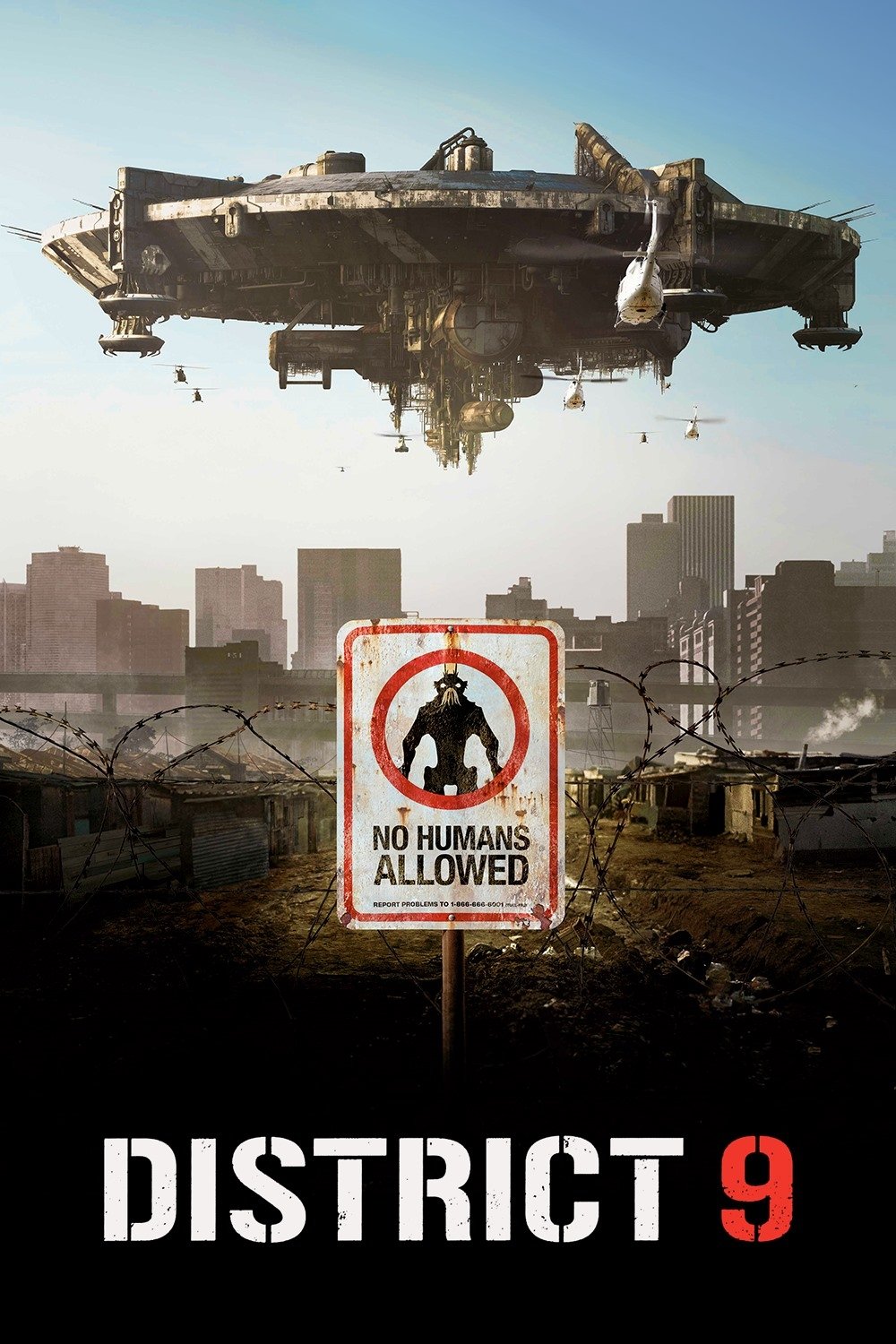
When I first watched District 9, the film’s jolting marriage of gritty science fiction and political allegory immediately struck me as something entirely unique. This isn’t just another movie about aliens landing on Earth; instead, it plunges the viewer into the uneasy heart of Johannesburg, where extraterrestrial refugees have become marginalized outsiders. The story centers on Wikus van de Merwe, whose rise and fall become a lens for the audience to experience the fraught relationship between humans and the so-called “prawns.” The narrative uses a faux-documentary style, amplifying the sense that I was witnessing a disturbing slice of reality rather than fiction.
Without delving into major spoilers, suffice it to say that the plot unravels in an unexpected, often wrenching direction. I appreciated the way the film manipulates its structure: blending news footage, surveillance videos, and handheld camerawork, it establishes a sense of authenticity rarely found in the genre. As I followed Wikus’ journey from bureaucratic compliance officer to fugitive, I was continually surprised by how the film balanced action, dark humor, and poignant moments of empathy. The allegory is not subtle, but it’s impactful—if you want to avoid detailed spoilers, you should stop reading here, since what follows touches on some of the film’s most memorable turns.
Key Themes & Analysis
For me, the most powerful aspect of District 9 is its exploration of systemic oppression, xenophobia, and the dehumanization of “the other”. Unlike traditional alien invasion tales, the aliens here are not cosmic conquerors but marooned refugees, depicted as refugees who live in squalid camps, their every move policed and regulated. I was instantly reminded of South Africa’s apartheid history, and director Neill Blomkamp doesn’t shy away from drawing those parallels. The social hierarchy, the casual violence, and the derogatory language all mirrored real forms of institutionalized prejudice.
The cinematography is something I return to every time I reminisce about the film. Blomkamp’s stylistic choices drew me in with their raw dynamism: shaky handheld shots and mock-interviews grant the film a kind of documentary veracity, while wide shots of the decaying slum juxtaposed with corporate compounds reinforce the sharp class divisions at play. I found the visual effects seamless, particularly in how they integrate the aliens into the tactile, dirty world of Johannesburg. The transformation scenes—body horror interwoven with emotional unraveling—are among the most memorable uses of practical and digital effects in any science fiction film.
As for the performances, I was blown away by Sharlto Copley’s portrayal of Wikus. Copley manages to evoke both revulsion and deep sympathy from the viewer, an impressive feat given the character’s initial complicity in the regime’s abusive practices. The film’s ensemble enhances the realism; nobody feels like a caricature, even the secondary antagonists. I appreciated how the film keeps its focus intimate, mostly following Wikus, so that when the story pivots into full-throttle action, it doesn’t lose the emotional weight that makes the drama resonate. Now, years after its release, I continue to find the film’s blend of genre thrills and pointed social commentary both rare and rewarding.
My Thoughts on the Historical & Social Context
When District 9 debuted in 2009, the world was still grappling with the aftershocks of global migration crises and persistent debates about identity, borders, and belonging. For me, the film’s backdrop—post-apartheid South Africa—was far from an arbitrary setting. I was acutely aware of how Blomkamp harnessed the deep scars of the nation’s segregated past to comment on the dangers of institutionalized “othering.” The depiction of violence and bureaucracy in the film didn’t feel like fantasy. Instead, these elements recalled real-world accounts of forced relocations and systemic abuse.
What strikes me even more deeply today is how the film’s themes remain distressingly relevant. Watching the news, I see echoes of District 9 in refugee camps, urban segregation, and governments treating migrants as mere problems to be solved. The film provokes discomfort and demands that viewers consider their own complicity in a system that alienates and dehumanizes. I remember discussing District 9 with friends when it first came out; it sparked conversations about race, empathy, and the failures of bureaucracy—subjects we continue to wrestle with. For me, the most potent message is the reminder that those we label as “aliens” or “outsiders” are more like us than not, a call to empathy that I can’t shake.
This film’s enduring impact lies in its timing and its refusal to let viewers look away from uncomfortable truths. I believe its relevance has only intensified as global attitudes toward migration and refugees have hardened in the years since its release. Even now, I find myself reflecting on the lines District 9 draws between fear, ignorance, and the politics of survival—a testament to how well it has aged and how much it still asks of its audience.
Fact Check: Behind the Scenes & Real History
One of the most fascinating discoveries I made when researching District 9 is that the project actually began as an expansion of Neill Blomkamp’s earlier short film, “Alive in Joburg.” In that raw, experimental piece, Blomkamp toyed with the documentary style and themes that would become central to the feature-length version. I find it remarkable how the director’s own experiences growing up during apartheid informed the grim authenticity of the film’s world. The production team transformed the film’s setting by shooting in actual impoverished neighborhoods of Johannesburg—a move that proved essential for the sense of realism I felt throughout the movie.
What surprised me even more was the film’s casting history. Sharlto Copley, who gave such a nuanced performance as Wikus, had never acted in a feature film before. In fact, he was primarily a producer and friend of Blomkamp’s, who initially helped with test footage. Seeing Copley’s turn as both a bumbling bureaucrat and a desperate survivor adds an authenticity I rarely see with established actors. This unexpected casting choice, to my mind, is one of the reasons the film feels so grounded and unpredictable.
I also learned that District 9’s visual effects team at Weta Digital developed entirely new techniques to blend live-action and CGI elements, especially in creating the aliens’ expressive faces. These innovations are part of why the movie looks as convincing now as it did in 2009. The tactile detail in the “prawn” design and their seamless interaction with practical environments made me forget I was watching digital creations—a technical achievement that elevates the movie above many of its big-budget contemporaries.
Why You Should Watch It
- It challenges science fiction conventions by offering a gritty, socially conscious alternative to typical alien invasion narratives.
- The performances and visual effects deliver an emotional punch, making the story feel urgent and unsettling.
- The film’s commentary on xenophobia and institutional violence remains more relevant now than ever, sparking conversation and self-reflection.
Review Conclusion
Whenever I revisit District 9, I’m struck anew by its refusal to give easy answers. The film’s blend of urgent social critique, pulse-pounding action, and raw emotional storytelling makes it a standout in modern science fiction. I believe it’s a must-see for any viewer interested in cinema as both entertainment and a vehicle for larger questions about humanity. While not an easy watch, its lasting impact, coupled with a groundbreaking central performance and technical innovation, secure it a special place in my list of recommendations. My rating: 4.5/5 stars.
Related Reviews
- Children of Men (2006) – When I think of films that, like District 9, use the speculative genre to tackle the politics of immigration and the decay of society, Alfonso Cuarón’s dystopian masterwork immediately comes to mind. Both films marry documentary-like realism with urgent allegory, pushing me to reflect on empathy and the value of life at society’s margins.
- The Host (2006) – Bong Joon-ho’s creature feature trades South Africa’s post-apartheid landscapes for contemporary South Korea, but the underlying critique of governmental failure and prejudiced scapegoating resonates with me in a way that’s directly comparable to District 9’s themes and tone.
- Attack the Block (2011) – This British sci-fi thriller shares District 9’s blend of gritty urban setting, unconventional heroes, and alien threats. I recommend it for anyone who appreciated how District 9 mixed social realities with exhilarating, subversive genre filmmaking.
- Elysium (2013) – Another Neill Blomkamp project, Elysium similarly confronts themes of class division and exclusion using a near-future sci-fi landscape. While more conventional in its action beats, I find it an ideal follow-up for fans who want to continue exploring these ethical and societal dilemmas.
If you want to explore this film beyond basic facts, you may also be interested in how modern audiences respond to it today or whether its story was inspired by real events.
🎬 Check out today's best-selling movies on Amazon!
View Deals on Amazon