
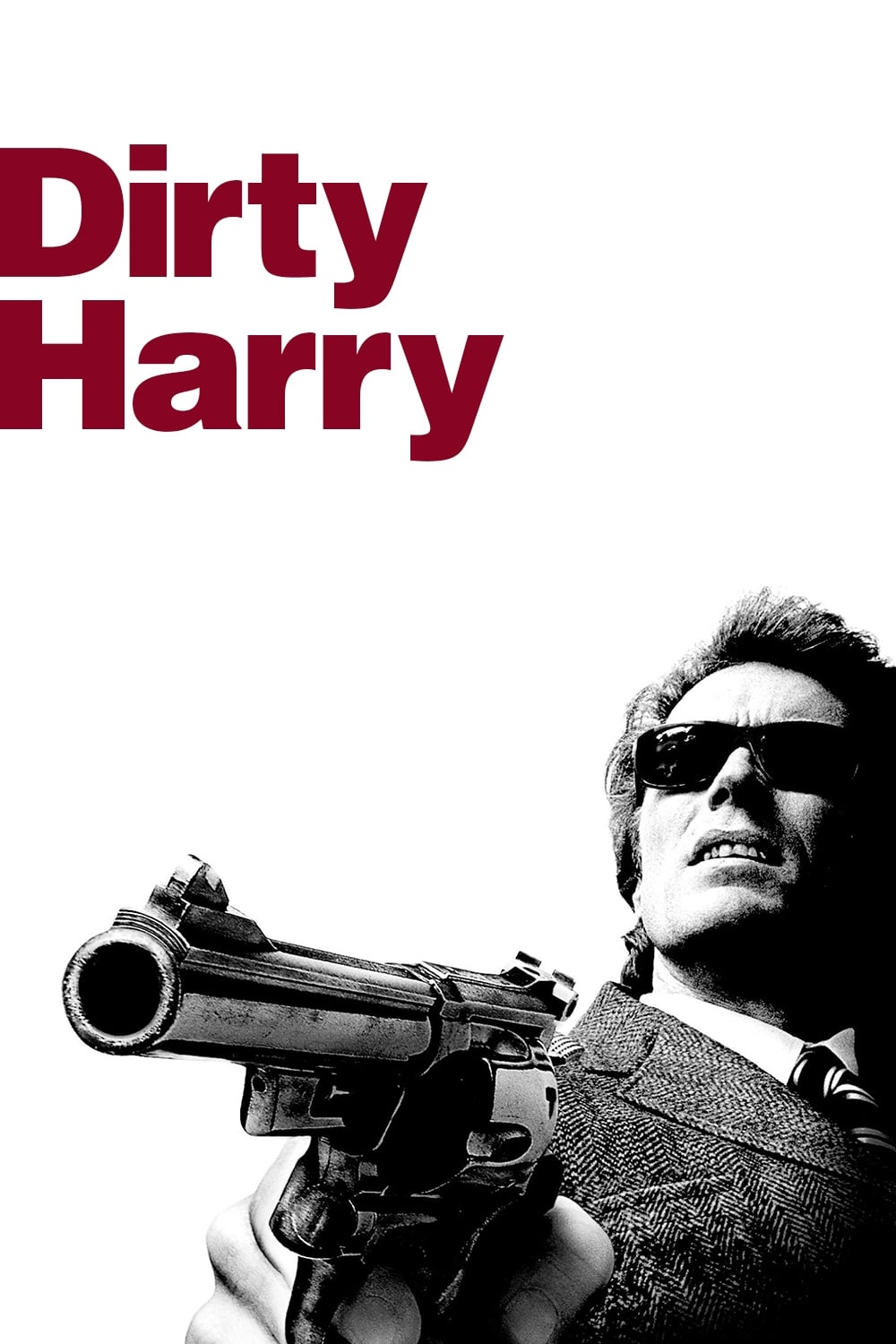
Plot Summary
Every time I sit down to revisit Dirty Harry, I feel as though I’m honing in on a piece of my own cinematic education. Directed by Don Siegel and championing the urban crime thriller as a gritty, unvarnished mirror to 1970s America, this film is less a whodunit and more a concentrated shot of societal anxiety. I’m drawn in not by the promise of a twist, but by the way the story grabs the era’s unease and doesn’t let go.
If you haven’t encountered Harry Callahan before, you’re in for an uncompromising ride. The film jumps directly into the aftermath of a sniper attack that rocks San Francisco, and from that grim starting pistol, it rarely eases up on its momentum. I was instantly propelled into an atmosphere where everything feels on edge: from the bustling cityscapes to the harried police headquarters, the sense of urgency is ever-present. What stands out to me most is how the narrative wastes no time situating us inside Callahan’s mind. The movie tracks his relentless pursuit of a sadistic serial killer who calls himself ‘Scorpio’, but what fascinated me wasn’t just the chase—it was the moral quicksand lurking beneath every decision Harry makes.
If you’re venturing into major spoilers territory, beware from here: the film’s biggest turning point for me wasn’t a plot twist, but a personal one—watching Callahan weighing the brutality of justice against the shackles of due process. Every time I get to that iconic confrontation on the football field, the power dynamic between hunter and hunted blurs in such a raw way, I catch myself asking, “What would I do, in his shoes?” It’s not the serial killer’s fate, but the *after*—the fallout, the resignation—where the real story hits home. That, for me, is the reason Dirty Harry’s plot still hooks me emotionally after all these years.
Key Themes & Analysis
Beyond the chase, what truly captivates me about Dirty Harry is its laser-focus on the question: How far can a society bend its own rules before breaking them—and itself—in the name of justice? Through my lens, this film is one of the first to plant a police officer at the epicenter of that ethical storm. Harry Callahan isn’t a classic hero. Instead, I see him as a vessel for audience discomfort, a man trapped in a system that’s as flawed as the villains it creates.
Sitting through each scene, I’m struck by Clint Eastwood’s controlled intensity. Every twitch of his mouth, every squint, is meticulously modulated. He doesn’t need lengthy dialogue to communicate where Harry stands; a simple stare communicates volumes. I’m always impressed by the way Eastwood internalizes rage and frustration. His line deliveries—especially the legendary “Do you feel lucky, punk?” moment—are so embedded in pop culture that it’s easy to forget they’re rooted in a real vulnerability simmering beneath the surface. For me, Eastwood’s performance blurs the line between myth and man, making Harry Callahan both larger-than-life and tragically human.
When I assess Don Siegel’s direction, I’m repeatedly drawn to his ability to evoke a palpable mood with minimal excess. There’s nothing glossy about his version of San Francisco—it’s a living, breathing city with grunge under its nails. Entrenched in jagged editing and shadow-soaked camera work, almost every wide shot makes me feel as if I’m peering into an exposed nerve of urban America. The cinematography, led by Bruce Surtees, captures daylight and darkness with equal brutality. On multiple viewings, I find myself fascinated by the use of reflection—camera angles that turn windows and water into distorted mirrors of the city’s fractured psyche. It is through these choices that I’m reminded how world-building is less about grand sets and more about the slow build-up of anxiety through subtle, persistent detail.
But what really hooks me intellectually are the clash of themes: individualism versus bureaucracy, retribution versus justice, and the thin line between heroism and vigilantism. Siegel doesn’t offer easy answers. Instead, he tosses both the character and the audience into a moral maze, giving us no clear way out. This ambiguity is what makes me return again and again. There’s a psychological heft in seeing a protagonist who’s willing—sometimes too willing—to cross ethical lines. I find myself gripped by what’s unspoken: the film’s confidence in letting silence, stares, and the city’s own chaos say what words cannot.
Lastly, I can’t ignore the score by Lalo Schifrin. The upbeat jazz-funk undercurrents are deceptive edges. I always feel a jolt of tension riding beneath the melodies, as if the city itself is never at rest. The music isn’t just background; it’s the pulse of the narrative, reminding me of the ever-present risk of urban anarchy right on the surface.
My Thoughts on the Cultural Impact & Legacy
What struck me most as I grew into my role as a film curator is how Dirty Harry carved out a new voice in cinema’s exploration of justice. It’s not hyperbole when I say that modern crime thrillers are built on its bones. Watching it now, the film’s willingness to question the validity and cost of hardline policing hits even harder. I’ve noticed how many later films—think Serpico, Heat, or even The Dark Knight—echo its DNA, especially in the way they handle antiheroes and the cost of their choices.
Personally, I find myself wrestling with its legacy. On one hand, Harry Callahan is an icon—tough, smirking, unwilling to back down. On the other, I’m constantly aware of how his approach has fueled polarizing debates about police overreach and the morality of ends justifying means. What lingers with me is the film’s sheer boldness: at a time when American cinema was redefining itself, Dirty Harry forced audiences to look unflinchingly at social rot, bureaucracy, and the ambiguous nature of heroism. That challenge still resonates with me. Whenever conversations arise about “gritty realism” in movies today, I recall how this film stripped away the superhero facade and left us with a deeply flawed man—who sometimes stumbles into being a hero by being the last one willing to act.
From my perspective, the movie’s influence extends not only through narrative tropes, but also through its visual and tonal choices. That shadowy, lived-in cityscape is a texture I still look for in crime dramas. Moreover, it set a standard for discussing uncomfortable truths through mainstream entertainment, inviting viewers (including me) to hold their own values up to a harsh light. That invitation to self-examination is what I value most—inwardly and outwardly, Dirty Harry changed the shape of the modern movie cop, and by extension, challenged me to reconsider what justice means on the screen.
Fascinating Behind-the-Scenes Facts
One of my favorite aspects of digging into Dirty Harry is uncovering the layered, surprising production stories hidden beneath the film’s gruff surface.
First, the casting journey for Harry Callahan was a saga in itself. Multiple A-list actors—including Frank Sinatra, Steve McQueen, and Paul Newman—were approached before Clint Eastwood ultimately landed the role. The thought of Sinatra wielding the iconic .44 Magnum is both bizarre and fascinating to me, but what hooks me further is how Eastwood didn’t merely slide into the role: he insisted on a leaner script and greater realism, directly shaping the character’s famously economical dialogue. That actor-to-character interplay makes every line he delivers all the more resonant for me.
Another gem I came across was the technical challenge of filming Scorpio’s rooftop sniper scenes. San Francisco’s unpredictable weather and tight city regulations meant that production regularly had to adapt on the fly. The rooftop sequences, which feel so immediate and dangerous on screen, were staged during treacherous night shoots—often with real bystanders just out of frame, unaware a movie was even being filmed. For me, this rawness is felt in every shadowy corner; I sense the production’s tension feeding directly into the final cut.
Lastly, I’m always impressed by the influence of Don Siegel’s directorial choices on future action cinema. For example, the way he employed handheld cameras during action sequences and chase scenes set a new bar for urban realism. To me, these techniques are why the movie still feels urgent and immersive decades later—like you’re right there on the streets with Harry.
Why You Should Watch It
- It’s a masterclass in using genre thrills to explore deep societal anxieties—every action beat carries psychological weight.
- Clint Eastwood delivers a career-defining performance, blending stoicism and fury in a way that reshaped the cinematic antihero.
- The film’s legacy is undeniable; understanding where today’s gritty thrillers come from means grasping the seismic impact set in motion by Dirty Harry.
Review Conclusion
After countless viewings and personal reflections, I can’t help but circle back to the lasting impression Dirty Harry has left on me—not just as a film fan, but as someone who curates, analyzes, and teaches cinema. It’s a rare thriller that ignites both my adrenaline and my ethical compass. The questions it asks may be uncomfortable, and its themes are far from simple, but in that messiness lies its brilliance. For its relentless tension, iconic central performance, and genre-defining style, I rate Dirty Harry 4.5 out of 5 stars. There’s always something new to wrestle with, and every revisit feels as provocative as the first.
Related Reviews
- The French Connection (1971) – I always draw comparisons between Dirty Harry and this gritty urban crime drama, which dives into the moral ambiguities of law enforcement and features equally relentless pacing and a raw, kinetic approach to the city as a battleground.
- Heat (1995) – Michael Mann’s crime epic explores obsession from both sides of the law, and I find it a fascinating evolution of Dirty Harry’s themes of haunted individualism, moral complexity, and the psychological cost of justice.
- Zodiac (2007) – David Fincher’s take on a San Francisco serial killer isn’t just a spiritual successor in terms of setting. Its analytical approach to investigation, obsession, and public anxiety mirrors what first gripped me in Dirty Harry, but with a modern lens.
- Lethal Weapon (1987) – For a more playful, but still subversive, twist on the cop genre, Lethal Weapon owes much to Dirty Harry’s mixing of vulnerability and bravado, making it both a tribute and a critique of earlier tough-guy archetypes.
For readers looking to go deeper, these perspectives may help place the film in a broader context.
🎬 Check out today's best-selling movies on Amazon!
View Deals on Amazon