
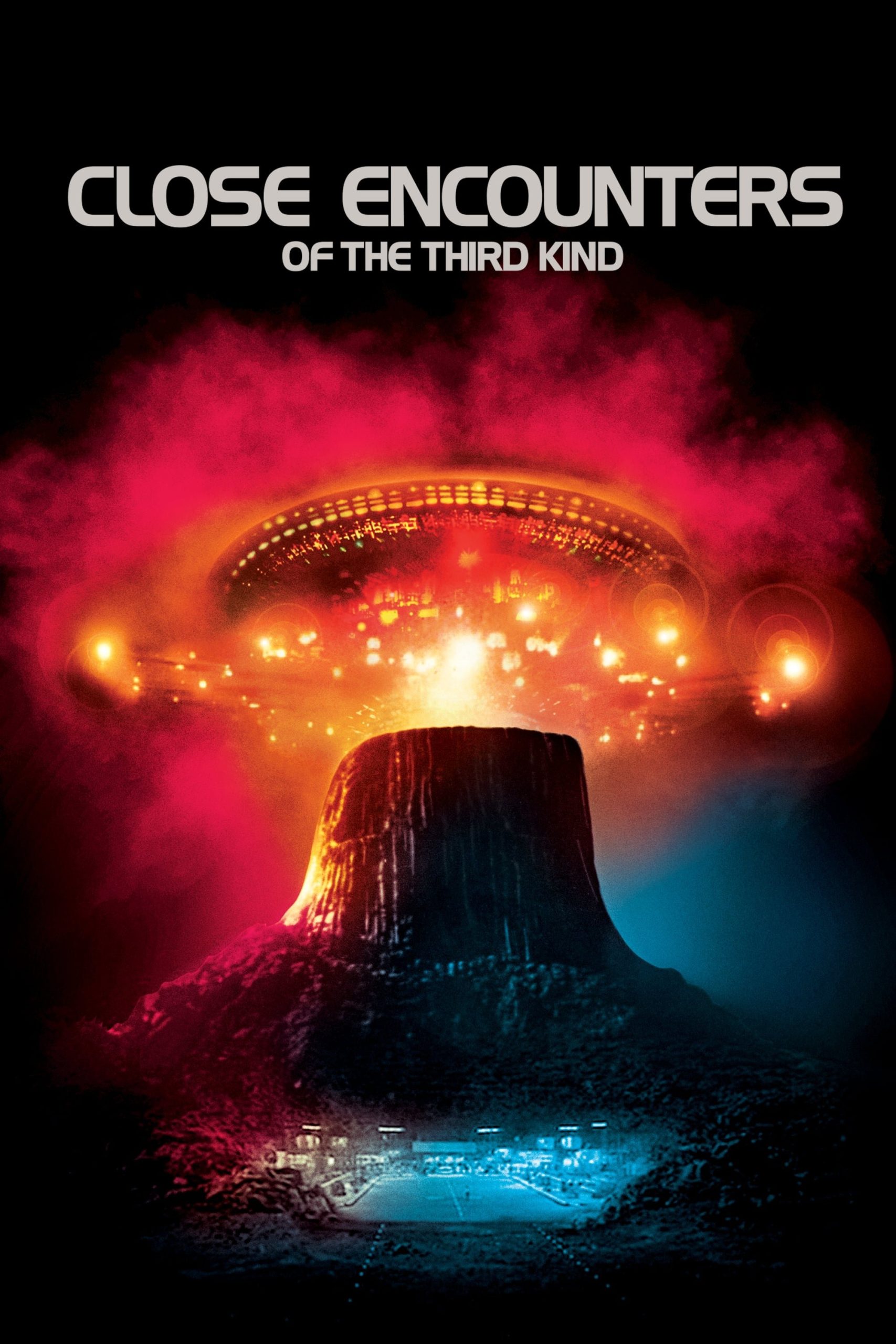
Plot Summary
Every time I revisit Close Encounters of the Third Kind, I’m pulled back into the spell of pure cinematic wonder—a quality I rarely experience in science fiction anymore. Directed by Steven Spielberg, a filmmaker whose name itself is synonymous with awe and blockbuster scale, this film immerses me in a world where the ordinary collides with the inexplicable. The tale unfolds with a sudden and inexplicable power outage in rural Indiana, and everything familiar starts to warp. I watch as Roy Neary, an everyman utility worker, becomes obsessed after a strange, blinding encounter with a UFO. He isn’t alone; scattered throughout the globe, ordinary people are haunted by mysterious visions, harmonies, and compulsions. Though I won’t reveal the bigger reveals that the film so patiently builds toward, I can say that the plot is far less about aliens themselves and more about the transformations they cause within human lives.
What continually fascinates me is how Spielberg takes a potentially pulpy subject—alien visitation—and treats it not as a threat, but as a profound invitation. The escalating events around Roy and other witnesses never descend into mere spectacle or horror. Instead, the story gently—but insistently—draws them (and me as the viewer) toward an ultimate meeting that feels less like an invasion, more like a search for understanding. The film’s tension simmers not in the fear of what aliens might do, but in the electrifying uncertainty of what contact could mean for humanity. Watching it, I realize that the real climax is found in the way these characters (and, by extension, all of us) approach the unknown: with equal parts terror, curiosity, and hope.
Key Themes & Analysis
Every time I watch Close Encounters of the Third Kind, I sense a childlike excitement bubbling beneath its surface—a reflection not of naiveté, but of Spielberg’s profound belief in wonder as a survival instinct. To me, the film’s defining theme isn’t aliens or technology. Rather, it’s about the hunger for connection and meaning that drives us, whether through the mystery of the cosmos or the ache of daily existence. Roy Neary’s journey, marked by obsession and sacrifice, mirrors the experience of anyone who’s ever felt something calling from outside their ordinary life. I connect deeply with the way Spielberg uses those iconic five musical notes (impossible to forget once heard) as a symbol of the near-universal desire to communicate, to bridge chasms—be they cosmic or personal.
Spielberg’s directing here strikes me as uniquely empathetic. He lingers on startled faces and awkward silences, emphasizing how out-of-place the protagonists become in their own homes and communities. For me, this transforms a story of intergalactic visitors into a very human drama about alienation—how pursuing an inexplicable calling can isolate us from loved ones, and how faith in the unknown can both terrify and liberate. I find suspense in the spaces Spielberg leaves empty, in what’s unresolved and unseen.
Visually, the film offers something I can only describe as cinematic poetry. Cinematographer Vilmos Zsigmond bathes the screen in glowing light—sometimes cold, sometimes warm—so much so that every sighting becomes a communion, glowing with possibility. Scenes are composed with an attention to ordinary detail, which only makes each brush with the extraordinary more breathtaking. I always feel like a child peering under the edge of reality, unsure of what I’ll find.
Acting, too, stands out for its restraint and rawness. Richard Dreyfuss transforms Roy from a curious everyman into an almost tragic figure consumed by purpose. What strikes me is how quickly I empathize with his loss of control; his breakdowns are uncomfortable but utterly believable. Melinda Dillon, as Jillian, radiates desperation and hope, capturing how the unexplained can both wound and heal. Even François Truffaut, best known as a legendary director himself, brings a gentle, wide-eyed optimism to his role as French scientist Claude Lacombe—a kind of stand-in for Spielberg’s own sentiment. I’m left not with stock characters, but people I can imagine knowing in my real life.
Underlying it all is a current of skepticism that feels just as contemporary today. Governments scramble to contain the story, sowing confusion. Experts are ignored by those in power. I interpret this as Spielberg’s sly nod to the ways in which authority often stifles curiosity. Yet he never surrenders to cynicism: the film’s faith is in the quiet, creative tenacity of the individual.
My Thoughts on the Cultural Impact & Legacy
What struck me most, especially upon first viewing, was the feeling that Close Encounters of the Third Kind changed forever what a science-fiction film could aspire to be. Before this, I usually associated the genre with cold speculation or apocalyptic scenarios. Instead, Spielberg crafted a work where the unknown isn’t a source of terror, but a catalyst for empathy and awe. For me—as a curator and historian of cinema—this film stands out because it proved that mainstream audiences hungered for mystery over mayhem, transcendence over paranoia.
In the years since its release, I see its fingerprints on countless works: from the gentle approach of “Arrival” to the childhood awe in “Super 8,” the idea that we should look skyward with open arms and questions, not just trembling hands. Spielberg’s film created a template for the “hopeful contact” sci-fi, a genre branch I cherish for its optimism. The signature five-note melody remains a piece of shared cultural DNA, quoted in symphonies, sampled in pop culture, and parodied by those who recognize its singular resonance. It’s as if Spielberg gave us all permission to yearn for the impossible, and to do so through beauty, not fear.
On a personal note, I revisit this film when I need reminding that art still has the power to call us together, to create shared experiences around the oldest questions: Are we alone? What would we say if we weren’t? The legacy for me isn’t merely historical; it’s emotional and transformative. Spielberg’s emphasis on invitation rather than invasion has fundamentally shaped what I look for in both science-fiction and mainstream cinema. More than most films in the genre, this one argues—sometimes wordlessly—that the world is both bigger and kinder than we dare to hope.
Fascinating Behind-the-Scenes Facts
Reflecting on what went into making Close Encounters of the Third Kind, I’m continually amazed by the creativity and problem-solving it required—both quintessential Spielberg traits. Here are just a few behind-the-scenes details that I find fascinating:
- The casting of Roy Neary could have gone a completely different route. I learned that Steven Spielberg’s first choice for the lead role was none other than Steve McQueen. McQueen, though a box-office titan, turned down the part because he felt he couldn’t cry on camera as the script required. This choice led to Richard Dreyfuss landing the role, and I truly believe his openness and emotional volatility made the character so much richer. The mere thought of McQueen playing Roy makes me realize how much casting shapes not just performance, but an entire film’s emotional core.
- The technical challenges of the UFO visuals became a crucible for invention. Rather than using the sleek, metallic models seen in many 1970s sci-fi films, effects supervisor Douglas Trumbull (famous for “2001: A Space Odyssey”) created crafts with shimmering, multicolored lights and organic forms. Using practical effects, the team employed everything from fiber optics to literal Christmas lights on rotating rigs. For the massive “mothership” sequence—a moment that always takes my breath away—the model builders drew inspiration from cloud formations, cityscapes, and even inserted a tiny R2-D2 in the structure as an Easter egg. For me, these handcrafted visuals remain more magical than CGI-heavy spectacles today.
- Shooting at the Devil’s Tower in Wyoming completely redefined location-based filmmaking for me. The site itself is a sacred landmark, and the production had to negotiate access delicately. The iconic reveal of the Tower in the film—a moment as powerful now as it was then—was only possible through careful cooperation with local authorities and indigenous groups. Every time I see Neary’s vision turn into reality, I’m aware that behind the scenes, dozens of people worked tirelessly to respect both the land and the story being told.
For me, knowing the lengths Spielberg and his collaborators went to in order to build something original, handcrafted, and deeply respectful makes every frame feel even more extraordinary.
Why You Should Watch It
- You’re seeking science fiction that offers awe and hope rather than cynicism. I find this film uniquely capable of inspiring wonder about what might be out there—without ever surrendering to fear.
- The visual and musical language is iconic, pioneering, and deeply influential. If you’re drawn to the craft of filmmaking or just want to soak in pure movie magic, there are few experiences as immersive as this one.
- The film dares to tackle the complexities of adult obsession and family responsibility. As someone who often revisits stories about the costs of belief, I see in Roy’s journey a messy, real portrayal of what happens when you’re called to something beyond yourself—no matter who you leave behind.
Review Conclusion
When all is said and done, Close Encounters of the Third Kind remains a mainstay in my top tier of science-fiction cinema—not for its effects or plot twists, but for its unwavering trust in wonder, connection, and the courage to reach beyond the familiar. Spielberg didn’t just make a UFO movie; he created an emotional odyssey, casting ordinary people as the heroes of the cosmic unknown. Even after decades (and dozens of viewings), I find its glow undimmed and its questions as alive as ever. For those reasons and more, I confidently give it a 4.5 out of 5 stars.
Related Reviews
- Arrival (2016): I strongly recommend “Arrival” to anyone who was moved by Close Encounters’ emphasis on communication and emotional resonance over spectacle. Like Spielberg, Denis Villeneuve crafts a story where language, understanding, and empathy become central to contact with the unknown.
- Contact (1997): For those drawn to the blend of skepticism, wonder, and personal obsession, Robert Zemeckis’s “Contact,” based on Carl Sagan’s novel, explores the intersection of science, faith, and hope with a similar earnestness and intellectual rigor.
- Starman (1984): John Carpenter’s “Starman” captures the gentle approach to alien visitation through romance and empathy, echoing Spielberg’s insistence on connection as the genre’s true heart.
- Super 8 (2011): As a film steeped in nostalgia and childlike awe, J.J. Abrams’ “Super 8” feels like a loving homage to earlier Spielberg, especially Close Encounters. The film’s tone, visual language, and coming-of-age themes make it a wonderful thematic companion.
For readers looking to go deeper, these perspectives may help place the film in a broader context.
🎬 Check out today's best-selling movies on Amazon!
View Deals on Amazon