
Plot Summary
I remember sitting down for my first viewing of Fernando Meirelles’ explosive crime drama and feeling that rare shiver—the sense I was about to witness something both raw and masterful. City of God moves with a relentless energy, captivated me with every frame, and introduced me to a world equal parts foreign and heartbreakingly intimate. Set in the poverty-stricken favelas of Rio de Janeiro, the film follows Rocket, a young aspiring photographer, as he navigates a labyrinth of violence and ambition, all while searching for a way out. The story isn’t linear; instead, it’s told through rapid vignettes—snapshots of gangsters, dreamers, and lost children whose intersecting fates pull the viewer deeper into the neighborhood’s fabric.
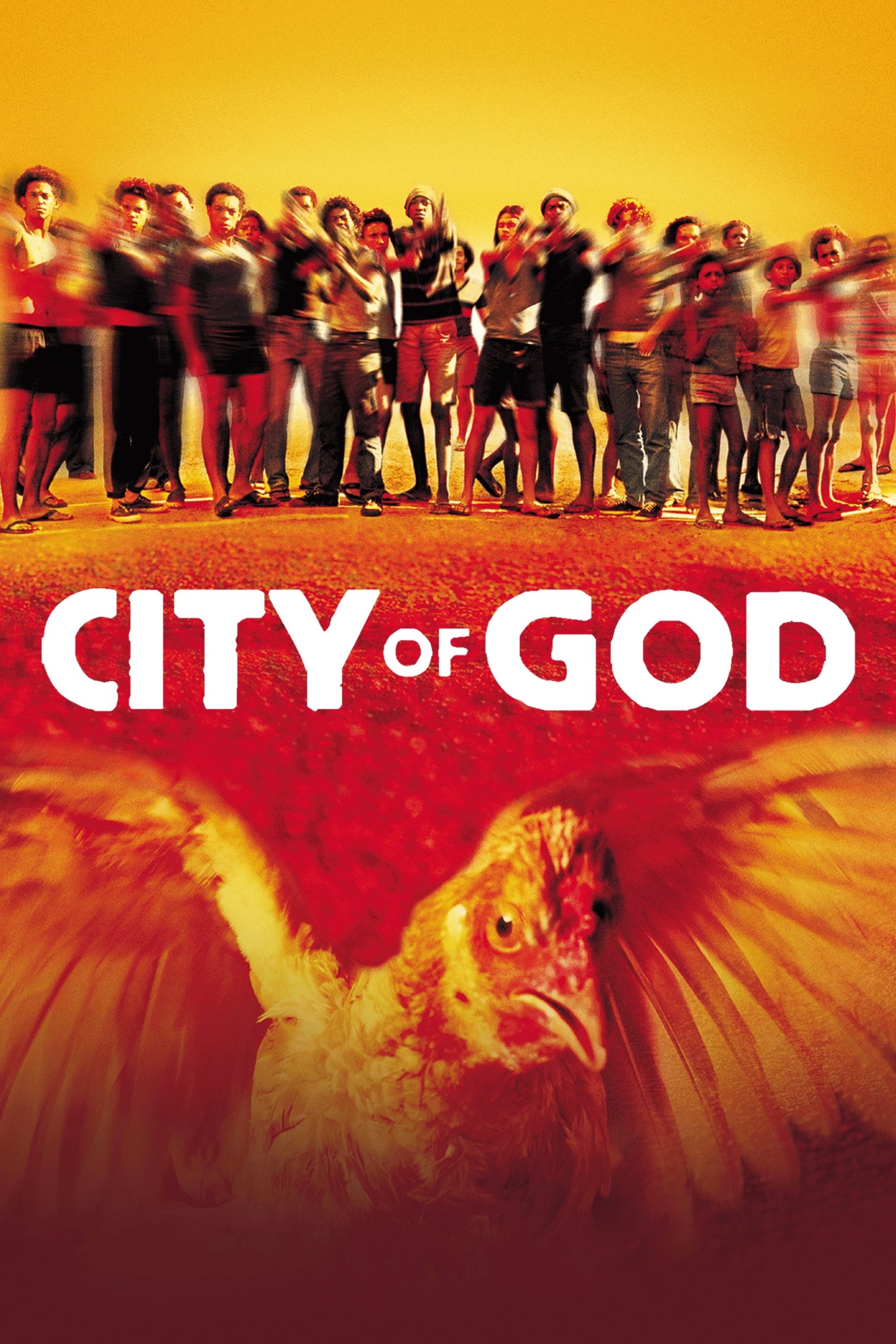
From the stunning opening scene—a comically chaotic chicken chase that rapidly escalates into a tense standoff—I realized right away that this was no ordinary coming-of-age tale. Instead, I found myself immersed in a community where survival depends on loyalty, cunning, and luck, and where children are thrust too soon into adulthood. Told through Rocket’s eyes, the film introduces a sprawling ensemble: Li’l Zé, a boy whose thirst for power grows monstrous; Bené, the closest thing to a conscience amid chaos; and a host of minor characters, each laid bare in flickering flashes of memory and tragedy. The narrative covers the neighborhood’s transformation from the late 1960s through the 1980s, showing how poverty and violence shaped entire generations.
Spoiler warning: While I’ll avoid key plot twists, it’s impossible to capture the film’s impact without acknowledging that tragedies pile atop triumphs and every youthful aspiration seems precariously close to disaster. What struck me most was how the tightrope between innocence and criminality wobbles dangerously—every character, no matter how minor, feels like they could tip the story in a new, devastating direction. I didn’t just witness a plot; I felt like I had lived inside it.
Key Themes & Analysis
Every time I revisit City of God, I’m floored by how it uses the grammar of cinema to channel its central themes: the cyclical nature of violence, the corruption of innocence, and the limits of personal agency in an unforgiving environment. Meirelles pulls off a balancing act I rarely see—melding kinetic, almost documentary-style realism with moments of harrowing beauty. The cinematography, with its frenetic tracking shots and saturated colors, practically pulses with life, giving the sense that the city itself is a restless character.
What really sets this film apart for me is its unflinching honesty. There’s no moralizing, no softening of edges. Instead, Meirelles and co-director Kátia Lund force me to confront the consequences of neglect, both societal and individual. The kids here aren’t movie archetypes—they’re desperate, creative, impulsive, sometimes monstrous, and all depressingly human. In many scenes, it’s the lack of choices—more than the lure of crime—that pushes them along dark paths.
Technically, the film is a marvel. Cinematographer César Charlone’s handheld camera is restless and intimate, often throwing me right into the middle of a gunfight, a party, or a private moment of anguish. I’ve always admired how the editing (by Daniel Rezende) cracks and snaps; stories splinter into fragments, then reassemble themselves, engaging me directly in the chaos rather than serving up a neat narrative. And the score—part samba, part tension-soaked electronica—reminds me constantly of Brazil’s vitality, even as tragedy unfolds.
The performances are what tip City of God from powerful to unforgettable. Many roles were played by non-professional actors drawn from the real favelas, and this lends the entire film an edge—I never once saw a “performance;” I saw people living, struggling, fighting, and loving as if their lives depended on it. Leandro Firmino’s portrayal of Li’l Zé has haunted me for years—a figure at once chilling and pitiable, made all the more frightening by how convincingly youthful he remains even as his crimes mount. Rocket’s earnestness is deeply relatable, providing the moral anchor in a story that could easily have veered into nihilism.
The voiceover narration is one of the smartest moves Meirelles makes; Rocket isn’t omniscient, nor is he detached. His sly, funny, sometimes aggrieved commentary provides a bittersweet contrast to the violence we witness. It’s his outsider-insider status that lets me in as a viewer—the sense that neither of us will ever fully understand this brutal world, yet both are inescapably linked to it.
My Thoughts on the Historical & Social Context
Reflecting on the period when City of God was released, I can’t help but sense a deep resonance with the political and economic turmoil of Brazil in the late 1990s and early 2000s. The “favelization” of urban centers, the explosion of violence, and systemic neglect weren’t just local news stories; they were crises woven into the national psyche.
As someone living outside of Brazil, I arrived at this film with images of Rio’s beaches and Carnival in my mind, only to find that Meirelles’ vision pulls back the tourism veil to reveal long-ignored realities. The social stratification—visible but so often invisible to outsiders—becomes the very language of the film. The story doesn’t just unfold in a vacuum; it interrogates the systems that breed violence and trap families in cycles of poverty.
I came to see City of God as a direct response to the “favela chic” imagery that romanticized urban poverty even as real communities struggled with everyday horrors. The film’s brutal optimism, its sense that any dreamer could be snuffed out but that a few might escape, struck me as uniquely relevant to early-21st-century anxieties—not just in Brazil, but globally, as urban inequality deepened everywhere.
What gives the movie its enduring power, in my experience, is how its urgency hasn’t diminished with time. Watching it now, I see new parallels: the way communities marginalized by systemic neglect are still caught between visibility and erasure, still fighting for agency. Despite being set in a specific time and place, the film’s questions about power, poverty, and possibility ring truer than ever. It speaks to today’s ever-growing chasms between rich and poor, its critique of institutions just as biting as it was two decades ago.
Fact Check: Behind the Scenes & Real History
Digging into the story behind City of God revealed production choices and historical details that only deepened my respect for the film. For one, I was fascinated to learn how Meirelles and Lund spent months searching for their cast in the favelas surrounding Rio de Janeiro. Nearly all the actors, including the leads, were untrained locals with lived experience of the environments they were depicting. This wasn’t just about authenticity; it was an ethical stance, an effort to give agency and voice to those so often excluded from mainstream Brazilian media. The result is apparent in every scene—the performances crackle with lived reality, never tipping into cliché.
Historically, the movie is a loose but faithful adaptation of real events chronicled in Paulo Lins’ novel, which itself drew on his childhood in Cidade de Deus. The events and characters are composites, but the violence, social structures, and daily fears are rooted in lived experience. While some critics have pointed out moments of dramatic license—sharpening certain events for narrative clarity—I felt the commitment to depicting the texture of daily life mattered more than timestamped accuracy.
In terms of production, I was struck by the filmmakers’ innovative use of digital technology. Meirelles insisted on handheld shooting styles and close collaboration with the community, helping to capture an immediacy that’s rare for early-2000s cinema. The result: the camera’s frenetic movements mirror the chaos of the favelas, and the real locations give everything a weather-worn, lived-in look. I still marvel at how this technical daring, combined with intense community involvement, created a visual language that’s become instantly recognizable in world cinema.
Why You Should Watch It
- The film offers a searingly authentic portrait of life in the favelas, challenging stereotypes and delivering deeply human stories with grit and empathy.
- Its narrative and technical innovations—dynamic cinematography, non-linear storytelling, and electrifying performances from real-life locals—set a benchmark for modern crime dramas.
- If you care about the intersection of art and activism, City of God brings urgent social issues to the forefront without ever feeling preachy or detached. It invites you to engage, reflect, and empathize.
Review Conclusion
City of God overwhelmed me with its ferocity, devastated me with its tragedies, and somehow still left me feeling hopeful for the real-life counterparts of its characters. Meirelles achieved something I consider rare: a film that is as thrilling as it is thoughtful, as specific to its time and place as it is universal in its themes. It’s not an easy watch, but that’s precisely why I think it matters. I finished both shaken and inspired—haunted by its questions and awed by its artistry. For those reasons, I firmly rate it 5/5 stars. This is a cornerstone of world cinema, one I return to whenever I want to be reminded of how deeply movies can move us—and how effectively they can expose the world’s rawest truths.
Related Reviews
- Gomorrah (2008): Like City of God, Matteo Garrone’s Italian crime saga plunges viewers into a world structured by brutality and codes of silence. I found its emphasis on realism and the lived-in details of Naples’ criminal underworld resonates powerfully with Meirelles’ approach—both films resist glamorizing crime, instead laying bare its corrosive effects.
- La Haine (1995): Watching Mathieu Kassovitz’s French urban drama, I was reminded of City of God’s kinetic style and urgent social commentary. Both films focus on marginalized youth entangled in cycles of violence, and both use bold cinematography and unflinching narratives to make broader points about systemic neglect and alienation.
- Tsotsi (2005): Gavin Hood’s South African drama stands out to me for its intense emotional resonance and visual poetry, much like City of God. Each film explores redemption and survival in a world marked by poverty and violence, seen through the eyes of conflicted, deeply human young men.
- Elite Squad (2007): José Padilha’s gritty examination of police corruption and gang warfare in Rio is an ideal companion piece. I noted how its relentless pace and immersive style echo the viscerally real world Meirelles crafts, while offering a different but equally compelling perspective on the structures of violence and power.
If you want to explore this film beyond basic facts, you may also be interested in how modern audiences respond to it today or whether its story was inspired by real events.
🎬 Check out today's best-selling movies on Amazon!
View Deals on Amazon