
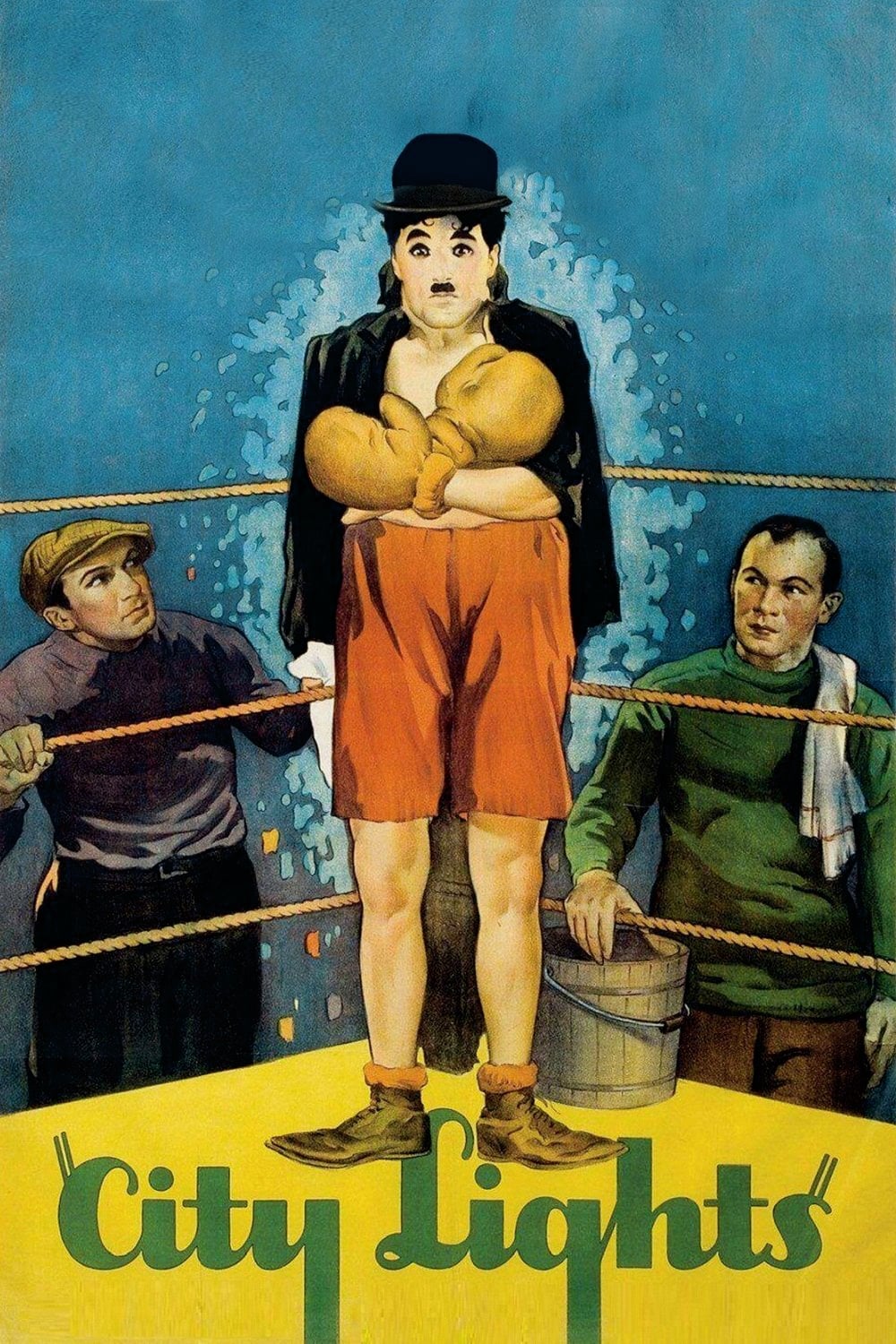
Plot Summary
I remember the first time I experienced “City Lights”: the screen flickered, and I was instantly swept into a world where words seemed unnecessary. This is a 1931 romantic comedy written and directed by Charlie Chaplin, who also stars as the Little Tramp. What I admire most is how the film manages to communicate so much through gestures, glances, and meticulously orchestrated set pieces, making spoken language feel nearly irrelevant. At the film’s core is the Little Tramp’s unlikely friendship with a blind flower girl and his comedic run-ins with a volatile millionaire. The film follows the Tramp’s increasingly desperate and endearing efforts to help the flower girl afford an operation to restore her sight, all while navigating the ever-shifting dynamics of his relationship with the millionaire who only recognizes him when drunk.
There’s a rich vein of humor running through the film, but it’s always balanced by an undercurrent of vulnerability. I was especially drawn to the way social class plays out. The Tramp hovers on the edges of society, never quite belonging, yet he’s always trying to do right by others even if it means sacrificing his own comfort. Without giving away the final moments—which contain one of the most gut-wrenching, wordless scenes I’ve ever seen—I found that Chaplin’s storytelling is as much about what isn’t said as what is shown. If you’re worried about spoilers, rest easy: the emotional resonance and ingenuity remain intact even if you know the broad strokes of the plot. The magic lies in the execution.
Key Themes & Analysis
What struck me most on my most recent viewing was how Chaplin uses comedy to illuminate the human condition in ways that still feel painfully relevant. For all its humor, “City Lights” is steeped in themes of loneliness, social disparity, unrequited love, and the dignity of selfless acts. I couldn’t help feeling that the film’s depiction of urban life—the coldness of the city council, the idle rich, and the overlooked poor—anchors the whimsy in something far more substantial.
Technically, I was blown away by the fluidity of Chaplin’s direction and his audacious commitment to silent cinema in an era already enamored with sound. By 1931, talkies were dominating Hollywood, but as I watched, it became clear why Chaplin chose to remain silent: his storytelling is universal, accessible to everyone regardless of language. No words could replace the eloquence of his physicality. The comedic timing—from the slapstick boxing match to the tender miscommunications with the flower girl—relies on choreography that feels more akin to ballet than anything else. The Tramp’s body language is equal parts comic and heartbreaking—not an easy feat to balance, and yet Chaplin does so seamlessly.
Visually, “City Lights” stands as a masterclass in cinematography. Every frame feels meticulously planned to heighten the emotional stakes. The use of light and shadow, especially in scenes of urban nighttime or the Tramp’s downtrodden moments, reminds me that Chaplin was more than a comedian; he was a visual poet. The lingering close-ups and careful composition draw me into the internal worlds of both the Tramp and the flower girl. I’m always amazed by how much empathy Chaplin elicits using only the subtlest of cues.
Above all, the performances give the film its enduring power. Chaplin’s own turn as the Tramp is, naturally, the centerpiece, but I’d be remiss not to highlight Virginia Cherrill as the blind flower girl. There’s an authenticity in her reactions that feels utterly unscripted, especially as her character’s relationship with the Tramp deepens. Their interactions carry an idealism that’s grounded in hardship, making the emotional payoff all the more powerful. Even Harry Myers, as the unpredictable millionaire, injects a manic, almost tragicomic energy that underscores the film’s meditations on class and instability. It’s this layering of performance, theme, and visual ingenuity that makes “City Lights” greater than the sum of its parts.
My Thoughts on the Cultural Impact & Legacy
As I reflect on how “City Lights” has shaped cinema and my own understanding of the medium, I’m routinely struck by its staggering influence. To me, this isn’t just a relic of a past era; it’s a blueprint for how films can move us without resorting to heavy-handed speech or melodrama. My appreciation grew when I realized that so many directors I admire—Orson Welles, Federico Fellini, even Woody Allen—have cited this film as formative to their own work. “City Lights” presents a worldview where humor and heartbreak are two sides of the same coin, something I think modern filmmakers often strive for but rarely achieve with such finesse.
The emotional potency of the closing scene lingers with me long after the credits roll. I often return to it because it distills the essence of cinema: the communion of audience and performer, without barriers. The vulnerability in the Tramp’s eyes—a mix of hope, longing, and anxiety—is one of the most honest expressions of love I’ve ever witnessed on screen. That moment, to me, is why the film still resonates so powerfully. I find myself using “City Lights” as a litmus test for friends new to classic cinema. If they connect with it, I know they’re open to experiencing what makes the medium so transformative: empathy, artistry, humor, and the unbreakable thread of common humanity.
From a broader perspective as a curator and film lover, “City Lights” represents more than a genre milestone. It’s a living testament to silent cinema’s capacity for depth and sophistication, reminding me again and again that great stories transcend their era. The film’s influence seeps into countless genres—the bittersweet romantic comedy, the social satire, the slapstick farce—challenging and inspiring storytelling conventions for nearly a century. I see its DNA in modern comedies, indie darlings, and the most poignant dramas. Whenever a filmmaker melds humor and poignancy, I see Chaplin’s shadow.
Fascinating Behind-the-Scenes Facts
I love digging into the production history of a film, and “City Lights” doesn’t disappoint—it’s loaded with stories that highlight both the technical mastery and obsessive dedication Chaplin brought to the project. One behind-the-scenes detail that never fails to amaze me is Chaplin’s perfectionism regarding the flower girl’s pivotal scenes. Reports indicate that the sequence where the Tramp first meets the flower girl, who mistakes him for a wealthy man, was shot and reshot over 300 times. Chaplin insisted on this repetition because he wanted to capture an exact moment of recognition, where innocence and misunderstanding collide. I find it both exhausting and awe-inspiring imagining the patience required from both Chaplin and Virginia Cherrill (who played the flower girl).
Another tidbit that fascinates me concerns the soundtrack. Although Chaplin resisted using spoken dialogue, he composed an original musical score himself. In my opinion, this was a stroke of genius—his musical instincts breathe additional life into the silent format. The recurring theme for the flower girl, in particular, matches the narrative’s emotional highs and lows to perfection. I find myself humming it days after every viewing.
Finally, I’m especially intrigued by the casting of Virginia Cherrill as the blind girl. Chaplin originally fired her during filming, believing she was unenthusiastic or unreliable. However, after testing other actresses—and being unable to recapture the delicate chemistry she brought to the role—he rehired her. The knowledge that even perfectionists like Chaplin recognized, sometimes belatedly, the magic of the right casting reminds me how serendipity plays a part in cinematic greatness. It’s little wonder the final film feels so authentic—the collaboration was hard-won and the product of tremendous effort, trial, and error.
Why You Should Watch It
- An unmatched blend of comedy and heartache, with physical humor that speaks to every generation.
- Insightful social commentary on class, generosity, and dignity, delivered with wit and warmth instead of lectures.
- A masterclass in visual storytelling and emotional resonance, proving great cinema doesn’t need words to move us.
Review Conclusion
When I think back over a lifetime of watching films, there are few that feel as complete, as enveloping, or as emotionally pure as “City Lights.” Its influence shapes not just film history but my own creative standards; whenever I encounter the rarest forms of cinematic truth, I think of Chaplin’s Tramp reaching out through the screen. If you’re new to silent films, I can’t think of a more welcoming, rewarding introduction. Even after decades—and countless imitators—it remains an incomparable testament to the power of visual storytelling, character, and the universal language of compassion. My star rating: 5/5.
Related Reviews
- The Kid (1921) – I always see this as Chaplin’s dry run for the emotional layering he achieves in “City Lights.” Both films explore social hardship through a childlike lens, blending slapstick with genuine sorrow. If you wanted to experience more of Chaplin’s singular mix of laughter and tears, “The Kid” is a perfect companion piece.
- Buster Keaton’s The General (1926) – The silent era’s other comedic giant, Keaton, crafts a film with similarly ingenious physical staging and underdog charm. I am always captivated by its visual inventiveness, which pairs beautifully with Chaplin’s own choreographic storytelling style.
- La Strada (1954) – Federico Fellini’s bittersweet fable channels the tragicomic tradition Chaplin made famous. I recommend it for the way it weaves sorrow and whimsy through the journey of another outsider struggling to be seen.
- Modern Times (1936) – Chaplin’s later masterpiece deepens the critique of industrialization and social alienation, making it a natural next step after “City Lights” for its thematic kinship and continued relevance.
For readers looking to go deeper, these perspectives may help place the film in a broader context.
🎬 Check out today's best-selling movies on Amazon!
View Deals on Amazon