
Plot Summary
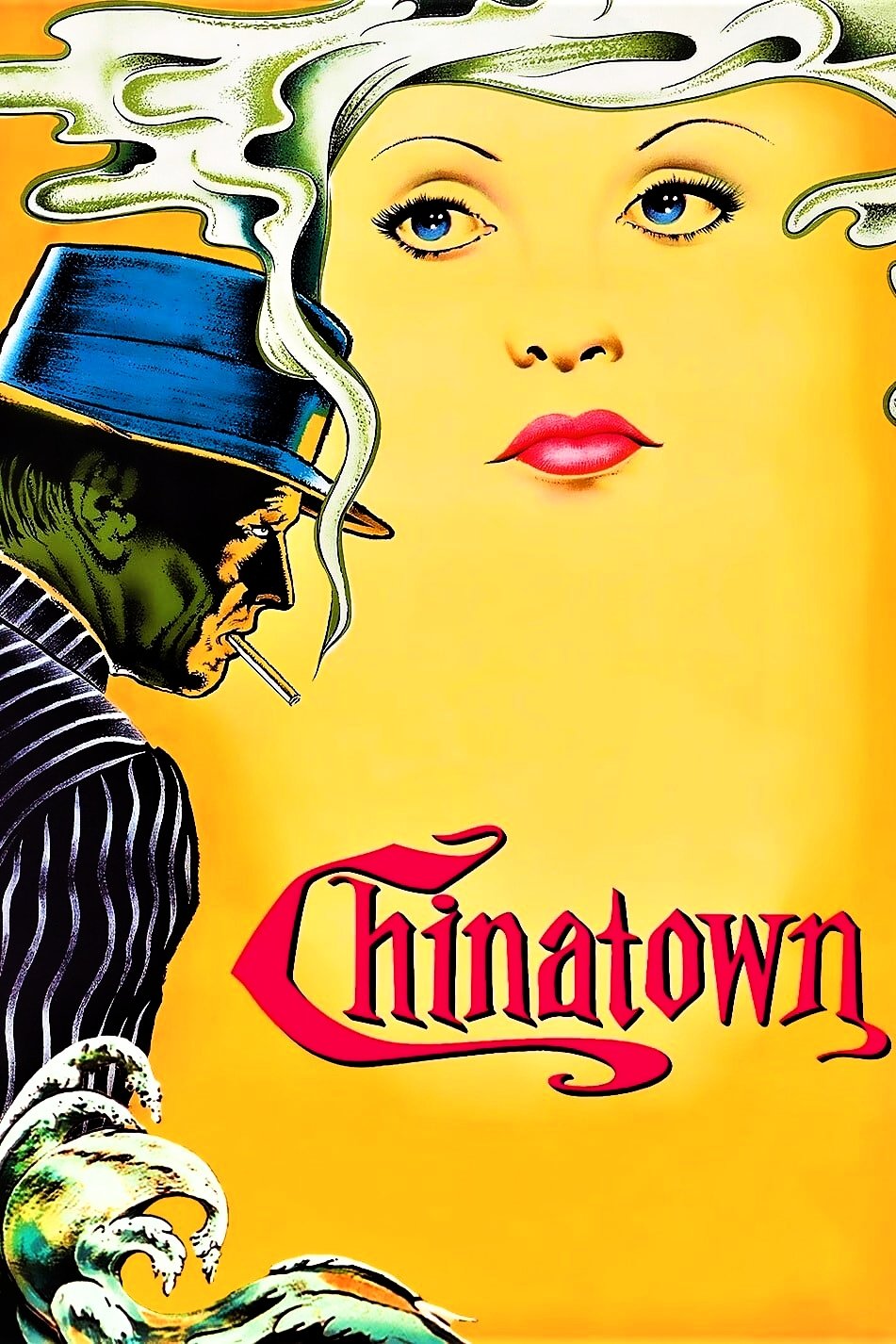
I’ve always found myself drawn to films that manage to envelop me in their world from the very first scene, and Chinatown is one of those rare movies that does so with seemingly effortless grace. As someone who thrives on layered storytelling, what left the deepest impression on me is how the film navigates the landscape of mystery and ethics. Set in pre-World War II Los Angeles, the story follows the weary private investigator Jake Gittes, whose seemingly routine case of marital infidelity unspools into something far murkier. Gittes, played with a permanently arched eyebrow by Jack Nicholson, quickly gets swept into Los Angeles’ corrosive machinations around water rights, city power, and personal betrayal.
Without delving into territory that would spoil the film’s legendary surprises, I can say the web of intrigue spirals rapidly. What begins as a familiar tale of misdirection and deception reveals depth after depth of malice and greed beneath the city’s sun-bleached surface. Each character, from Faye Dunaway’s enigmatic Evelyn Mulwray to John Huston’s imposing Noah Cross, reveals more of themselves as the mystery deepens. The city itself, with its bright daylight and shadowy motives, feels as crucial to the story as any flesh-and-blood player. And yet, even after over 40 viewings, I’m always stunned by how the film’s revelations, both small and seismic, reshape everything I thought I knew about Gittes’ quest for the truth.
Key Themes & Analysis
What struck me most powerfully about Chinatown is its bleak, cyclical exploration of corruption and moral compromise. Watching it, I’m reminded of the way darkness lingers at the edges of even the brightest day in Los Angeles. The narrative doesn’t offer solutions so much as it burrows deeper into how power and privilege can warp justice. The film’s noir roots are obvious, but I see them reframed through a much more modern, nearly existential lens—the heroism of Gittes is constantly undermined by futility, undercut by the realization that “doing the right thing” offers little solace or reward in a world built on secrets and self-interest.
Roman Polanski’s directing choices are both meticulous and audacious. He uses the camera as an extension of Gittes’ perspective; I felt compelled to follow what he sees, what he fails to see, and, most poignantly, what he simply cannot know. Polanski’s willingness to hold back—to let a single, static shot linger or to frame Gittes as a small figure lost amidst looming architecture—gave me an uncomfortably intimate experience of Gittes’ helplessness. The famous shot of Gittes watching, through his car’s windshield, as his options and understanding slip away, haunts me as one of cinema’s great visual metaphors for the elusiveness of truth.
John Alonzo’s cinematography is another element I can’t praise enough. The choice to shoot in widescreen (so evocative of sun-drenched California) seems designed to contrast the film’s visual openness with its thematic claustrophobia. I love how the city feels bright but never warm, alive but distinctly inhospitable. Alonzo’s subtle use of shadow and dust, the flutter of blinds across a sunlit face, all create a tapestry that feels simultaneously nostalgic and dangerous. For me, this persistent sense of distortion is what makes Chinatown such a satisfying noir—its look is irresistible, but its undercurrent is undeniably poisonous.
When I reflect on performances, I keep circling back to Jack Nicholson’s portrayal of Gittes. His world-weary confidence, undercut by flashes of vulnerability, draws me in every time. Rather than a hardboiled, unflappable detective, Gittes is a man haunted by his inability to shape the world to his own code of justice. Dunaway, too, brings remarkable nuance; Evelyn Mulwray is both fierce and fragile, resolute yet deeply wounded. In their scenes together I sense the tension between compassion and suspicion, a dynamic that fuels the film’s emotional stakes.
Polanski’s approach is one of measured cruelty—he constantly invites hope into the story only to snatch it away when least expected. The infamous ending (which I won’t spoil unless explicitly warned) is perhaps the boldest statement on the futility of good intentions in a broken system that I’ve ever encountered. As I sit with the film’s themes, I’m left questioning the very structure of morality: Is justice even possible in a world this compromised? For me, Chinatown is a story less about solving a mystery than about realizing how little can truly be fixed.
My Thoughts on the Cultural Impact & Legacy
If I could point to one film that fundamentally redefined how I think about the noir genre and its capacity for cultural critique, it’s Chinatown. What resonates with me most, even decades after its release, is how the movie expanded the boundaries of what a detective story could be. Watching it for the first time as a young film enthusiast, I remember being shocked not only by the film’s narrative audacity but also by its underlying pessimism—Chinatown refuses to let me retreat into comfort, challenging me to accept ambiguity, tragedy, and systemic rot as unchangeable parts of the human story.
The film’s influence is nearly impossible to overstate. In my work as a critic and curator, I constantly see its DNA in modern neo-noir: the morally ambiguous protagonist, the emphasis on institutional corruption, the refusal to provide easy answers. Movies like L.A. Confidential, Blade Runner, and even Zodiac clearly owe a creative debt to the tone and complexity that Chinatown established. But beyond fandom and homage, what matters most to me is how the film made noir feel newly dangerous—no longer about solving a puzzle, but about unmasking the structural cruelty hiding in plain sight.
What makes its legacy feel personal is the way it changed my expectations as a viewer. I seek out stories that risk hurting their audience in service of the truth, and I revisit Chinatown whenever I need to be reminded that movies can provoke, unsettle, and disturb in profoundly meaningful ways. Its ending, which has grown even more wrenching with time, continues to shape my gut-level belief that sometimes, art’s role is not to heal but to confront. Chinatown persists in my mind as a benchmark—a film whose audacity and resonance still set the standard for cinematic boldness.
Fascinating Behind-the-Scenes Facts
There’s an entire mythology behind the making of Chinatown that fascinates me just as much as the film itself. For one thing, I am always intrigued by how Polanski and Robert Towne, the screenwriter, reportedly battled bitterly over the film’s conclusion. From what I’ve researched, Towne originally envisioned a more optimistic outcome, while Polanski, still haunted by his own personal tragedies, firmly insisted on the bleak finale that defines the movie today. That creative clash feels pivotal to me, shaping the film’s tone and giving it an emotional impact that lingers far longer than a simple resolution might have.
The casting of John Huston as Noah Cross is another revelation that shapes my experience of the film. Huston, himself a legendary director, brought his own history of power in Hollywood to the screen, lending the character a terrifying plausibility. I’ve always wondered about the extra level of psychological intensity that comes when an actor embodies, as Huston does here, the very corruption and arrogance he helped define for generations of filmmakers. Polanski’s choice of Huston wasn’t just stunt casting—it was an act of thematic alchemy, sharpening the film’s social critique into something nearly mythic.
On a technical note, I’m fascinated that Polanski insisted on shooting many key scenes with minimal coverage—meaning he often captured only a single camera angle or take per sequence. This bold, sometimes risky decision underscores the film’s tight pacing and heightens my experience of Gittes’ perspective, making his mounting frustration all the more visceral. When I rewatch, I can sense the tension this must have created on set, but I also recognize how it brings a razor-sharp focus to the finished product. These behind-the-scenes decisions, steeped in risk and collaboration, have come to symbolize for me exactly what makes Chinatown so self-assured and enduring as a piece of cinema.
Why You Should Watch It
- To witness one of the most unflinching portraits of corruption and despair ever committed to film.
- For Jack Nicholson’s career-defining performance as a detective whose confidence unravels alongside the city’s deceptions.
- If you value storytelling that subverts genre expectations and lingers with you long after the credits roll.
Review Conclusion
Each time I return to Chinatown, I find myself caught in a spell of moral unease that few other films can conjure. Its uncompromising narrative, technical brilliance, and haunting performances create a visceral experience that refuses to fade. While it’s undeniably a harsh and sometimes bitter pill to swallow, I appreciate how it never tries to placate or pacify me—it demands that I sit with discomfort, that I accept questions without answers. To me, this is the mark of a true classic. It’s a film I recommend to anyone who wants more from cinema than mere entertainment—a movie for those ready to see the world and themselves in a starker, more honest light. I rate Chinatown a 5/5, for its courage, its craftsmanship, and the way it endlessly redefines what I believe movies can achieve.
Related Reviews
- L.A. Confidential (1997): I recommend this film because it explores Los Angeles’ dark side with a similarly intricate, morally ambiguous plot. Its neo-noir style, intricate conspiracy, and emotional complexity make it a spiritual successor to Chinatown’s themes of corrupted power and personal disillusionment.
- The Long Goodbye (1973): For me, this Altman take on Raymond Chandler’s classic novel is essential viewing for the way it deconstructs the hardboiled detective archetype. Its cynical tone, period setting, and motif of fractured morality provide a fascinating counterpoint for anyone compelled by Chinatown’s vision of a decaying American dream.
- Blade Runner (1982): While it shifts to a futuristic setting, this film connects with Chinatown through its noir sensibilities, atmospheric world-building, and meditation on what it means to search for truth in a world that resists simple answers.
- Zodiac (2007): I see David Fincher’s procedural masterwork as a modern echo of Chinatown’s obsession with the unknowable. Its dogged investigation, creeping paranoia, and refusal to tie up loose ends invite viewers to share in a search for meaning that may never be satisfied.
For readers looking to go deeper, these perspectives may help place the film in a broader context.
🎬 Check out today's best-selling movies on Amazon!
View Deals on Amazon