
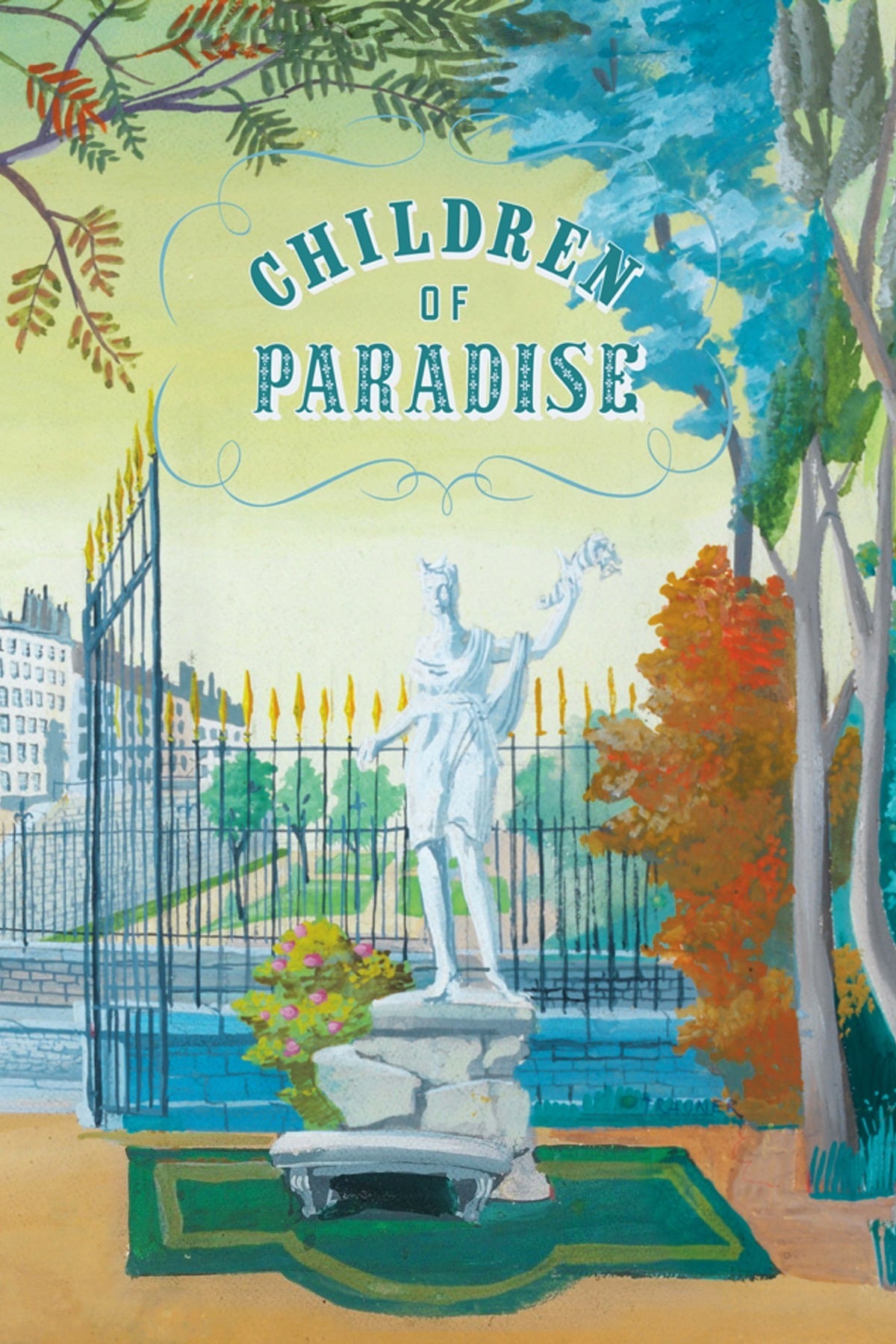
Plot Summary
From the moment I encountered Children of Paradise, directed by Marcel Carné, I felt swept up in a world bursting with theatrical passion and romantic longing. The movie enveloped me in the exuberant chaos and intrigue of early 19th-century Paris, an era I often romanticize for its art, danger, and glittering decadence. The story orbits around Garance, a mesmerizing and enigmatic woman, and the four men who are drawn to her like moths to an irresistible flame: the gentle mime Baptiste, the brooding actor Frédérick Lemaître, the shadowy criminal Lacenaire, and the aristocratic Count de Montray. Each of these central figures brings a distinctly different energy to Garance’s world, reflecting a fractured yet layered vision of desire, fame, and identity.
What I found so utterly gripping was the careful, intricate dance of love, obsession, and yearning that weaves through every encounter. Without giving away the twists that I found most devastating, I’ll simply say that everything unfolds against a background of colorful street performers, smoky backstage corridors, and all the spectacle of Parisian show business. The overlapping stories and shifting affections seem to me less about plot mechanics and more about the elusive nature of true connection and how public personas conceal private hearts. For anyone wanting to avoid spoilers, I’ll stop short of the final revelations, but I will say the finale left me thinking for days about love’s capacity for both bitterness and grace.
Key Themes & Analysis
The first time I watched this film, what struck me most was how Children of Paradise transforms the stage into a living metaphor for real life. What is performance, after all, besides an attempt to be seen and loved for who we truly are? From the opening shots of the bustling Boulevard du Crime, I felt an overwhelming sense that every character is both actor and audience – playing parts written by society, class expectation, or romantic fantasy.
I was fascinated by the way identity and performance are inextricably linked. Baptiste’s artistry in mime is not simply entertainment; it’s his way of processing heartbreak and hope. Frédérick’s charm is rooted as much in insecurity as in bravado. For me, the film is less an historical romance than a meditation on the masks we wear, and how every longing is shaped by the roles assigned to us by fate or fortune. The tension between authenticity and illusion is everywhere, from Garance’s inscrutable gaze to Lacenaire’s unscrupulous calculations.
Visually, the film is an embarrassment of riches. I found myself pausing scene after scene to take in the play of light and shadow orchestrated by cinematographer Roger Hubert. The demimonde glows with a chipped, lived-in beauty, while sweeping crowd scenes pulse with frenetic energy that seems almost impossible for a film of its era. The carnival atmosphere and dense, bustling extras contributed by Carné amplify the film’s sense of theatricality, reminding me constantly of the thin veil separating art and life. The director’s work with pacing, especially in quieter moments between Baptiste and Garance, left me with the stunning realization that even in silence, the film brims with poetry.
As I watched, I couldn’t help but be captured by the performances. Arletty’s Garance delivers an astonishing blend of resilience and vulnerability, her subtle gestures revealing more than dialogue ever could. Jean-Louis Barrault as Baptiste broke my heart repeatedly – his mime routines communicate everything about longing and regret. Pierre Brasseur’s Frédérick injects much-needed levity and complexity; I marveled at how his bravado masks loneliness. The entire supporting cast melts into the city’s tapestry, making the world feel as alive and unpredictable as any I’ve seen in cinema.
Above all, what I found unforgettable is the film’s central preoccupation with unattainable love, the cruelty of fate, and the redemptive possibilities of art. Even as lives collide and hearts are broken, what persists is a love of beauty, the shimmering possibility of being truly known if only for a fleeting moment.
My Thoughts on the Historical & Social Context
I can’t imagine discussing Children of Paradise without acknowledging the weight of its history. Created during the dark years of the Nazi occupation in France, the film’s very existence strikes me as an act of creative defiance. I am constantly in awe of how the filmmakers, persecuted and surveilled, managed to produce something so luminous and expansive. Every time I watch it, I feel the shadow of censorship and danger, and it makes the emotional intensity on screen resonate much deeper. I see the longing for freedom, for the ability to love and express oneself, as more than a narrative device – it’s a coded message to audiences desperate for hope.
This historical context also shapes my personal reading of the film’s primary themes: I see Garance’s independence, Baptiste’s yearning to speak, and even Lacenaire’s rebellion as reflections of an oppressed society. The characters’ struggles to assert their desires and speak their truths feel, to me, like a metaphor for the French people during occupation – their longing to maintain identity, dignity, and voice against overwhelming odds. Watching the film now, in a world that sometimes feels equally turbulent and divided, I’m reminded of the urgency and necessity of art that speaks honestly about longing and resistance.
Part of what makes Children of Paradise haunt me long after the credits is how current its questions remain. What does it mean to love sincerely in a cynical world? Can art still matter when society is under siege? These questions linger with me, and I believe it’s this emotional and ethical depth that makes the film as relevant today as it was to its original postwar audience.
Fact Check: Behind the Scenes & Real History
The more I learn about the film’s creation, the more I admire its quiet heroism. For starters, I discovered that the film was shot during the German occupation, with many crew members working in secret or using false names due to their Jewish heritage or involvement in the Resistance. Imagine the pressure and courage that required; every scene holds not only artistic risk but personal stake. I can’t help but view the final product as a triumph over fear and repression.
I also found out that the film’s sprawling sets and lavish crowd scenes had to be managed under nearly impossible conditions. Scarcity of materials and rationing forced designers to innovate with costumes and props; sometimes, actors wore costumes pieced together from whatever could be found. There’s an urban legend I love that some scenes were interrupted or delayed because of power outages or direct interventions by Nazi officials. The fact that these obstacles are invisible to the viewer adds to my sense of awe for the finished film’s polish and fluidity.
Finally, I was struck by the way the film blurs fact and fiction in its depiction of the Boulevard du Crime and its real-life theatrical stars. While the script loosely draws inspiration from Paris’s actual entertainment district and some historic performers, many of the characters are an imaginative blend. For example, Baptiste is inspired by the real-life mime Jean-Gaspard Deburau, but the story’s emotional arcs and love quadrangle are pure poetic invention. This gives the film the rare ability to feel mythic – a tapestry woven from both memory and fantasy.
Why You Should Watch It
- This film is an astonishing marriage of spectacle and soul; its visual artistry and emotional resonance left me breathless.
- The story’s intertwining of art, love, and freedom remains just as urgent and relevant for today’s viewers as it was for audiences enduring the pain of occupation and war.
- The performances, particularly Arletty’s and Barrault’s, are among the most memorable in the history of French cinema, inviting me as a viewer to reflect deeply on longing, sacrifice, and the nature of performance itself.
Review Conclusion
Reflecting on my experience with Children of Paradise, I’m convinced that this is more than just a film: it’s a living, breathing testament to the resilience of art, the timeless agony of unfulfilled love, and the brave pursuit of truth under impossible circumstances. Every time I revisit its haunted streets and crowded theaters, I find myself caught off guard by its raw intelligence and humanism. For anyone in search of cinema’s power to move, provoke, and console, I cannot recommend it highly enough. My personal rating: 5/5.
Related Reviews
- La Ronde (1950) – dir. Max Ophüls: I recommend this film because it shares a lush, theatrical sensibility with Children of Paradise, as well as a nuanced exploration of romantic desire and the cyclical, sometimes bittersweet nature of love. Its structure, using intersecting stories and a play-within-the-film device, echoes the narrative sophistication I admire in Carné’s masterpiece.
- The Earrings of Madame de… (1953) – dir. Max Ophüls: Like Children of Paradise, this film uses sumptuous period detail and dazzling camerawork to tell an intimate yet universally resonant story of passion, regret, and the roles we’re forced to play. The focus on fate and emotional sacrifice makes it an ideal companion for those enthralled by poetic French cinema.
- The Red Shoes (1948) – dir. Michael Powell & Emeric Pressburger: Although British, this film’s immersion into the world of performance, artistry, and doomed romance closely echoes the haunting themes and emotional richness that drew me to Carné’s work. Its visual inventiveness and exploration of the artist’s soul are especially relevant for fans compelled by the interplay of life and art.
- Grand Illusion (1937) – dir. Jean Renoir: I find this classic resonates with Children of Paradise through its focus on humanism, resistance to oppression, and the role of art as survival. Both films were made under the shadow of war, and both hold up as testaments to cinema’s moral and emotional power.
If you want to explore this film beyond basic facts, you may also be interested in how modern audiences respond to it today or whether its story was inspired by real events.
🎬 Check out today's best-selling movies on Amazon!
View Deals on Amazon