
Plot Summary
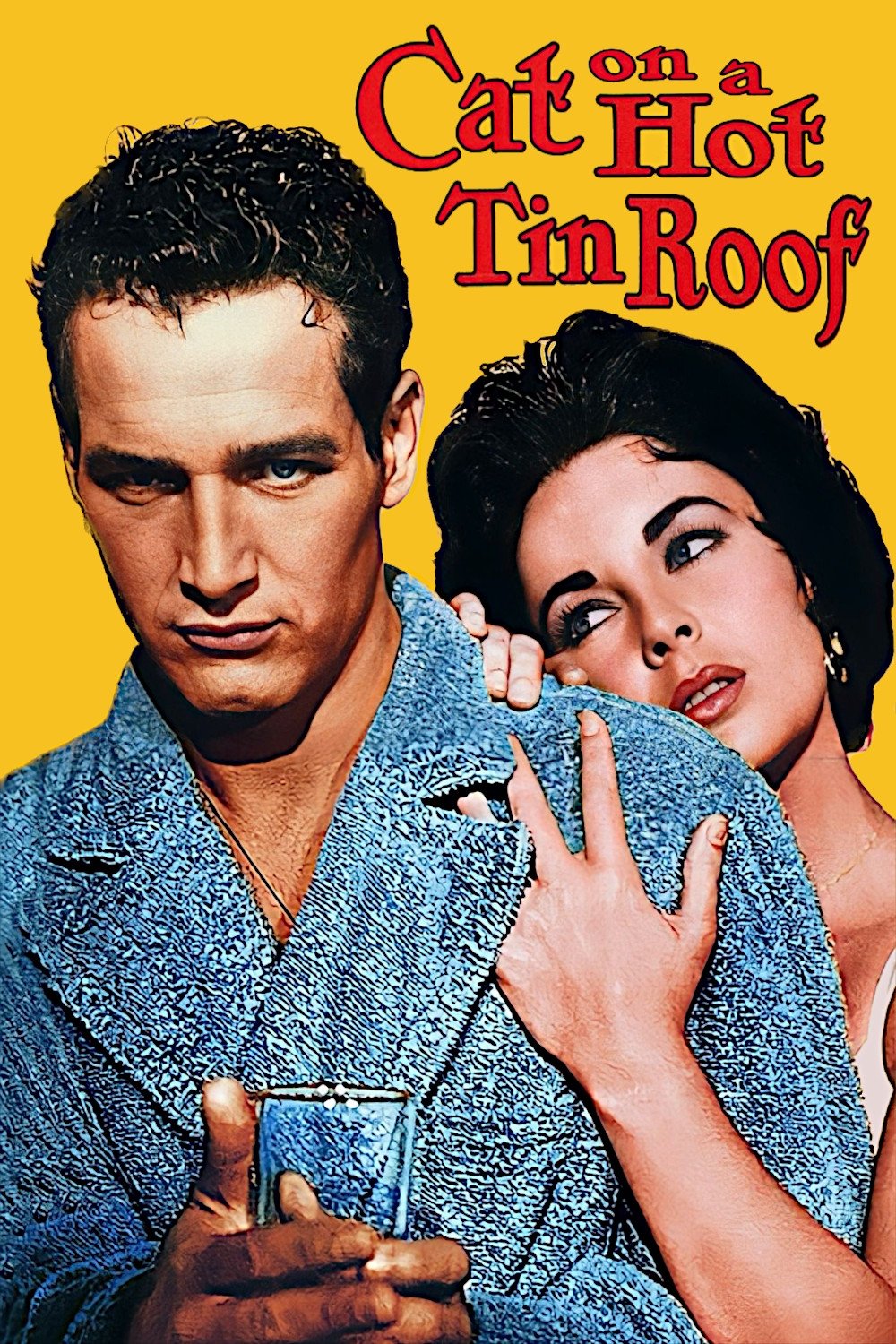
From the moment I first watched “Cat on a Hot Tin Roof,” directed by Richard Brooks, I was struck by the intense emotional landscape that unravels within one sultry Mississippi evening. This Southern drama, adapted from Tennessee Williams’s Pulitzer-winning play, uses a family gathering as a crucible for simmering resentments and long-held secrets. At its heart, I found a profound narrative about a disintegrating marriage—Brick (Paul Newman), a former athlete battling personal demons, and Maggie (Elizabeth Taylor), the determined but isolated wife, return to his family home for patriarch Big Daddy’s (Burl Ives) birthday celebration. With the weight of inheritance looming and health crises unfolding, the film peels back layers of social pretense, greed, and longing, echoing the oppressive heat that gives the movie its memorable title.
While I’m cautious about spoilers, I’ll say that the story’s power rests less in surprise and more in the slow burn—the escalation of confrontation, the coded language beneath every sharp exchange. Rivals within the family vie for Big Daddy’s favor as truths, both personal and collective, threaten to detonate during this reunion. Every look, every paused sentence, is charged with the possibility of revelation, and I became absorbed in watching how each character performs or withholds their true selves under familial scrutiny.
Key Themes & Analysis
If I had to pinpoint what makes “Cat on a Hot Tin Roof” so enduring, it would be its relentless excavation of human vulnerability and pride. The film lays bare the dysfunction that festers beneath a genteel Southern surface. As someone who tends to read films through the lens of emotional authenticity, I was especially compelled by the film’s fearless approach to alienation and denial. Brick’s struggle with alcoholism is not simply a background detail—it’s a manifestation of grief, guilt, and a refusal to engage with painful memories. Every slurred word and evasive glance from Newman’s performance told me that this wasn’t just a film about family; it was about wrestling with the limits of love and forgiveness.
Elizabeth Taylor’s portrayal of Maggie is, to me, the definition of a performance that transforms the source material. She channels her desperation not as a weakness, but as an act of incredible will. There are moments when her dialogue veers into monologue, echoing the play’s origins, but Taylor’s charisma never lets it feel stagey. Instead, I felt Maggie’s isolation and her razor-sharp longing for connection with Brick. The chemistry—fraught and passionate—between Taylor and Newman made each scene throb with unspoken things.
Burl Ives’s turn as Big Daddy stands as a masterclass in balancing gruffness with pathos. In lesser hands, Big Daddy could have become a Southern caricature, but Ives plays him with such raw, blustering humanity that he cuts through the artifice of the family’s deception. His scenes with Brick, in particular, are some of the most electrifying I’ve seen. The dialogue here is loaded with subtext—not all of it survived the transition from stage to screen, due to the era’s censorship, but the sense of danger and heartbreak lingers.
Directorially, Brooks uses the camera to capture the sweltering, claustrophobic atmosphere of the Pollitt mansion. The slow tracking shots and close-ups turn the home into a psychological maze. For me, the way Brooks and cinematographer William Daniels use space—to both frame and confine the characters—mirrors the emotional tightrope each person walks. The sweltering heat, ever-present thunderstorms, and decaying grandeur of the setting reinforce themes of repression and decay.
I think one of the film’s most radical moves is its willingness to confront family legacy and the impossibility of absolute truth. Secrets are currency in this story, but the real “hot tin roof” is the pressure each character feels to maintain emotional facades for the sake of peace—or power. These personal stakes echo, for me, contemporary anxieties about authenticity in public and private life.
My Thoughts on the Historical & Social Context
Watching “Cat on a Hot Tin Roof” through the filter of its 1958 premiere, I’m reminded of just how much its subversive qualities depended on the norms of its time. This was a period marked by social conformity, particularly in Hollywood, where the Motion Picture Production Code still limited the explicit discussion of taboo topics like homosexuality and addiction. It becomes clear to me, especially on repeated viewings, that Brooks and his cast had to work through inference, subtext, and the physicality of their performances to communicate what the script could not say outright. The source play, of course, was more direct. Yet I believe the film’s coded language only heightens its tension—turning what could have been melodrama into a battle over what family members dare to name or acknowledge.
As someone fascinated by the intersection of art and context, I appreciate how the movie’s themes resonated in an America on the verge of seismic social changes. Through the lens of family dysfunction, the film exposes the costs of patriarchal authority, conformity, and denial—costs that would soon be challenged in the real world through civil rights struggles and evolving attitudes toward sexuality and mental health. The Pollitt family’s refusal to address underlying trauma mirrored the tendency of many 1950s families to prioritize harmony over honesty. For me, this refusal still feels pointed in a culture often obsessed with image and denial.
In today’s terms, what makes “Cat on a Hot Tin Roof” still essential viewing is its courage in facing truths many would rather bury. The unspoken, the unresolved tensions, and the buried pain are all too recognizable in today’s conversations—whether about generational trauma, LGBTQ+ histories, or the lingering effects of rigid gender norms. Its insights remain uncomfortably sharp, and I’m often startled by how contemporary its drama can feel, even as its surface trappings are rooted in a bygone era.
Fact Check: Behind the Scenes & Real History
The behind-the-scenes story of “Cat on a Hot Tin Roof” is, in some ways, as dramatic as the film itself. Paul Newman was only cast as Brick after a long process that saw several other names considered. I discovered that both Elvis Presley and James Dean (before his death) were rumored favorites of Tennessee Williams, but the final choice was shaped by studio politics and Newman’s extraordinary screen test. I think it’s fascinating that despite being a relatively new leading man, Newman’s brooding energy seemed destined for this role.
One production detail that always interests me is how the adaptation navigated censorship. Many of the play’s frank allusions to homosexuality were softened or removed from the script to satisfy the Hays Code. The palpable tension between Brick and his lost friend Skipper is still present, woven through subtext and body language, but it isn’t remarked upon directly. Williams himself was initially critical of these changes, yet I find that the sense of painful omission only makes Brick’s torment more haunting.
Another striking fact: Elizabeth Taylor endured a personal tragedy during filming when her husband, producer Mike Todd, died in a plane crash. She returned to set days later, and knowing this highlights the emotion she brought to Maggie—her grief seems to echo through her raw, at times desperate, performance. For me, this knowledge adds another dimension to the emotional urgency that Taylor radiates in nearly every frame.
Comparing the film to reality, the South depicted here is somewhat stylized, a heightened, feverish setting that serves the story’s emotional stakes more than strict historical accuracy. Still, I found the backdrop evocative—drawing on both myth and the very real pressures of familial and societal expectation unique to that region and era.
Why You Should Watch It
- If you are drawn to searing, character-driven drama, this film’s performances deliver some of the most potent work of its era—especially Newman’s and Taylor’s electrifying on-screen chemistry.
- For viewers interested in how classic Hollywood grappled with taboo topics and the limitations of its era, this adaptation is a masterclass in suggestion, subtext, and the art of the unsaid.
- It’s an indispensable watch for anyone who wants to understand the evolution of American cinema’s handling of family, trauma, and identity—and how those pressures still resonate today.
Review Conclusion
For me, “Cat on a Hot Tin Roof” isn’t just an artifact of mid-century cinema—it’s a film that continually reasserts its relevance. What Brooks, Taylor, Newman, and Ives achieved here goes far beyond melodrama; it’s an excavation of how love, inheritance, shame, and pride twist through the generations. Despite the censorship of its day, the film vibrates with the truths it cannot name, and I find it impossible to look away once the emotional tempo starts to climb. I give it a 4.5/5 for its enduring power, luminous performances, and uncompromising look at the wounds that bind families together or drive them apart.
Related Reviews
- “A Streetcar Named Desire” (1951)—Another Tennessee Williams adaptation, this film mirrors “Cat on a Hot Tin Roof” in its depiction of Southern Gothic tension and psychological unraveling. I recommend it to anyone who appreciated the claustrophobic atmosphere and emotionally charged dialogue here.
- “Who’s Afraid of Virginia Woolf?” (1966)—If you admired the combustible marriage at the heart of this film, Edward Albee’s adaptation brings a similar dynamic to the fore. I find its portrayal of marital mind games and buried trauma to be just as gripping, with performances that are equally daring.
- “Long Day’s Journey Into Night” (1962)—This film, based on Eugene O’Neill’s play, shares the theme of family secrets and intergenerational pain. I see it as an essential companion to “Cat on a Hot Tin Roof” for those drawn to stories where unresolved history poisons the present.
- “East of Eden” (1955)—For viewers compelled by stories of familial conflict and the search for approval, this Steinbeck adaptation offers an emotionally resonant, visually rich narrative that explores similar American myths of inheritance and legacy.
If you want to explore this film beyond basic facts, you may also be interested in how modern audiences respond to it today or whether its story was inspired by real events.
🎬 Check out today's best-selling movies on Amazon!
View Deals on Amazon