
Plot Summary
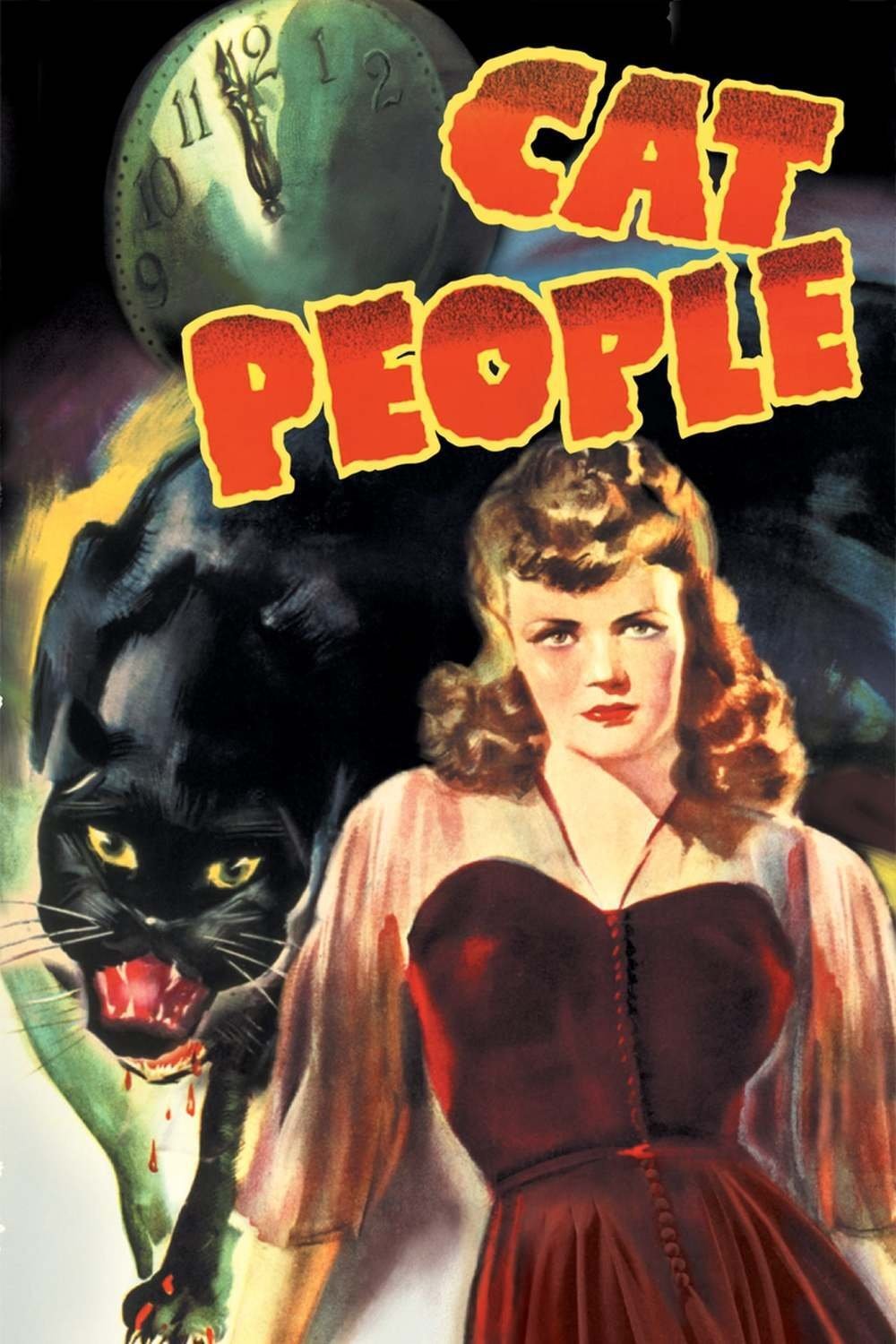
When I first watched Cat People, directed by Jacques Tourneur, I found myself immediately pulled into its shadowy world—a place where suspicion is constant, and the boundary between myth and reality seems to flicker with every dimly lit scene. Set against the urban backdrop of 1940s New York, the film follows Irena Dubrovna, a Serbian immigrant whose mysterious beauty and gentle demeanor hide a disturbing fear: the belief that she descends from a cursed line of people who transform into deadly panthers when provoked by intense emotion. The story revolves around Irena’s marriage to the endearingly all-American Oliver Reed and the unease that disrupts their budding domestic life.
Rather than fixating on elaborate monster effects or violent outbursts, the film roots its suspense in restraint. I saw how director Tourneur and producer Val Lewton chose whispers, fleeting shadows, and the power of suggestion over outright spectacle. While the narrative hints at Irena’s internal struggle and her growing isolation, much of the tension arises from the unspoken: the things we sense but cannot name. Even as the plot thickens with Oliver’s confidante Alice growing closer to him and Irena spirals into her own fears, major twists remain carefully shrouded. For readers wary of spoilers, I won’t divulge the shocking turn that arrives in the film’s later acts—though I will say that the ultimate confrontation between love, jealousy, and hidden menace pays off with a subtlety that lingers long after the credits roll.
What captivated me, in retrospect, was not just the series of events but how the film made me feel perpetually watched, as if something unseen moved between the shadows. That’s where Cat People defies typical horror by making paranoia itself the main character, showing the devastating effects of doubt, guilt, and cultural displacement rather than relying on overt horror tropes.
Key Themes & Analysis
The heartbeat of Cat People lies in its examination of the fear of the ‘other’—within ourselves and within society. For me, the film’s most enduring theme is the terror that lurks inside ordinary interactions. Irena’s struggle with her own nature is both literal and metaphorical. On one level, she fears unleashing something monstrous inside her—and on another, she is painfully aware of how the world will judge and misunderstand her difference.
Tourneur’s technique was revelatory to me. Rather than bombarding audiences with special effects, he and cinematographer Nicholas Musuraca rely on what I consider a masterclass in the use of darkness and silhouette to evoke unease. In the famous swimming pool sequence, for example, the water’s shimmer contrasts with the formidable, encroaching shadows—a visual metaphor for the way fear amplifies in the absence of certainty. The sound design does just as much work as the visuals; I noticed how silence and carefully placed noises stoke the imagination far more potently than any jump scare could.
Simone Simon’s portrayal of Irena struck me with its vulnerability and quiet terror. Rather than playing her as a typical femme fatale, Simon imbues Irena with a profound sadness—a woman not simply to be feared, but to be mourned. Kent Smith’s Oliver, meanwhile, provides a counterpoint as the steadfast but ultimately limited American husband, someone well-meaning yet incapable of fully grasping Irena’s internal struggles. For me, Jane Randolph as Alice was also memorable—her warmth and directness contrasting sharply with Irena’s haunted reserve.
Underlying everything is the film’s subtext on sexuality and repression. I couldn’t help but read the fear of transformation as a metaphor for the danger of forbidden desires, an idea reinforced by the script’s coded references and careful dance around explicit content (a necessity for films made under the Hays Code). Watching Cat People, I sensed a profound undercurrent about the dangers of suppressing our true selves, and about how repression—imposed by society or self—breeds a kind of monstrousness all its own.
My Thoughts on the Cultural Impact & Legacy
There are few films I return to as often as Cat People, both for personal inspiration and for understanding how horror cinema evolved. The film marked a turning point for me in how I view the genre: instead of monsters leaping from shadows, I saw the shadow itself as the monster. This approach to suggestion over explicitness became a blueprint for psychological horror, influencing future filmmakers from Hitchcock to De Palma and beyond.
On a broader level, I admire how the film embraced ambiguity and internal anxiety at a time when Hollywood norms often demanded tidy resolutions and clear villains. Cat People introduced a new kind of horror—one grounded in the everyday, in emotional experience, and in the tragedy of losing connection to those closest to us. When I consider films like Rosemary’s Baby or Don’t Look Now, I see Cat People’s DNA in every scene where fear is cultivated through what isn’t shown, where unease grows from domestic settings instead of haunted houses.
Personally, what keeps me revisiting this work is the way it confronts the question: Are we defined by forces within us, or the ways we resist them? It makes me question how much of our fear comes from projections, rumors, and inherited myths, rather than real danger. In an era obsessed with ‘Otherness’—be it immigrants, outsiders, or simply those we cannot understand—Cat People resonates more than ever. It shaped my appreciation for subtle, atmospheric cinema, reminding me that the greatest terrors (and tragedies) are often those that never reveal their true faces. That legacy, for me, is as profound as any jump scare or creature feature in horror history.
Fascinating Behind-the-Scenes Facts
Whenever I dive into the origins of Cat People, I’m amazed by the inventive solutions Tourneur and his team devised under significant constraints. The first tidbit that always strikes me is that the film was made on a notoriously tight budget. Producer Val Lewton was assigned the project with just over $130,000, forcing the creative team to innovate with darkness and suggestion rather than expensive monster effects. This spawned what later became known as the “Lewton Bus”—an iconic suspense technique wherein a false scare (like a sudden hiss of escaping bus brakes) releases audience tension, setting a new standard for how sound and editing could be used to manipulate emotion. I noticed that modern thrillers still borrow from this clever trick.
Another detail I love is the casting process for Irena. Simone Simon, who had just transitioned from European cinema, initially struggled to fit into the Hollywood studio system. There are anecdotes about her anxiety on set—something I feel was channeled into her role, making Irena’s fragility and sense of alienation even more authentic. Lewton’s insistence on keeping her led to memorable, raw performances that might never have happened if casting decisions had followed the studio’s more conventional instincts. Irena’s vulnerability now seems inseparable from Simon herself, and that merge of actor and character always fascinates me.
Technically, I find the film’s swimming pool sequence especially revelatory. Because of resource limitations, Musuraca shot the scene with creative lighting and echoes, producing one of the film’s most memorable moments. This scene also marks one of the earliest uses of “suggested terror,” where the threat is created by what we hear and imagine—rather than what’s seen. Many directors have cited this as a formative influence on their approach to suspense. Cat People proves to me that necessity really is the mother of invention, especially on low-budget productions.
Why You Should Watch It
- Atmospheric mastery: Every frame oozes tension and shadow, proving you don’t need blood or jump scares to be deeply unnerved.
- Psychological complexity: The film explores repression, identity, and alienation in a way that challenges and lingers, sparking conversations long after viewing.
- Historical significance: Its subtle storytelling and innovative techniques laid the groundwork for decades of psychological horror—so seeing it isn’t just entertaining, it’s essential for cinephiles.
Review Conclusion
For me, Cat People remains a milestone in cinematic history because it refuses to hand the audience simple answers. Rather than shrinking from its limitations, it turns every shadow into a shiver, every whisper into an accusation. I relish its ability to make me second-guess what’s lurking around the corner, both onscreen and psychologically. The performances, especially Simone Simon’s, linger with their haunting blend of innocence and dread. This is a film that lures you in with suggestion and leaves you with questions far more unsettling than anything overt horror could provide. For its artistry, eerie resonance, and lasting legacy, I give it a star rating of 4.5 out of 5.
Related Reviews
- The Seventh Victim (1943): As another Val Lewton-produced horror, this film offers similarly moody, shadow-rich cinematography and ambiguous, terror-filled storytelling that rewards patient viewers. Its focus on urban dread and psychological unease makes it an ideal companion to Cat People.
- The Innocents (1961): I find this adaptation of Henry James’s “The Turn of the Screw” a natural successor, as both films rely on suggestion, repressed fear, and uncertainty to unsettle viewers. The careful ambiguity about what’s real and what’s imagined mirrors Cat People’s approach to internal horror.
- Peeping Tom (1960): Michael Powell’s controversial classic turns a clinical eye on voyeurism, psychological trauma, and the monster within. Like Cat People, it unsettles not by gore but through the protagonist’s haunted inner life and the sense of ever-present menace lurking just out of sight.
- Kuroneko (1968): This Japanese ghost story melds supernatural folklore with themes of trauma and womanhood, echoing Cat People’s unique blend of myth, melancholy, and socio-cultural dread. Fans of atmospheric, poetic horror will find this film’s resonance echoes the best of Tourneur’s work.
For readers looking to go deeper, these perspectives may help place the film in a broader context.
🎬 Check out today's best-selling movies on Amazon!
View Deals on Amazon