
Plot Summary
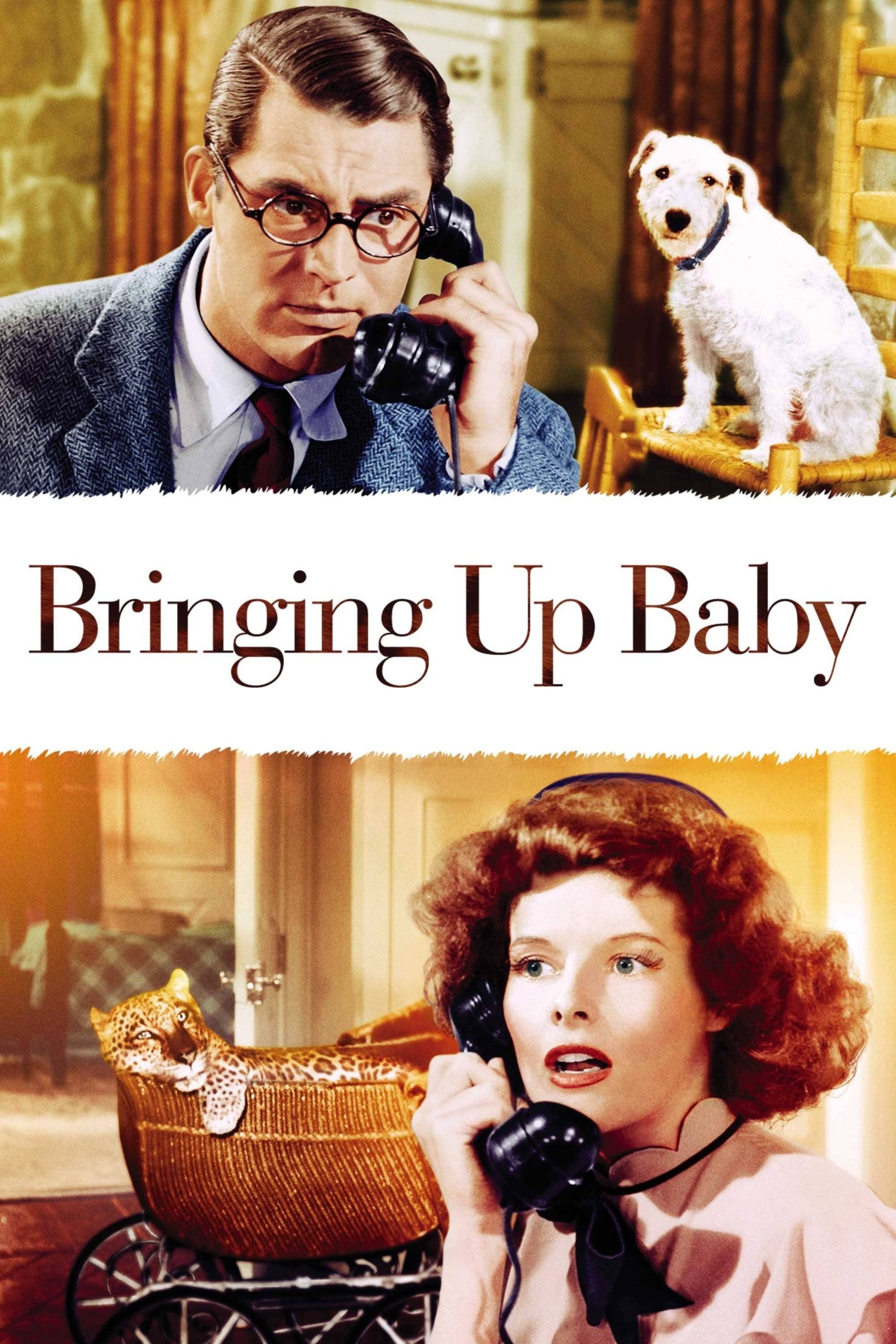
It’s rare that I feel genuine delight within seconds of a classic film starting, but Bringing Up Baby, directed by Howard Hawks, had me instantly charmed and slightly breathless from the rhythm of its wit. As I watched, I couldn’t help marveling at how tightly woven its narrative was, shunning conventional pacing for an almost screwball ballet of misunderstandings, mistaken identities, and madcap chases. For those who haven’t seen it, the movie centers on David Huxley, a paleontologist whose stuffy, orderly life is upended by the arrival of Susan Vance, a force of nature who bounces into his world—along with a tame leopard named Baby. The plot snowballs into a cascade of increasingly absurd escapades involving lost intercostal clavicles, society dinners gone awry, and the relentless presence of the utterly unpredictable Susan. Before I go further, fair warning: there are plenty of unexpected twists, but I’ll skirt obvious spoilers to keep your first viewing as fresh as mine felt.
What captivated me most about the story wasn’t just the chaos, but the sense that the universe itself was conspiring to nudge these two mismatched souls together. Each sequence tops the last in sheer audacity—whether it’s Susan driving off with David’s car or orchestrating a wild goose chase across the Connecticut countryside—but in the heart of all this lunacy, there’s something deeply satisfying about the gentle unraveling of David’s carefully constructed life. My favorite moments were those quiet beats where the comedy briefly paused, letting me glimpse the growing warmth between David and Susan beneath the slapstick layers.
Key Themes & Analysis
I’ve always been fascinated by films that use comedy to say something profound about the human experience, and Bringing Up Baby is a prime example of how the screwball genre can do more than simply make us laugh. For me, its most compelling theme is the liberation of self through chaos. David, played by Cary Grant, starts as the epitome of repressed academia—a man whose confidence rests on logic, facts, and controlled environments. Yet, it’s precisely through his brush with Susan’s anarchy (brought to dazzling life by Katharine Hepburn) that he discovers dimensions of himself he never dared acknowledge. I found myself rooting not just for their romance but for David’s own awakening—a comedic, but quite moving, journey from rigidity to joyful surrender.
Another angle I can’t ignore is the film’s sly thrust at gender norms. Watching Susan continuously upend social expectations—pursuing David, causing trouble, and rarely apologizing for her big personality—I sensed an undercurrent of subversion. Hawks, knowingly or not, hands Hepburn a rare kind of female agency for the era: she’s not the object but the agent of chaos, and it’s both David and the world around them that must adapt. The comedic set pieces, with their escalating confusions and role reversals, aren’t just empty laughs; they’re a commentary on the absurdity baked into rigid gender roles.
Stylistically, I was stunned by how Hawks orchestrates the chaos through razor-sharp timing, overlapping dialogue, and rapid-fire editing. The pacing reminded me of jazz improvisation—unpredictable yet precise. Cinematographer Russell Metty’s camera often lingers just long enough on Hepburn and Grant to let the smallest gestures speak volumes: a glance, a stifled laugh, a momentary hesitation. Those subtle choices, I think, are what make the humor land decades later. And then there’s the cast. Katharine Hepburn delivers what I felt was one of the most daringly energetic comedic performances of Hollywood’s Golden Age. Cary Grant, meanwhile, finds ways to make every physical gag and stammering protest deeply human. Their chemistry, for me, is the film’s beating heart.
My Thoughts on the Historical & Social Context
What strikes me each time I revisit Bringing Up Baby is how it slipped into American screens right as the world teetered on the edge of profound change. The film’s 1938 release falls squarely between the Depression’s waning years and the looming shadow of World War II. When I think about why such a zany, irreverent movie mattered to audiences then, I see it as more than escapism. It offered an invitation—to momentarily throw off the burdens of daily struggle, to embrace the absurd, and to find laughter amid uncertainty. The chaos that unfolds in the film mirrors the era’s own instability, but instead of breeding fear, it generates possibility and renewal. That, to me, is what makes its optimism feel earned rather than naive.
Even more fascinating is how the film’s subversion of authority and propriety lands in a time when the norms of American society—gender roles, class divisions, expectations around romance—were facing subtle, sometimes invisible, transformation. Hepburn’s Susan embodied a kind of liberated femininity that was just beginning to ripple through American consciousness, even if it wouldn’t fully crystallize until much later. When I watch her disrupt David’s careful routines and force him into situations where he must let go, I’m reminded of the broader cultural tensions of the late 1930s: the uncertainty about old rules and the hunger for new ones. The film’s irreverence speaks to a historical moment desperate for laughter, resilience, and change, which is why I still find it both relevant and exhilarating.
In today’s world, the film takes on new meaning for me. Its message—that embrace of unpredictability can lead to genuine connection and self-discovery—feels especially timely in our own times of upheaval. The reminder to find humor and joy, even (or especially) when life veers off-script, resonates more deeply every year. I believe that’s why the film’s playful spirit hasn’t faded, and why I keep recommending it to friends as a delightful antidote to cynicism.
Fact Check: Behind the Scenes & Real History
On a personal level, I find the production history of Bringing Up Baby nearly as fascinating as the film itself. One tidbit that always leaps to mind is the casting of Katharine Hepburn, who was not—contrary to what some assume—a natural choice for comedy at this point in her career. In fact, she was considered “box office poison” after a string of commercial flops, and Hawks reportedly had to coach her meticulously on the nuances of screwball timing. Her performance ended up being so magnetic that it almost single-handedly redeemed her status in Hollywood. The chemistry she develops with Cary Grant feels deceptively effortless, considering this context.
I’m also endlessly amused by the notorious leopard from the title. The animal, used to portray “Baby,” was a real live leopard named Nissa, who necessitated elaborate safety precautions. It gives me chills to remember that at one point, there were rumors of Hepburn being unfazed by her co-star while Grant was reportedly nervous around the animal, leading to the use of ingenious split-screen effects and body doubles for certain scenes. The smoothness with which these sequences play out on screen is, to me, a testament to Hawks’s innovative direction.
Finally, a point I think deserves attention is the film’s enduring reputation. While it’s now held up as a paragon of screwball comedy, its initial release was a box-office disappointment. Audiences at the time were perhaps unprepared for its relentless pace and rollercoaster plotting. Yet, over the decades, its influence has only grown—especially as later filmmakers recognized the brilliance of its construction and the depths beneath its surface-level zaniness. This slow burn to greatness reminds me that true art sometimes takes time to find its audience.
Why You Should Watch It
- For the dazzling interplay between Katharine Hepburn and Cary Grant, whose performances set a gold standard for romantic comedy chemistry.
- To witness some of the sharpest, funniest dialogue and perfectly executed comic timing in Hollywood history.
- If you crave a story where chaos isn’t just a backdrop, but the actual agent of liberation and transformation.
Review Conclusion
Every time I return to Bringing Up Baby, I’m reminded that true comedic brilliance lies in surprise—moments that upend our expectations, characters who leap off the screen, and stories that invite us to live (even briefly) free of our own constraints. Howard Hawks’s film isn’t just one of the sharpest screwball comedies ever made; it’s a celebration of the unpredictable, messy, joyous journey toward connection. I believe its spirit is as infectious now as it was in 1938, and for me, it earns a resounding 5/5 stars for the sheer pleasure and energy it brings to every frame.
Related Reviews
- The Awful Truth (1937): I recommend this one for how it similarly pairs Cary Grant with dazzling wordplay and rapid banter, but with a focus on the unraveling and rebuilding of a marriage. Both films revel in mistaken identities and comedic misunderstandings, but The Awful Truth provides a slightly more subdued, yet equally insightful, exploration of relationships gone awry and reborn.
- My Man Godfrey (1936): If you loved the social satire lurking beneath Bringing Up Baby’s madcap chaos, you’ll find My Man Godfrey equally sharp and relevant, with Carole Lombard and William Powell navigating class divides through relentless wit and eccentricity. It’s a different setting, but the same screwball energy and critique of upper-class foibles shine through.
- His Girl Friday (1940): Another Howard Hawks gem, this film takes the rapid-fire dialogue and gender role subversions of Bringing Up Baby into the world of newspaper reporting. Rosalind Russell and Cary Grant create an electric dynamic, showing how personal and professional chaos can lead to both comedy and deep self-realization. I always recommend it to those who want more of Hawks’s genius for orchestrating overlap between plot, performance, and bigger thematic questions.
If you want to explore this film beyond basic facts, you may also be interested in how modern audiences respond to it today or whether its story was inspired by real events.
🎬 Check out today's best-selling movies on Amazon!
View Deals on Amazon