
Plot Summary
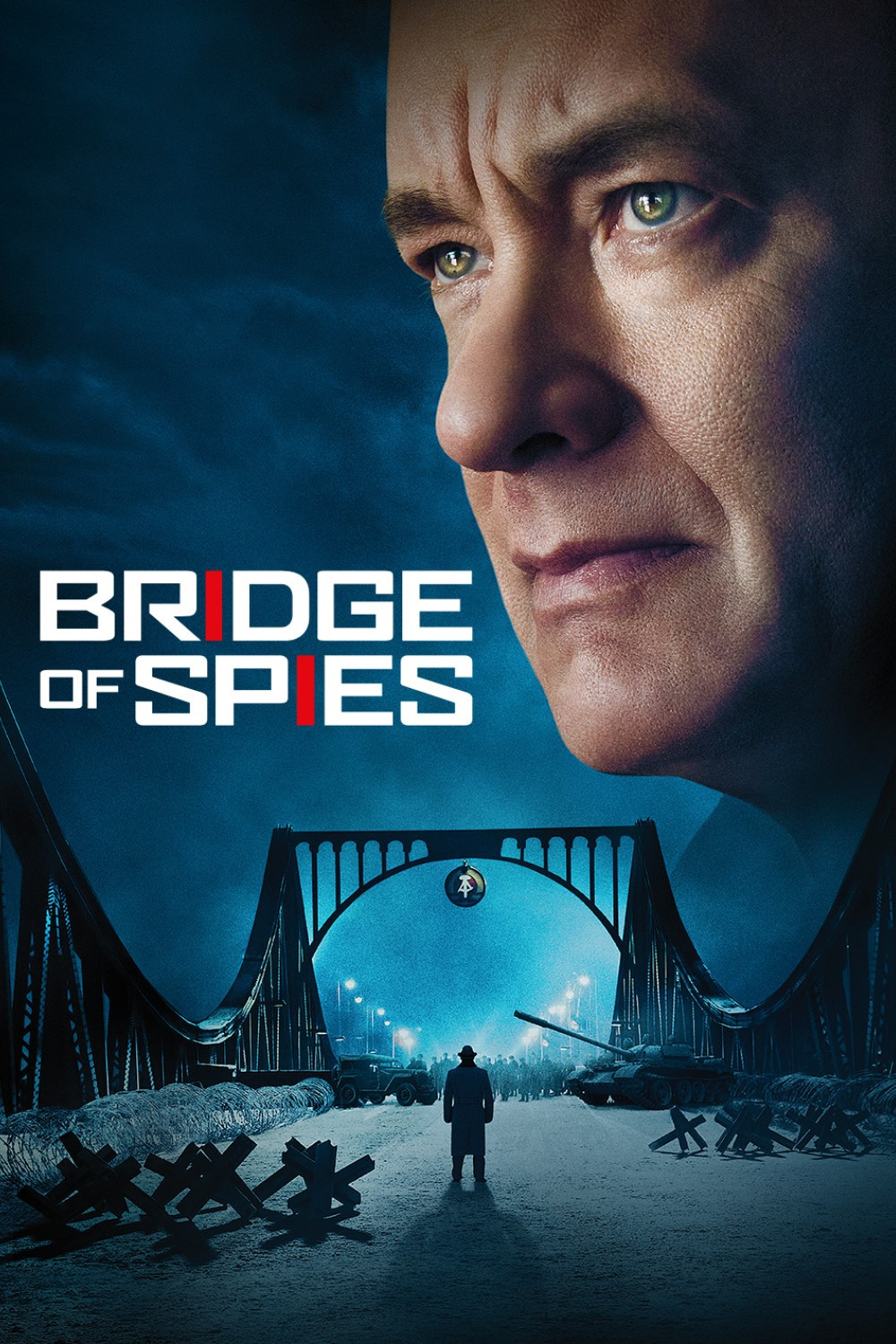
The first time I watched “Bridge of Spies,” I was instantly swept into the tense, paranoid atmosphere of a Cold War-era America—an era I have always found both fascinating and terrifying. Guided by Steven Spielberg’s meticulous direction, the film drops me into the world of insurance lawyer James Donovan, played by Tom Hanks at his most compelling. The core of the story follows Donovan, who is unexpectedly recruited to defend a captured Soviet spy, Rudolf Abel, then later negotiates a daring prisoner exchange for a downed American pilot and a wrongfully imprisoned student in the heart of East Berlin.
Without giving away major twists, what struck me most isn’t the web of espionage itself, but how the narrative quietly builds tension—not through action sequences, but through conversations, moral debates, and the psychological chess game between nations and individuals. While I was always aware I was watching a piece of history, the drama felt alive and personal, especially in scenes that pit Donovan’s sense of justice against a society plagued by fear and suspicion. The film doesn’t rely on bombastic set-pieces; instead, it cultivates suspense through everyday courage and ethical uncertainty, all evolving amidst a city literally and metaphorically divided.
Key Themes & Analysis
Above all, I see “Bridge of Spies” as a story about integrity under pressure. Steven Spielberg’s style—so often associated with spectacle—here reveals itself in restraint. I admired how Spielberg lets scenes breathe, allowing the quiet tension in a courtroom or on a windswept Berlin bridge to underscore the stakes. Janusz Kamiński’s cinematography invites the chilly gray-blue palette of the Cold War into every frame, making diplomacy feel as stark and cold as the landscape.
For me, the most powerful moments are those in which Donovan confronts not the Soviets, but his own neighbors and colleagues—ordinary people warped by fear. The theme of principle versus public opinion weighs heavily, and I found myself reflecting on the price of morality in the face of collective anxiety. The screenplay, crafted by Matt Charman and the Coen Brothers, cuts with wit and quiet devastation, making me question my own sense of what’s “right” when the world is determined to do the opposite.
Tom Hanks delivers more than just his trademark everyman warmth; I’m convinced his performance hinges on a stubborn decency that makes Donovan’s small victories resonate as heroic. Mark Rylance, as the enigmatic Abel, is almost spectral—understated, yet so fully inhabited that he forces me to empathize with “the enemy.” Their interplay, especially in moments of gently sardonic humor, provides unexpected humanity. Those performances, paired with Spielberg’s superb pacing and eye for historical texture, elevate what could have been a procedural drama into a contemplative meditation on trust, loyalty, and personal cost.
Every time I revisit the film, I find myself dwelling on how Spielberg addresses history without glorifying it. The narrative recognizes the paranoia of the era, but it’s the small, almost invisible acts of courage—Donovan refusing to abandon his values, showing kindness to Abel—that remain with me. These choices make the film not just a suspenseful thriller, but a quietly subversive commentary on what it really means to be brave.
My Thoughts on the Historical & Social Context
When I look at the 2015 release date, it’s clear to me that “Bridge of Spies” is as much a reflection on contemporary anxieties as it is a period piece. Watching it in a post-9/11, post-Snowden world, I felt the resonance of its central questions: How do we defend civil liberties when our society feels threatened by outsiders? I see the film speaking as much to today’s polarized debates about human rights and security as it does to any Cold War moment. Spielberg doesn’t let the audience sit comfortably—he asks us, through Donovan’s dilemmas, to decide where we draw our own moral lines.
In 2015, the world was steeped in arguments over transparency, the value of diplomacy, and the cost of paranoia. I sensed Spielberg’s intent to remind us that the past is tragically cyclical. When Donovan argues for due process for Abel, it echoes current debates about how we treat perceived enemies, immigrants, or “othered” communities. This persistence of fear and suspicion as corrosive forces is, for me, where the film achieves lasting relevance. I confess, I walked away wondering whether I’d have Donovan’s courage or fall prey to groupthink.
For modern audiences, the film’s sobering depiction of government secrecy and public hysteria holds a mirror to everything from diplomatic snafus to social media mob mentality. If anything, as the years pass and our global politics spiral between progress and regression, I find “Bridge of Spies” growing in relevance. Spielberg’s approach is never didactic; he simply offers difficult questions, and I find them gnawing at me long after the credits roll.
Fact Check: Behind the Scenes & Real History
Diving into the background, I was fascinated to learn how Spielberg insisted on shooting the pivotal Glienicke Bridge sequence on the actual “Bridge of Spies” in Berlin, despite the enormous logistical challenges. Filming at dawn in winter, the crew braved genuine freezing conditions to evoke the suffocating tension of the exchange—a decision that, in my opinion, gives those moments their palpable authenticity.
Another detail that caught my eye: though much of the film’s tension rides on historical accuracy, Spielberg and the writers took selective creative liberties. For example, in real life, James Donovan dealt with even greater suspicion and hostility at home. While the film hints at this, the actual press and public reaction was so vitriolic that Donovan’s family required police protection. I found myself reflecting on how the film softens these blows for dramatic clarity, but still leaves no doubt about the isolation faced by anyone who chooses principle over patriotism.
Casting Mark Rylance as Rudolf Abel was itself an inspired gamble. Spielberg had admired Rylance’s stage work and cast him despite his relative cinematic obscurity. That decision, for me, is critical: Rylance’s Academy Award-winning performance lends Abel a stoic dignity and tragic humanity that transforms him from a plot device into a living, breathing paradox. The chemistry between Hanks and Rylance, I believe, is what truly anchors the film’s emotional core.
Why You Should Watch It
- The film’s nuanced portrayal of international diplomacy and ethical dilemmas rivals the tension of any action thriller yet feels far more resonant and relevant.
- Tom Hanks and Mark Rylance deliver performances that shape the heart of the story, making their characters’ personal journeys unforgettable.
- Spielberg’s direction combines visual precision with careful restraint, making the Cold War setting immersive and suspenseful without relying on spectacle.
Review Conclusion
Every time I revisit “Bridge of Spies,” I discover something new about myself—about the way I view right and wrong, and the costs I would (or would not) bear to defend them. The film, in my view, forgoes easy answers for a complex, rewarding emotional landscape where compassion and conviction quietly triumph over bluster. Spielberg’s respect for the subtlety of human motives, married to Hanks and Rylance’s unforgettable duet, ensures the story lingers, burning quietly, at the back of my mind.
As a film critic and lover of history, I appreciate movies that challenge more than they comfort. For me, “Bridge of Spies” stands out as one of the most intelligent, morally challenging, and beautifully realized historical dramas of the last decade. I find it earns a place not just as a “good” Spielberg film, but as an enduring meditation on justice and human decency. My rating: 4.5/5.
Related Reviews
- “Munich” (2005): I recommend this Spielberg film for its similarly intense examination of personal morality under pressure, this time set against the backdrop of real-life political violence and the complexity of justice and revenge.
- “Tinker Tailor Soldier Spy” (2011): For viewers drawn to intricate plotting and understated suspense, this adaptation of John le Carré’s novel shares “Bridge of Spies”’ fascination with the emotional cost of espionage and a muted, gray Cold War aesthetic.
- “Argo” (2012): Ben Affleck’s direction balances humor, suspense, and a sharp look at diplomacy, offering another thrilling yet human-scale take on history’s hidden negotiations—perfect for fans who appreciate “Bridge of Spies”’ blend of fact and dramatic flair.
- “The Post” (2017): This Spielberg-Hanks collaboration explores the tension between government secrecy and freedom of the press. It’s an essential companion piece for those interested in stories where quiet resolve sparks social change.
- “Good Night, and Good Luck.” (2005): George Clooney’s black-and-white drama brings a sharp focus to the battle for truth during the McCarthy era—a period close in spirit to the anxieties and ethical muddles of “Bridge of Spies.”
If you want to explore this film beyond basic facts, you may also be interested in how modern audiences respond to it today or whether its story was inspired by real events.
🎬 Check out today's best-selling movies on Amazon!
View Deals on Amazon