
Plot Summary
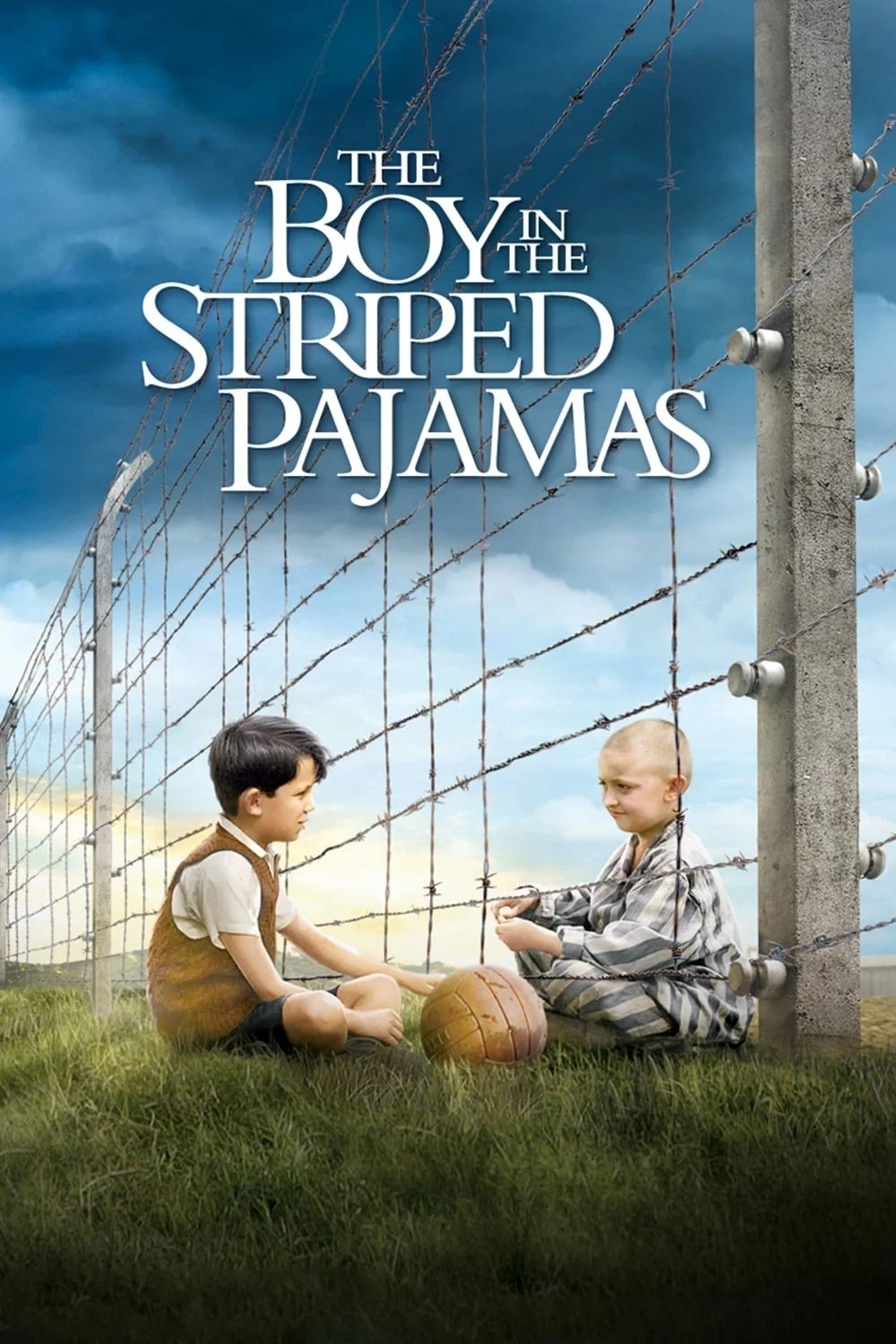
When I first experienced Mark Herman’s drama, I was struck by the quiet intensity that defines its early moments. The story, though elegantly simple at its surface, slides gracefully into a world divided by invisible yet impenetrable barriers. Set amidst World War II, I followed Bruno, the eight-year-old son of a high-ranking Nazi commandant, as he’s abruptly uprooted from his Berlin home to a chillingly remote countryside estate. The narrative unfolds through Bruno’s innocent eyes, shielded from the horrors that lurk just beyond his garden’s wire fence. Herman masterfully captures the confusion, curiosity, and moral awakening that slowly blossom in a child who doesn’t yet understand the world’s evils.
Bruno’s exploration leads him to the perimeter of what the adults call a “farm”—a place, I realized with growing dread, that is actually a concentration camp. There, a fateful friendship forms between Bruno and Shmuel, a boy behind the barbed wire, whose striped pajamas are, in fact, prisoner’s uniforms. The gradual yet powerful bond they share becomes the film’s axis, pushing me to reflect on innocence versus knowledge, and the devastating cost of ignorance. While the plot’s major turn might seem predictable to history’s witnesses, I was nevertheless unprepared for the emotional punch it delivers. If you haven’t seen the film, beware—major spoilers lie ahead should you choose to read detailed synopses elsewhere.
Key Themes & Analysis
As someone who obsesses over the intersection of narrative and cinematic craft, I found innocence and its loss to be at the heart of this film. The power of the story lies not in what is told but in what is left unsaid, what hovers in the silences between Bruno and Shmuel’s conversations. The film bends our perspectives—adult understanding versus childlike confusion—so I felt thrust into a world where “good” and “evil” are blurry, not yet crystalized inside a young mind. The physical fence, which the camera lingers on with deliberate hesitation, becomes a menacing character all on its own—a literal and figurative line that separates not just people, but consciousness and moral reality.
The cinematography by Benoît Delhomme amplifies this duality: home interiors are warm, suffused with the deceptive coziness of safety, while the exteriors near the camp are muted, tinged with cold blue-grays, always menacingly out of focus—mirroring Bruno’s oblivion. These choices are not accidental. The film’s camera is on a child’s level, both physically and thematically, heightening the disconnect between the adult world’s cruelty and Bruno’s search for companionship.
What struck me most about Herman’s direction is his restraint. He resists the impulse to sensationalize, trusting the audience to read between the lines. I found David Thewlis’s portrayal of Bruno’s father chilling in its normalcy, playing a monster with the self-assurance of a bureaucrat. Vera Farmiga, as Bruno’s mother, captures the unraveling moral center, a portrait of a woman stunned into grief as reality bleeds through polite denial.
Notably, I was repeatedly drawn to the performances of Asa Butterfield (Bruno) and Jack Scanlon (Shmuel). There is no melodrama—just small, genuine gestures that suggest a shared humanity over insurmountable obstacles. Their tentative, halting conversations serve as the emotional core, with both young actors conveying volumes in silence. I couldn’t help but see the film’s greatest success in its simplicity: horror never shouted, but softly revealed.
The pacing is deliberate; sometimes, it lingers uncomfortably on moments that lesser stories would breeze past. I appreciated this courage—forcing me, as a viewer, to reckon with complicity, ignorance, and empathy. This is not a film that provides easy answers or catharsis; it’s a work that stares back at you when the credits roll, whispering its indictment long after you leave the theater.
My Thoughts on the Historical & Social Context
Watching Boy in the Striped Pyjamas in a post-9/11 era, where so much of the world continues to grapple with the resurgence of nationalism and othering, I was reminded of the importance of stories that make us confront the limits of human empathy. Released in 2008, the film arrived at a time when Western audiences were already reckoning with questions of complicity—be it wars abroad or the quieter injustices at home. For me, the film’s refusal to give viewers an “out” by taking a purely historical stance is its sharpest tool. It stages its moral lessons in a way that felt relevant both to its contemporary moment and to our own uneasy present.
I’ve always believed that watching depictions of the Holocaust, especially through the eyes of a child, isn’t about education alone. It’s about reckoning with the fact that evil is far more banal and pervasive than we’d like to admit. Seeing Bruno’s world, with all its comforts and lies, made me question not just the past, but the narratives we replicate today—where innocence is a luxury, often insulated by privilege, and empathy is too often an afterthought.
This film also challenges me with its boldness—it doesn’t center Jewish voices, which is a legitimate criticism, and instead asks what happens when the agent of evil’s family comes face to face with its consequences. Some may find this choice controversial; I see it as a double-edged sword. On one hand, it risks shifting focus from victims to bystanders; on another, it invites uncomfortable but necessary self-reflection, implicating us in systems we’d rather ignore. In turbulent political times, I find that this narrative strategy still matters, forcing new generations to ponder, “What would I have done—and am I doing enough now to combat injustice?”
Fact Check: Behind the Scenes & Real History
As a devotee of production history and cinematic truth, I can’t help but dig beneath the surface. Here are three research-driven particulars that reshaped my appreciation of the film:
- The casting of Asa Butterfield wasn’t just fortuitous; it was crucial. Director Mark Herman auditioned hundreds of children for the role, seeking not simply a talented actor but a boy who projected innate curiosity and vulnerability. According to interviews at the time, Butterfield’s understanding of Bruno’s innocence—not naiveté—set him apart. I found this revelation fascinating, as so much of the film’s emotional weight hinges on his small, nuanced reactions.
- The film’s portrayal of the concentration camp diverges in significant ways from historical reality. In real camps, security was vastly stricter; it would have been nearly impossible for a civilian child to approach, let alone communicate through the fences. Scholars and survivors have pointed out such discrepancies. But as I see it, the filmmakers relied on symbolism rather than strict accuracy, using the friendship as an allegorical device rather than a plausible historical event. While I appreciate this creative liberty, I recognize the critical debate it generates among historians and educators.
- The visual design drew on extensive research into Nazi architecture, uniforms, and even propaganda imagery. Production designers sourced archival photographs to reconstruct both the family’s home and the camp exterior, lending an uncanny, unsettling authenticity to the film’s world. I was especially struck by how the “perfection” of the household interiors contrasts with the bleak uniformity of Shmuel’s world—an intentional, chilling juxtaposition.
Why You Should Watch It
- The film confronts audiences with haunting moral questions that extend beyond its era, compelling viewers to examine their own complicity in systems of exclusion or prejudice.
- Its intimate, child’s-eye storytelling strips away the veneer from historical horrors, delivering an emotional experience that lingers long after the final frame.
- The understated performances and nuanced direction elevate it above typical “Holocaust dramas,” offering a meditative meditation on innocence, identity, and empathy.
Review Conclusion
There’s no easy way to categorize my feelings for Boy in the Striped Pyjamas. It’s a film that commands silence as much as reflection, a cinematic experience that doesn’t traffic in spectacle but in the quiet, shattering moments that unexpectedly alter everything we thought we understood. Mark Herman coaxed some of the best performances I’ve witnessed in a child-centered drama, while keeping the focus uncompromisingly narrow and the emotional terrain uncomfortably raw.
I recognize the complexities—and, yes, even the controversies—around its approach to history. But I’m convinced the film’s core ambitions deserve admiration: forcing empathy, inviting the audience to stare into the abyss of human cruelty, and emerge changed. For those who can sit with discomfort, who crave film as a site of difficult moral interrogation, I give this work 4.5 out of 5 stars. It’s a story you don’t easily forget—and, perhaps, that’s the point.
Related Reviews
- Life Is Beautiful (1997) – This Italian masterpiece blends the innocence of childhood with Holocaust tragedy, using humor and fatherly love as shields against atrocity. Like “Boy in the Striped Pyjamas,” it places a child’s perspective at the center and asks us how hope survives in devastation. It’s a moving, visually inventive companion piece for those drawn to bittersweet irony and emotional storytelling.
- The Painted Bird (2019) – This haunting, visually arresting adaptation of Jerzy Kosiński’s controversial novel brings another child’s perspective from the wartorn landscapes of Eastern Europe. I recommend it for viewers interested in cinema that challenges, unsettles, and uses shocking imagery to probe the psychological trauma borne by children during conflict.
- Jakob the Liar (1999) – Chronicling a fabricated hope within a Jewish ghetto, this film explores themes of illusion, desperation, and moral courage under oppression. If you found yourself moved by the ambiguities and hard-won empathy in “Boy in the Striped Pyjamas,” this nuanced Robin Williams-led drama offers a similarly layered meditation.
- Son of Saul (2015) – Widely praised for its immersive, claustrophobic style, “Son of Saul” is a relentless examination of the Holocaust through one man’s eyes. Its innovative cinematography—often focused tightly on the protagonist—mirrors the subjective storytelling that impressed me so much in Herman’s film, but turns the intensity up even further.
- The Book Thief (2013) – For those who value the perspective of innocence and the transformative power of friendship in dark times, this adaptation offers another look at life under Nazi rule as seen by a child. I believe its quietly lyrical storytelling and focus on relationships justify its place alongside “Boy in the Striped Pyjamas” for audiences seeking both heart and historical resonance.
If you want to explore this film beyond basic facts, you may also be interested in how modern audiences respond to it today or whether its story was inspired by real events.
🎬 Check out today's best-selling movies on Amazon!
View Deals on Amazon