
Plot Summary
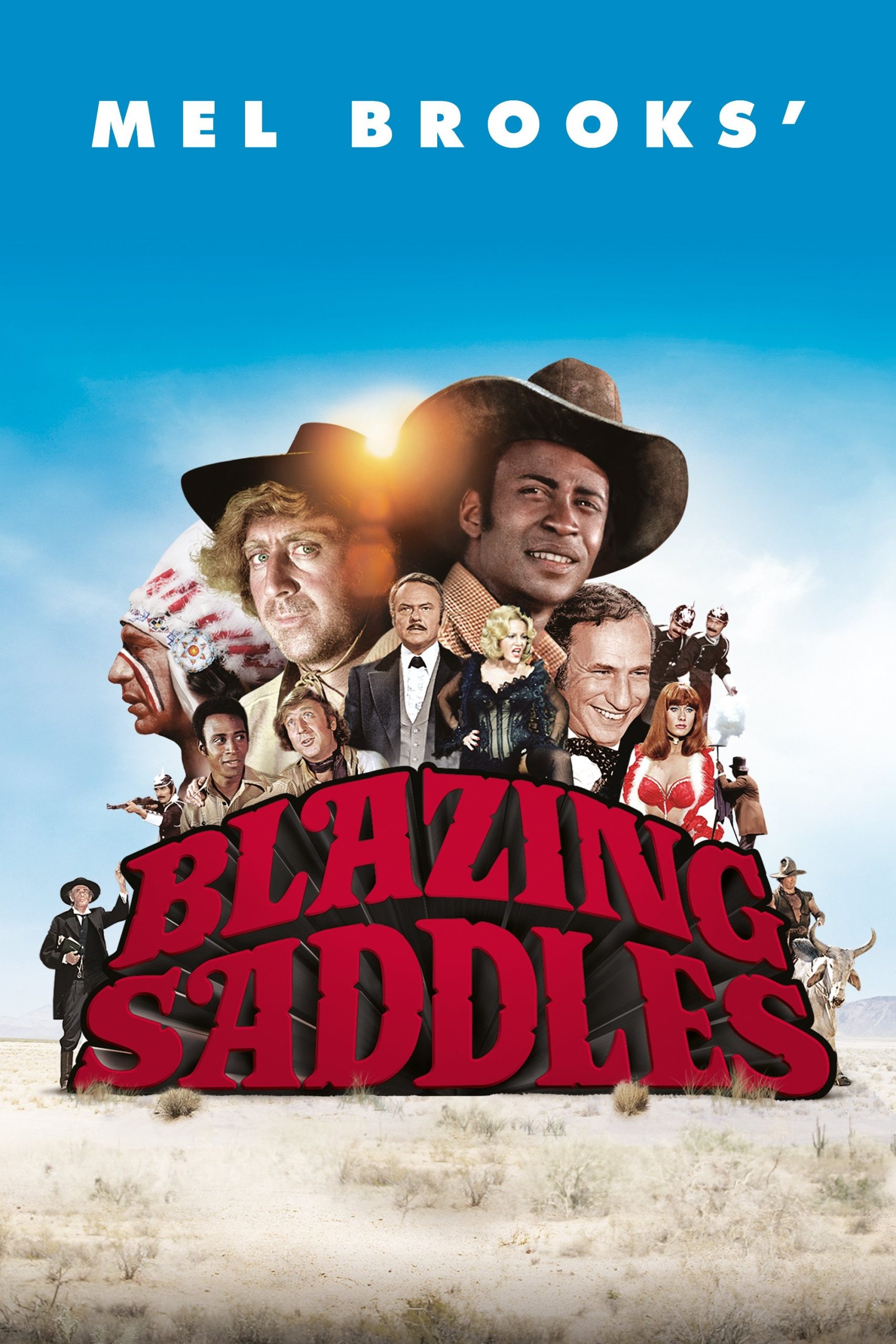
My first encounter with Mel Brooks’ Blazing Saddles wasn’t just a movie night—it felt like cinematic mischief breaking all the rules I’d ever come to associate with a Western. At its most basic level, the film tells the story of Bart, a Black railroad worker who is thrust—by cynical political scheming—into the role of sheriff in a deeply racist frontier town called Rock Ridge. The politicians’ plan is simple: appoint a Black sheriff, let the townspeople revolt, and clear the way for a lucrative railroad. What unfolds, however, is a relentless series of gags, near-the-knuckle social commentary, and a plot that is both an affectionate send-up and sharp critique of the Western genre.
I don’t want to rob anyone of the film’s riotous surprises, so I’ll avoid detailing the film’s outrageous finale. Suffice it to say, the plot gleefully sabotages convention: what begins as a fish-out-of-water tale about Bart navigating suspicion and outright bigotry becomes a larger spectacle of town-wide absurdity, culminating in a showdown that shatters not only the fourth wall but the fabric of Hollywood itself. Still, what lingers for me isn’t just the plot mechanics—it’s the audacious spirit with which Brooks and his writers turn every expectation inside out. If you think you know where it’s heading, prepare for a detour into the most anarchic reaches of film comedy.
Key Themes & Analysis
What I find genuinely radical about Blazing Saddles is how directly and unapologetically it confronts the ugly absurdities of racism, all within the stylings of a broad slapstick romp. Unlike films that tiptoe around the social climate of their era, Brooks foregrounds racial tension—the insults, the suspicion, and the cruel expectations the character of Bart faces are played for laughs, yes, but never at the expense of the message. The point lands all the harder because the comedy exposes just how ludicrous—and common—these attitudes were, not just in the “Old West” but in 1974 America, and frankly, even today.
The bravura of Brooks’ direction and the film’s screenplay rests in its willingness to make the audience confront their own complicity, to laugh awkwardly and then question the root of that laughter. I remember sitting in silence after certain jokes—realizing, sometimes uneasily, that the humor is pointed, intentional discomfort meant to strip away any sugarcoating of history.
The film’s visual style mocks and celebrates Westerns in equal measure. From the rolling tumbleweeds to the luminous night-time saloon interiors, every frame wears its parody credentials openly. Cinematographer Joseph Biroc gives the film a slightly heightened, almost cartoon-like palette, making everything feel larger than life—a perfect canvas for the outlandish characters and gags. Yet, there’s evident craft in the compositions, a keen awareness of what made classic Westerns epic, all redirected to serve comics ends.
As for performances, Cleavon Little’s sheriff Bart is a masterclass in charm, timing, and sly intelligence—he radiates a natural dignity amid the lunacy around him. Whenever Gene Wilder’s Jim, or “The Waco Kid,” stumbles into the frame, I find the film reaches some of its gentlest comedic summits. Wilder’s laid-back melancholy is the perfect counterweight to the mania playing out in the town. Madeline Kahn, as the Dietrich-inspired Lili Von Shtupp, quite simply devours the screen with every drawn-out syllable—her musical number is a showstopper, delightfully lampooning both genre archetypes and entertainment tropes.
Brook’s approach to comedy here goes well beyond slapstick: I notice how deftly Blazing Saddles employs meta-humor long before it was fashionable. The film’s endless winks to the camera, the breaking of narrative boundaries—these are not just throwaway moments but calculated structural jokes, constantly reminding me that the real target is not just racism or Hollywood Westerns, but the very conventions of filmmaking itself.
My Thoughts on the Cultural Impact & Legacy
For me, the lasting shock of watching Blazing Saddles isn’t just the outlandish jokes—it’s the realization that Mel Brooks dared to make such a film at all. When I think about its place in cinema history, I see a singular work that redefined the boundaries of satire and what was considered “acceptable” to say—on screen and in polite conversation. I find it remarkable (and a little inspiring) that the movie’s raw satire on race relations burst into theaters during a decade when censorship and public backlash were still potent forces. It paved the way for other filmmakers to be braver and more forthright, especially in their use of comedy as a tool of social disruption.
It’s impossible for me to separate my appreciation for this film from the sense of liberation it offers. Watching Blazing Saddles as a curator of film history, I’m amazed by its irreverence—not just toward bigotry, but towards the idea that movies have to play it safe. Its influence can be seen in the DNA of contemporary parody and meta-comedy, all the way from the broad gags of the Zucker brothers to the boundary-pushing satire of shows like “South Park.” For me, the film stands as both a time capsule and a timeless dare to speak uncomfortable truths through laughter.
Critically, it shaped the Western genre by undermining its hallowed myths, suggesting that sometimes the best way to address complicated historical realities is to stare right into them—with a grin and a whoopee cushion. As someone passionate about stories that challenge genre conventions, I appreciate how Brooks made the “anti-Western” a legitimate creative field. The film lingers in popular consciousness because it refuses to let either its characters or its viewers off the hook: progress, it argues with every barbed gag, is possible only if you first acknowledge the mess around you. That’s a message that feels just as urgent—and just as subversive—decades later.
Fascinating Behind-the-Scenes Facts
On a personal level, I’m always fascinated by the drama and serendipity that unfold behind the camera, and Blazing Saddles is packed with production stories that add to its legend. One detail that continually makes me smile: the role of Bart was almost played by Richard Pryor, who actually co-wrote the script with Brooks and others. Studio concerns over Pryor’s “reputation”—a thinly-coded anxiety about his bold stand-up material—kept him off screen, but his irreverent spirit radiates from every gag and line. Every time I watch Cleavon Little’s performance, I sense Pryor’s influence right beneath the surface.
Another delightful fact is the battles Brooks faced with the censors. I’ve read how the studio kept pushing for cuts, especially over the frequent use of racial epithets and risqué humor. Brooks fought fiercely, pointing out (correctly, in my view) that watering down the language would neuter the entire point of the film’s satire. That stubbornness didn’t just save the jokes—it preserved the entire project’s artistic integrity.
Finally, there’s the scene involving the infamous campfire—probably the most anarchic use of bodily humor I can remember in a mainstream film. The ability to slip something so outrageous past the studio heads, in a time of stricter censorship, is a testament to Brooks’ slyness and the peculiar freedom of the early 1970s. I personally think that moment alone did more to reset the bar for comedy than a dozen more genteel comedies put together.
Why You Should Watch It
- If you crave a comedy that exposes social hypocrisy without flinching, this is essential viewing—its humor isn’t just for laughs but serves as sharp-edged commentary.
- Fans of meta-humor and self-aware filmmaking will revel in the film’s genre-breaking audacity; its willingness to tear down the fourth wall and poke fun at Hollywood itself still feels groundbreaking to me.
- The performances—especially Cleavon Little, Gene Wilder, and Madeline Kahn—deliver a masterclass in comedic timing and character acting, elevating the film well beyond simple parody.
Review Conclusion
Reflecting on Blazing Saddles, I’m struck by how the film’s edge hasn’t dulled after all these years—it continues to thrill, provoke, and surprise me, much as it must have startled audiences on its initial release. Its legacy is not just as a riotously funny movie, but as a cultural artifact that proves comedy can be disruptive, even dangerous, when wielded fearlessly. For sheer craft, comedic boldness, and the clarity of its vision, I’m compelled to give it a 5/5—not because it is flawless, but because it achieves the rare feat of making me laugh, think, and question in equal measure.
Related Reviews
- Young Frankenstein (1974): Mel Brooks’ loving Frankenstein parody echoes the anarchic spirit and genre-subversion of Blazing Saddles. Each time I watch it, I’m reminded of Brooks’ ability to riff on movie archetypes with warmth and wit, making it a perfect companion piece for anyone who appreciates meta-humor and comic timing.
- Monty Python and the Holy Grail (1975): If you savor irreverence and genre deflation, Monty Python’s most iconic film is essential. For me, the Pythons’ surreal, boundary-breaking approach to medieval legend taps that same vein of satirical mischief and willingness to break narrative convention.
- Silver Streak (1976): Featuring both Gene Wilder and Richard Pryor, this action-comedy showcases the kind of chemistry and subversive humor that makes Blazing Saddles pop. I always recommend it for those looking to explore how these two legendary performers operated within—and outside—the mainstream.
- Dead Men Don’t Wear Plaid (1982): Steve Martin’s brilliant send-up of detective noir, packed with fourth-wall breaking and genre-bending panache, makes it a natural next step for fans who, like me, cherish the irreverence and homage of Brooks’ masterpiece.
For readers looking to go deeper, these perspectives may help place the film in a broader context.
🎬 Check out today's best-selling movies on Amazon!
View Deals on Amazon