
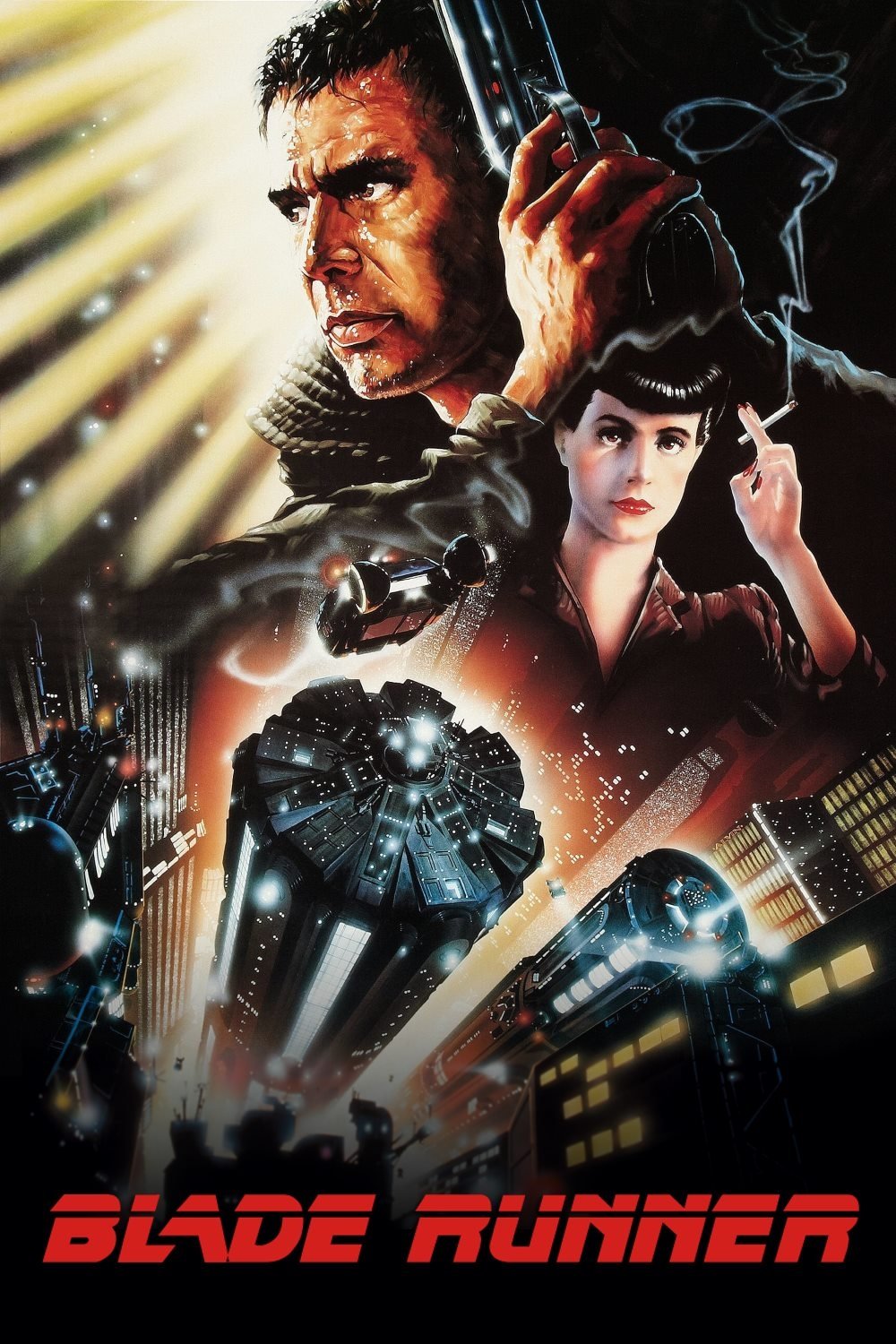
Plot Summary
My first encounter with Ridley Scott’s science fiction masterpiece was akin to stepping into a living, breathing fever dream of the future. Set in a rain-drenched, neon-flooded Los Angeles of 2019, the story follows Rick Deckard, a world-weary ex-cop pressed into service as a “Blade Runner”—a hunter of synthetic humans known as “replicants”. I was immediately drawn into Deckard’s journey, which is less about action and more an absorbing meditation on identity, consciousness, and morality. He is tasked with tracking down a group of rogue replicants, each wrestling with the finite constraints of their own existence. While I’ll avoid major spoilers, I will warn that Scott’s storytelling is so layered and nuanced that even the basic setup compels you to question what it means to be human. Every encounter, every shadowy alley, every whispered line delivers yet another clue about this dystopian world’s ambiguous moral realities—forcing me, as a viewer, to interrogate my own biases and sympathies.
Key Themes & Analysis
Watching Blade Runner, I always come back to its central theme: the blurry boundary between human and machine. What struck me most was how the film shuns simple black-and-white morality, instead immersing viewers in powerful ambiguity. The replicants aren’t mere villains; they are beings desperate to live, love, and understand the world around them. In Deckard’s haunted eyes, I witnessed not just the hunter but also a man teetering on the edge of his own existential crisis.
The cinematography is a revelation—Jordan Cronenweth’s moody lighting and smoke-choked frames suggested to me a noir-influenced future that felt both tactile and otherworldly. The dazzling cityscapes are cluttered yet beautiful, layered with glowing advertisements, perpetual drizzle, and the constant hum of industry. Even on repeat viewings, I catch fresh details—a flicker of neon, a shadow dancing across Rutger Hauer’s face—that flesh out the world’s oppressive mood.
I find Ridley Scott’s direction to be masterfully controlled. He invites us to savor quiet moments—Rachel’s trembling uncertainty, Roy Batty’s haunted soliloquy—just as much as the kinetic chase scenes. The performances are deliberate and nuanced: Harrison Ford’s subtle portrayal of Deckard gave me someone to root for and question, while Rutger Hauer brings palpable vulnerability and menace to Roy Batty.
Beyond its visuals and performances, the film lingers on broader philosophical questions. I’m fascinated every time by its open-endedness: Are memories our own if they can be manufactured? If our time is brief, does that make our yearning for meaning any less genuine? Blade Runner doesn’t preach; it whispers, coaxes, and occasionally confronts with quiet devastation. The Vangelis score is another constant presence—steeping every lost hope and broken dream in haunting, synthetic melodies that somehow feel heartbreakingly human.
What truly resonates, time after time, is how Blade Runner turns its science fiction trappings inside out. This isn’t about laser guns or intergalactic battles—it’s a cinematic poem about the nature of experience. The film’s ending (especially in the “Final Cut”) leaves me contemplating not just Deckard’s fate but my own understanding of empathy and mortality.
My Thoughts on the Cultural Impact & Legacy
What continues to captivate me about Blade Runner is its extraordinary footprint on cinema—and on me as a film enthusiast and curator. When I first watched it, I realized I was seeing the dawn of a new kind of science fiction, one that dared to blend philosophy with aesthetics in ways previously unimagined. The film’s influence can be felt everywhere: in the sprawling city vistas of Ghost in the Shell, in the meditative rhythms of Ex Machina, and especially in the moral ambiguity of so many post-1980s dystopias.
The film’s resonance lies in its refusal to offer easy answers. Instead of wrapping up its ideas with a neat bow, Scott lets every viewer linger in uncertainty—about Deckard’s humanity, about the morality of hunting sentient beings, about the blurry ethics of progress. This willingness to dwell in the grey area is why I still find it fresh, even decades later.
For me, Blade Runner’s legacy is twofold: It changed the visual language of movies—I can’t see a rain-soaked city or a flickering hologram without thinking of it—and it pushed science fiction to become a vehicle for real human introspection. The sheer audacity in asking, “What makes us real?” gave filmmakers and audiences alike new permission to dream darker, deeper, more profoundly. I see its traces in every modern film that handles technology and humanity with mature skepticism.
On a personal level, I find that the film’s quiet, persistent undercurrent of longing—both the replicants’ and Deckard’s—matches my own human questions about purpose, memory, and connection. It’s a reminder that great science fiction isn’t about machines. It’s about what we’re willing to see of ourselves in the mirror they hold up.
Fascinating Behind-the-Scenes Facts
As much as I admire the finished product, it’s the stories behind the scenes that give Blade Runner its mythic stature in my mind.
First, I was fascinated to learn about the clashing visions between Ridley Scott and the crew. The production was infamously turbulent. The British Scott’s meticulous attention to visual detail clashed with Hollywood’s faster-paced system, leading to what became known as “Blade Runner blues” among the crew. I’m always amazed the film’s layered beauty emerged from such creative chaos—it’s a testament to Scott’s uncompromising vision.
Second, Harrison Ford’s experience on set was, by his own admission, fraught with frustration. I’ve read that he and Scott butted heads over Deckard’s characterization and the ambiguous script rewrites, yet I think this tension infused Ford’s performance with a realistic sense of cynicism and exhaustion. Hearing Ford reflect later on how little clarity he had about the character’s backstory gives new meaning to the uncertainty that runs through Deckard’s every move.
Finally, I’m continually struck by the fact that Roy Batty’s iconic “tears in rain” monologue wasn’t in the script as written. Rutger Hauer ad-libbed and condensed his final speech on the night of filming, transforming what could have been rote villain dialogue into one of the most poetic and moving moments in film history. The power and vulnerability he injected in those improvised lines have lingered with me ever since.
Why You Should Watch It
- It challenges you to question what it means to be human, merging science fiction with real emotional stakes.
- The visual world-building remains stunning and influential—few films offer such a richly realized atmosphere.
- You’ll experience performances and moments that have set new standards for the genre, resonating long after the credits roll.
Review Conclusion
Every time I revisit Blade Runner, I find new shadows, new questions, and new reasons to marvel at its audacity. It’s a film that invites thought rather than demanding obedience, a film that treats the viewer as a collaborator in unraveling its mysteries. For anyone searching for cinema that lingers—a movie that hums in your subconscious for days—this is a singular, provocative achievement. Personally, I give it 5/5 stars—not just for what it accomplished in its moment, but for how it continues to shape the possibilities of film and imagination today.
Related Reviews
- Ghost in the Shell (1995) – I see this anime classic as Blade Runner’s spiritual sibling. Its soulful meditation on identity and its breathtaking cityscapes mirror many of Blade Runner’s core fascinations—expanding on the theme of artificial consciousness in a future-drenched aesthetic.
- Children of Men (2006) – If you were drawn to the emotionally charged dystopia and deft world-building in Blade Runner, Alfonso Cuarón’s vision of a world without hope will hit just as hard. For me, both films dig deeply into what it means to cling to humanity in dehumanizing times.
- Ex Machina (2014) – For viewers who found the moral ambiguity and sparse, intimate drama of Blade Runner compelling, Alex Garland’s parable about artificially created intelligence feels like a logical next step. I appreciate its unnerving minimalism and profound ethical challenges.
For readers looking to go deeper, these perspectives may help place the film in a broader context.
🎬 Check out today's best-selling movies on Amazon!
View Deals on Amazon