
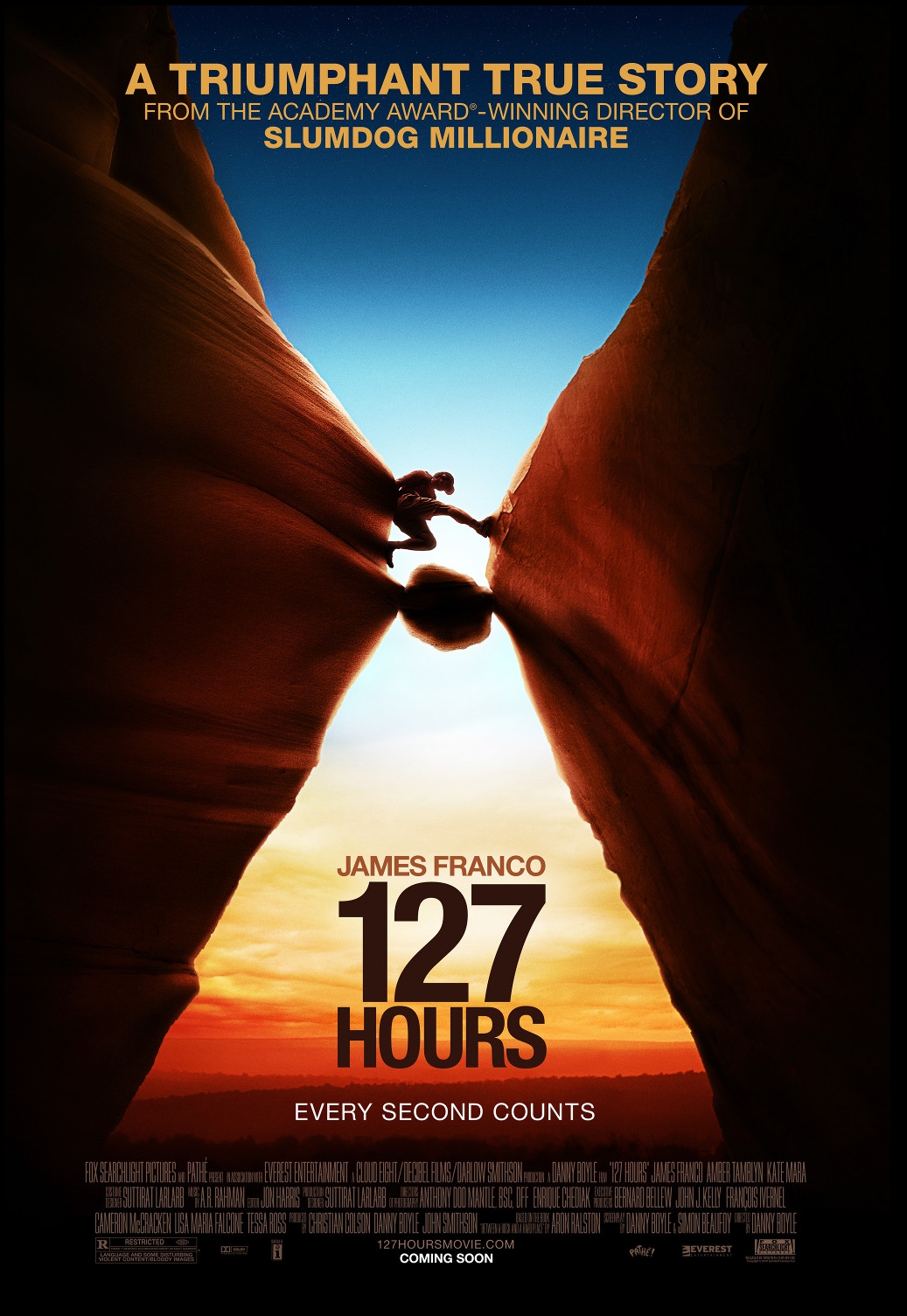
The story of human resilience often finds its most powerful channels through cinema, and few films are as visceral and immersive in this regard as “127 Hours.” Directed by Danny Boyle, celebrated for his kinetic storytelling and Oscar-winning film “Slumdog Millionaire,” this survival drama thrusts viewers into one of the most harrowing true tales of survival in modern history. Blending elements of biographical, adventure, and psychological drama, “127 Hours” stands out within the genre for its gripping intensity and groundbreaking cinematic techniques.
Plot Summary
Set in the breathtaking and unforgiving landscape of Utah’s Canyonlands National Park, “127 Hours” tells the extraordinary true story of Aron Ralston, a young and adventurous mountain climber and canyoneer. Embarking on a solo trek, Ralston’s journey of self-reliance and thrill-seeking soon takes a dire turn. After inadvertently dislodging a boulder, he finds himself trapped, his right arm pinned against the canyon wall in a position with seemingly slim hope for escape.
As hours turn to days, Ralston is pushed into survival mode. Armed with scant supplies and the unyielding isolation of the canyon, he draws upon not only every ounce of physical endurance but also the powerful reserves of his mind. Through vivid hallucinations, flashbacks to family and friends, and raw confrontation with his own mortality, the audience is drawn intimately into his experience.
Spoiler Warning: For those unfamiliar with Ralston’s autobiography or the real news event, the film’s climax features a shocking, self-rescuing decision that is both horrifying and inspiring. However, for much of the runtime, “127 Hours” wisely focuses on the emotional and psychological turmoil rather than dwelling on the physical trauma, making it as much about the human spirit as the dire situation itself.
Key Themes & Analysis
At its core, “127 Hours” is a meditation on isolation, the instinct for survival, and the profound effects of memory and hope. Through Danny Boyle’s dynamic direction, the film transforms what could have been a static, one-location narrative into an exhilarating cinematic experience. The use of split screens, rapid editing, and inventive sound design immerses the audience right alongside Aron Ralston, conveying both his internal chaos and his fleeting moments of calm introspection.
Thematically, the film explores:
- The Will to Survive: Ralston’s ordeal is the physical manifestation of mankind’s innate drive to persist, even under the most excruciating odds. Boyle frames the struggle not just as one against nature, but also as a battle within Ralston himself, highlighting the psychological barriers as much as the physical ones.
- Regret and Reflection: Trapped with only his thoughts and a video camera, Ralston is haunted by memories and unresolved relationships. Flashbacks are handled with a dreamlike quality, offering glimpses into past choices and regrets. These moments breathe humanity into the ordeal, raising poignant questions about how we use—or squander—each moment of our lives.
- Freedom and Connection: Ralston’s daredevil attitude has often left him isolated from meaningful connections. The film gracefully tracks his journey from self-sufficiency to profound longing for connection, making his struggle not merely a physical escape, but a spiritual one.
James Franco’s performance as Aron Ralston is a masterclass in one-man acting. Bearing almost the entire film single-handedly, he delivers a tour de force: raw, nuanced, and emotionally compelling. The progression from cocky adventurer to desperate survivor is rendered with subtle authenticity. Even as Ralston faces unimaginable pain, Franco infuses the role with wry humor and unyielding determination, ensuring audiences remain invested in his plight.
From a cinematographic perspective, Anthony Dod Mantle and Enrique Chediak’s work transforms the claustrophobic confines of the canyon into both a character and a crucible. The interplay of natural light, extreme close-ups, and swirling overhead shots regularly disrupts spatial expectations, reflecting Ralston’s mounting sense of entrapment and moments of transcendence. A.R. Rahman’s buoyant and pulsing score dynamically shifts between anxiety and hope, tightly matching the rhythm of Ralston’s dwellings and decisions.
Danny Boyle’s direction elevates “127 Hours” from a survival narrative to an experiential odyssey. His use of subjective camera angles, at times deploying hallucinations and daydreams, allows viewers to inhabit Ralston’s mindspace, making the film deeply personal and emotionally gripping. Stylistically, Boyle’s pacing and tonal shifts maintain suspense, despite the confined setting and seemingly inevitable outcome.
Why You Should Watch It
- Intense and Immersive Filmmaking: The film’s dynamic direction and innovative camerawork make “127 Hours” an unforgettable viewing experience that stands apart in the survival genre.
- James Franco’s Riveting Performance: Franco’s transformative, career-defining portrayal as Aron Ralston commands attention, empathy, and ultimately inspires.
- Powerful True Story: The film’s foundation in real events underscores its emotional impact, offering not only suspense but also a sobering celebration of the resilience of the human spirit.
Review Conclusion
“127 Hours” is not just a testament to human survival; it is an exploration of what it means to live and be connected. Through Danny Boyle’s visionary direction, James Franco’s immersive performance, and a carefully crafted narrative untethered from melodrama, the film transcends the boundaries of its genre. It is as much about the choices we make as the accidents that befall us, and how, even at our lowest points, we can rediscover purpose and redemption.
The raw intensity and inventive storytelling ensure that “127 Hours” is an essential cinematic experience. Both harrowing and uplifting, it invites viewers not only to witness but to feel Ralston’s ordeal—an odyssey marked by physical pain, psychological endurance, and ultimately, the triumph of hope. For its unflinching honesty and dazzling execution, this film merits a strong rating of 4.5 out of 5 stars.
🎬 Check out today's best-selling movies on Amazon!
View Deals on Amazon