
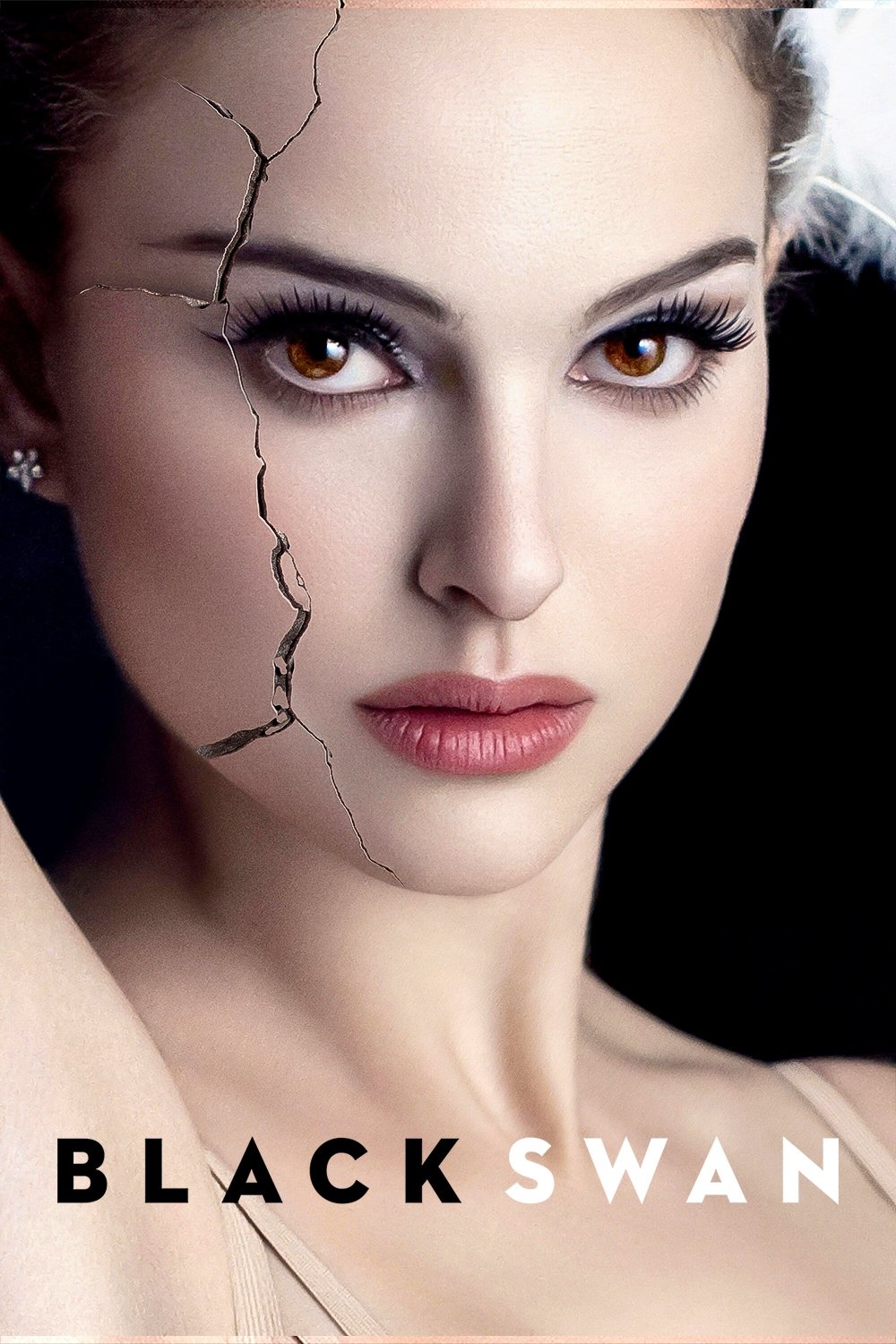
Plot Summary
While I’ve watched countless psychological thrillers, Black Swan enveloped me immediately in a way no other film had before. Crafted by director Darren Aronofsky, the movie pulls viewers into the ethereal yet merciless realm of professional ballet through the story of Nina Sayers, a dancer obsessed with perfection. Set against the chilly backdrop of New York City, the film follows Nina’s increasingly fracturing mindset as she vies for the covetable lead in a new production of Swan Lake. As her dreams and pressures collide, I watched with mounting unease, knowing that Aronofsky was building an experience rather than a straightforward narrative. This is a film that moves in and out of reality, never revealing its full hand until the audience is fully enmeshed in its feverish logic.
Nina—the central figure, performed with startling rawness by Natalie Portman—exists in a fragile balance between innocence and desire. She must embody both the pure White Swan and the dangerous, sensual Black Swan. What grabbed my attention was not only her technical brilliance but the film’s depiction of how her self-imposed discipline and suppressed identity spiral into something almost mythic. The supporting cast—her overbearing mother (Barbara Hershey), manipulative director (Vincent Cassel), and the enigmatic new dancer Lily (Mila Kunis)—all seem to orbit Nina’s unraveling psyche, supporting the sense of a psychological pressure cooker.
I found that the film’s plot threads are so tightly interwoven with Nina’s internal state that describing the story risks giving too much away. Without straying into major spoilers, I can share that as opening night looms, Nina’s grip on reality becomes more tenuous. Incidents that may or may not be hallucinations stack up, and I sensed my own understanding warping moment by moment. It’s the kind of storytelling that left me questioning what was real both for Nina and for myself as a viewer.
Warning: From this point, mild spoilers may be present.
Soon, I was swept up by the fiercely competitive world that pushes Nina toward not just greatness, but near-total self-destruction. The lines between Nina and the Black Swan, ambition and madness, start to blur to a degree that left me breathless by the film’s finale. That eerie ambiguity lingers long after the credits roll.
Key Themes & Analysis
What stunned me most about Aronofsky’s film isn’t just its nerve-racking pace or aesthetic perfection, but how deeply it burrows into questions of identity, obsession, and artistic sacrifice. The duality of the White Swan and Black Swan is never just about ballet technique; for me, it becomes a prism for understanding the contradictions within ourselves—the longing to remain safe versus the urge to break free.
I repeatedly found myself drawn into the film’s visual language. Matthew Libatique’s cinematography keeps the camera close to Nina, with handheld movements that mimic her sense of claustrophobia. There’s a persistent sense of being boxed in, which made me feel as if I, too, was gasping for air. Mirrors fill the screen—literal and metaphorical reflections that emphasize self-surveillance and dissociation. At one point, the way a reflection lingers on Nina’s face suggests her identity is already splintering, and these subtle choices sealed my admiration for the film’s technical mastery.
The sound design is another aspect that stays with me: whispers, the shuffling of pointe shoes, and Tchaikovsky’s score all blend to create a fever-dream atmosphere. I felt myself physically responding to these audio cues—they work almost subconsciously, amplifying the mounting horror inside Nina’s mind.
Yet, all of this would have fallen flat without the commitment of the performers. Natalie Portman’s performance is, in my eyes, one of the most daring and complete transformations I’ve seen on screen. She inhabits both terror and yearning, restraint and abandon, sometimes all within a single scene. When Portman’s Nina succumbs to moments of ecstasy or self-doubt, I could feel that vulnerability in my gut. Supporting roles, especially Mila Kunis’ ambiguous Lily and Vincent Cassel’s manipulative director, serve as tantalizing foils—both threatening and seductive reflections of Nina’s fears and desires.
Beyond its psychological complexity, I think Black Swan is a statement on the destructive requirements of art—how the ideal of “perfection” can consume the creator as much as the creation. I found myself deeply unsettled by the way the film navigates the thin edge between inspiration and breakdown. Aronofsky doesn’t offer easy answers or sentimental redemption. Instead, every frame seems to suggest that reaching true artistic brilliance might require a devastating sort of surrender.
It’s this relentless interrogation of drive and duality, presented with both elegance and dread, that makes Black Swan—in my experience—so unforgettable.
My Thoughts on the Cultural Impact & Legacy
Choosing what I value most about Black Swan’s cultural legacy is no easy feat. This is a film that, to my mind, fully reshaped how psychological thrillers approach internal conflict and the crisis of self. Before its release, cinema was dotted with stories about obsession, but very few matched the visceral, embodied fear this film demands from its audience.
What still resonates with me—even years later—is how Black Swan navigated and ultimately changed the conversation around female ambition and identity onscreen. For me as a curator and critic, it proved that genre films could tackle gender, mental health, and creative costs unapologetically and in profoundly visual ways. Since Black Swan, I’ve watched directors and writers borrow its palette of anxiety, surrealism, and bodily horror to explore the minds of their own protagonists. You see its shadow in works as varied as psychological horror, feminist cinema, and even mainstream dramas.
Personally, I find myself returning to this film for its willingness to stare down the ugliest parts of ambition. Black Swan argues that the relentless pursuit of perfection has real, sometimes ruinous psychological costs. In my own explorations of cinema, that message feels both universal and timeless. It’s a reference point—for myself and, I suspect, for many critics—to debate how much suffering we accept for beauty, and at what price.
I credit Black Swan not only for giving us an electrifying portrait of an artist but for pushing filmmakers and audiences to expect more from psychological drama. It remains, for me, a film whose influence is detectable every time someone risks vulnerability or delves into the unstable territory of the mind. That lingering legacy is why I continue to champion it, both as a lover of film and as someone who values what movies can teach us about ourselves.
Fascinating Behind-the-Scenes Facts
Whenever I recommend Black Swan, I always share a few behind-the-scenes stories that give depth to the movie’s onscreen intensity. For instance, Natalie Portman underwent a grueling transformation, spending up to eight hours a day training in ballet before cameras even rolled. She worked with choreographers and actual dancers to achieve authenticity, and I learned that Portman even sustained injuries (including a dislocated rib) during production—commitment that I feel pulses through every scene.
Another fact I find especially fascinating is the tight shooting schedule and indie-level budget that forced the team to be exceptionally creative. Despite the film’s lush visuals and elaborate dance numbers, the $13 million budget required Aronofsky’s crew to work lean. Much of the film was shot on borrowed sets—Aronofsky leveraged relationships with real ballet companies in New York, using their rehearsal spaces and even integrating actual dancers into pivotal scenes. When I notice how grounded and tactile the film feels, I remember these resourceful choices.
And then there’s the inspired casting: Mila Kunis was cast after Aronofsky saw her work on That ‘70s Show, despite initial skepticism from financiers. Kunis dove headlong into the physical regimen and developed a natural, dangerous chemistry with Portman. Their on-screen dynamic—simultaneously nurturing and predatory—adds vital electricity to the story. Personally, I think the gamble absolutely paid off, resulting in a supporting role that’s every bit as unforgettable as the lead.
Why You Should Watch It
- The film is a masterclass in blending psychological tension with visual artistry—each frame is meticulously designed to reflect Nina’s unraveling mind, making it a deeply immersive experience.
- Natalie Portman’s performance is transformative and haunting, a rare role that pushes the limits of emotional and physical vulnerability in cinematic storytelling.
- Black Swan challenges the audience to confront difficult truths about ambition, identity, and the cost of artistic perfection, leaving questions and emotions that linger long after the viewing ends.
Review Conclusion
After all these years, Black Swan remains one of the few films that genuinely disturbed and dazzled me in equal measure. Darren Aronofsky’s directorial precision, combined with Portman’s fearless performance and the hypnotic visual storytelling, ensures it stands as a cultural milestone for psychological thrillers. I recommend it to anyone willing to be unsettled and awestruck by a story that cuts to the bone of creative obsession.
Star Rating: 5/5
Related Reviews
- Perfect Blue (1997) – I recommend this animated film for viewers drawn to psycho-thrillers that blur reality and identity. Like Black Swan, it’s a disturbing portrait of an artist losing herself to obsession, with surreal visuals and social critique.
- Whiplash (2014) – For its unyielding portrayal of the pursuit of artistic greatness, this film’s intense mentor-mentee dynamic, psychological tension and exploration of excellence-at-any-cost closely echo Black Swan’s themes.
- Requiem for a Dream (2000) – Also directed by Darren Aronofsky, it’s a chilling study in addiction, delusion, and self-destruction, making it essential viewing for those who crave films that push boundaries and expose the rawest human vulnerabilities.
- The Red Shoes (1948) – This classic ballet film was a clear influence on Black Swan. I recommend it for its passionate exploration of how the love for one’s art can veer dangerously toward obsession—perfect for viewers fascinated by the intersection of beauty and madness.
For readers looking to go deeper, these perspectives may help place the film in a broader context.
🎬 Check out today's best-selling movies on Amazon!
View Deals on Amazon