
Plot Summary
Watching “Bigger Than Life” for the first time, I felt immediately swept into a world where every detail simmered with unease—a sense of normalcy on the surface that’s riddled with quiet desperation beneath. In this drama helmed by Nicholas Ray, something about the set-up—a schoolteacher leading what looks like a suburban ideal—invited me to anticipate disruption, and I wasn’t disappointed. For those hoping to experience the film with fresh eyes, I’ll steer clear of substantial spoilers, but I need to sketch the framework that so fascinated me: at its heart, this is a tale of one man’s gradual descent from an ordinary life into an extraordinary crisis, spurred by unexpected medical intervention.
James Mason plays Ed Avery, a man whose routine existence gets upended after he develops a serious illness. The prescribed treatment—a then-experimental drug—works wonders initially, but what I found memorably unsettling is how Mason’s performance shifts as the film goes on. Ed morphs from affable everyman to a figure whose behavior becomes more alarming, transforming domestic tranquility into an escalating nightmare. Family members, especially his wife Lou (portrayed by Barbara Rush), and son Richie, become both witnesses and collateral to these frightening changes. As the plot unfolds, the pressure cooker atmosphere mounts: there’s a palpable sense of ordinary life being stripped away layer by layer, replaced with something both bizarre and disturbingly plausible. Even without full spoilers, I can say the journey it charts is one of unexpected darkness and fraught family dynamics.
Key Themes & Analysis
What struck me most about “Bigger Than Life” was its acute dissection of American suburban existence—a world that, on the surface, promised comfort and conformity in the 1950s. From my vantage point, Ray isn’t simply telling a story about illness, but instead, he’s laying bare the rot beneath domestic bliss, critiquing both societal expectations and the unchecked faith in medical miracles. Watching the camera linger in tight, sometimes claustrophobic domestic interiors, I couldn’t shake the sense that these visuals echo Ed’s psychological entrapment.
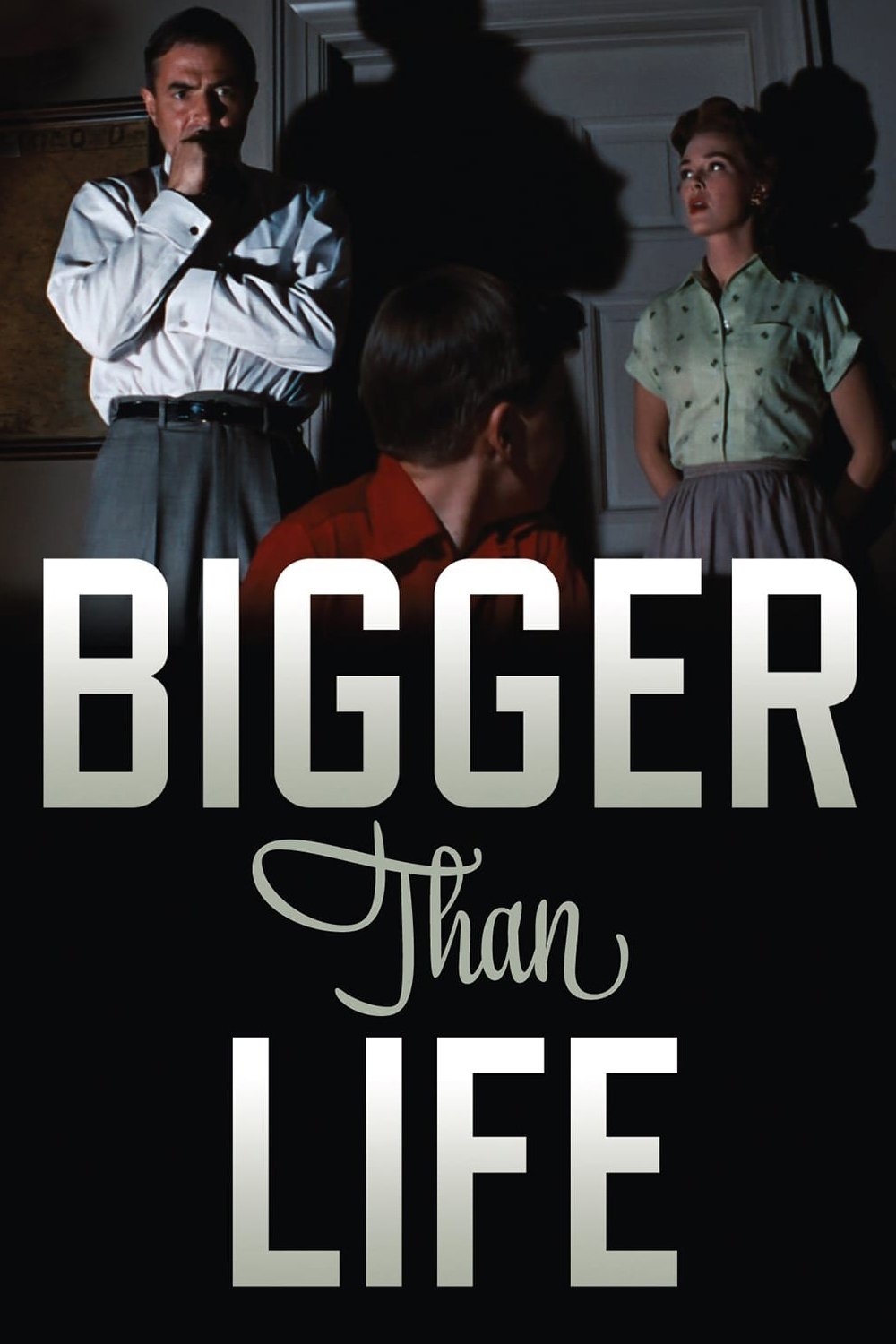
Cinematography plays a central role here. Cinematographer Joseph MacDonald uses bright, wide-angled compositions that contrast sharply with the story’s increasingly bleak mood. There’s a deliberate clash: well-lit rooms, saturated in bold colors, frame characters who look more trapped than comforted. For me, this visual tension amplifies the movie’s themes—it’s as if the “American Dream” façade is fighting to remain intact while everything inside is collapsing.
Mason’s performance as Ed Avery is nothing short of extraordinary. I was moved by how he modulates his tone and posture, growing more grandiose and severe, yet never slipping into caricature. His portrayal made me consider the thin line between heroism and hubris—Ed’s initial gratitude for his “miracle” cure devolves into something much darker: a sense of omnipotence that warps his values. Barbara Rush gives the story its emotional anchor. As Lou, she combines quiet fortitude with palpable terror, making the viewer acutely aware of her powerlessness in the face of Ed’s unraveling. Walter Matthau, playing a loyal friend, adds a touch of grounded realism to the ensemble.
The screenplay refuses easy answers. I found Ray’s approach daring, especially for the era: he interrogates the then-emerging American culture of conformity, consumerism, and medical optimism. The movie dares to ask what happens when the quick fixes offered by science and society actually fracture what they’re meant to protect. More than just a drama about addiction or mental health, “Bigger Than Life” forces viewers—me included—to confront anxieties about masculinity, authority, and the myth of infallible parental control. These aren’t just period-specific tensions; they feel alarmingly at home in current times.
Directorial choices drive the film’s tension relentlessly forward. Ray’s ability to render psychological horror within the framework of a domestic melodrama is masterful. I was consistently impressed with the way he turns simple dinner scenes or school meetings into fraught, suspenseful set pieces—the real terror, he seems to suggest, lives in our homes and minds, not in some distant, shadowy corner of the world.
My Thoughts on the Historical & Social Context
What draws me into “Bigger Than Life,” beyond its craftsmanship, is its direct engagement with the anxieties that haunted 1950s America. This was the era of postwar prosperity, when television commercials beamed hopeful visions of happy families and scientific progress promised to solve every problem. I can sense, in every frame, Ray’s skepticism toward those easy promises. There’s an undercurrent of dread about what lies beneath the surface: the film becomes a vivid allegory for the perils of uncritical faith in authority—be it medical, parental, or societal.
It’s hard not to connect Ed’s descent into delusion with broader Cold War fears, where the greatest threats were often homegrown and insidious, lurking beneath the ordinary. The mounting pressure on Ed to be the provider, the ideal man, and the perfect parent mirrors anxieties I see echoing even now—with the relentless demands placed on families and the willingness to accept radical solutions, no matter the cost. This context makes the film resonate deeply with me: it’s not just a critique of its own era but a chilling foreshadowing of ours.
I’m also struck by how the film’s attitudes toward illness and mental health both reflect and challenge its time. Ed’s treatment is presented as miraculous at first, and his subsequent unraveling is met by confusion, shame, denial—not only by him but by those around him. This tension between public expectation and private suffering remains deeply relevant, especially in our ongoing debates about healthcare, overmedication, and masculine identity.
Thinking about the 1950s audience, I imagine how jarring it would have been to see a film so openly question the pillars of American life—fatherhood, professionalism, and medical science. For me, “Bigger Than Life” feels like a quiet scream against complacency, making it as urgent today as it was unsettling for its original viewers.
Fact Check: Behind the Scenes & Real History
Digging into the film’s production history, I find several aspects both surprising and illuminating. For starters, James Mason wasn’t just the lead actor—he also served as a producer. This dual role allowed Mason to help shape the film’s psychological complexity. His personal investment in the project is evident in how fully he inhabits Ed Avery; he fought to protect the story’s darker elements, which studio heads considered controversial at the time.
What fascinates me further is the film’s basis in actual medical history. “Bigger Than Life” was inspired by an article written by journalist Berton Roueché for “The New Yorker,” chronicling a real patient’s experience with cortisone therapy. In real life, the drug was indeed new and seen as a miracle, albeit with virtually unknown long-term effects. Ray and Mason adapted this reality into a cautionary tale, amplifying the psychological drama to drive home their warning about overreliance on untested treatments—and the dangers of pursuing perfection at any cost.
I also uncovered an intriguing detail about the film’s visual style. Nicholas Ray insisted on using CinemaScope, an unusually wide format for intimate drama. I think this gamble paid off spectacularly: the vast, horizontal frames have a way of rendering the family’s home both open and stifling—the very spaces meant to comfort instead become stages for silent despair. Few melodramas of the era looked quite like this, and Ray’s choice transformed what could have been a small domestic story into an epic examination of American values in crisis.
Why You Should Watch It
- The film delivers a deeply unsettling take on the American Dream, exposing the hidden costs of suburban perfection and medical “progress.”
- James Mason’s performance is among his finest—his transformation from loving father to menacing figure is both harrowing and unforgettable.
- Nicholas Ray’s daring direction and visual style elevate the narrative into something both hauntingly beautiful and powerfully relevant to modern audiences.
Review Conclusion
Looking back on my experience with “Bigger Than Life,” I’m struck by how fully it challenged my expectations. I had anticipated a classic melodrama; instead, I found myself caught up in a devastating social critique laced with genuine suspense and horror. This is a film that refuses to reassure. Every stylistic choice, every confrontation, every moment of quiet collapse contributes to a feeling that the most dangerous ruptures aren’t external catastrophes—they’re the silent storms waged within the home. The movie lingers with me, not just for its craft but for its audacity to challenge, expose, and disturb—qualities that ensure its resonance long past its release.
Out of five stars, I give “Bigger Than Life” a 4.5/5. It’s a masterclass in psychological drama, and its relevance has only grown with time.
Related Reviews
- All That Heaven Allows (1955) – I recommend this Douglas Sirk melodrama because it also interrogates the myths of idyllic suburban life, using color and composition to unmask conformity and repression, much like Ray does here.
- Safe (1995) – For a more modern spin on anxieties about health, family, and societal pressures, Todd Haynes’ film recalls “Bigger Than Life” in its unnerving portrait of a woman’s slow, suffocating disintegration within comfortable suburbia.
- Revolutionary Road (2008) – Sam Mendes’ adaptation of Richard Yates’ novel offers a contemporary examination of suburban discontent and marital strain, echoing the psychological battles and shattered facades that resonate so powerfully in “Bigger Than Life.”
If you want to explore this film beyond basic facts, you may also be interested in how modern audiences respond to it today or whether its story was inspired by real events.
🎬 Check out today's best-selling movies on Amazon!
View Deals on Amazon