
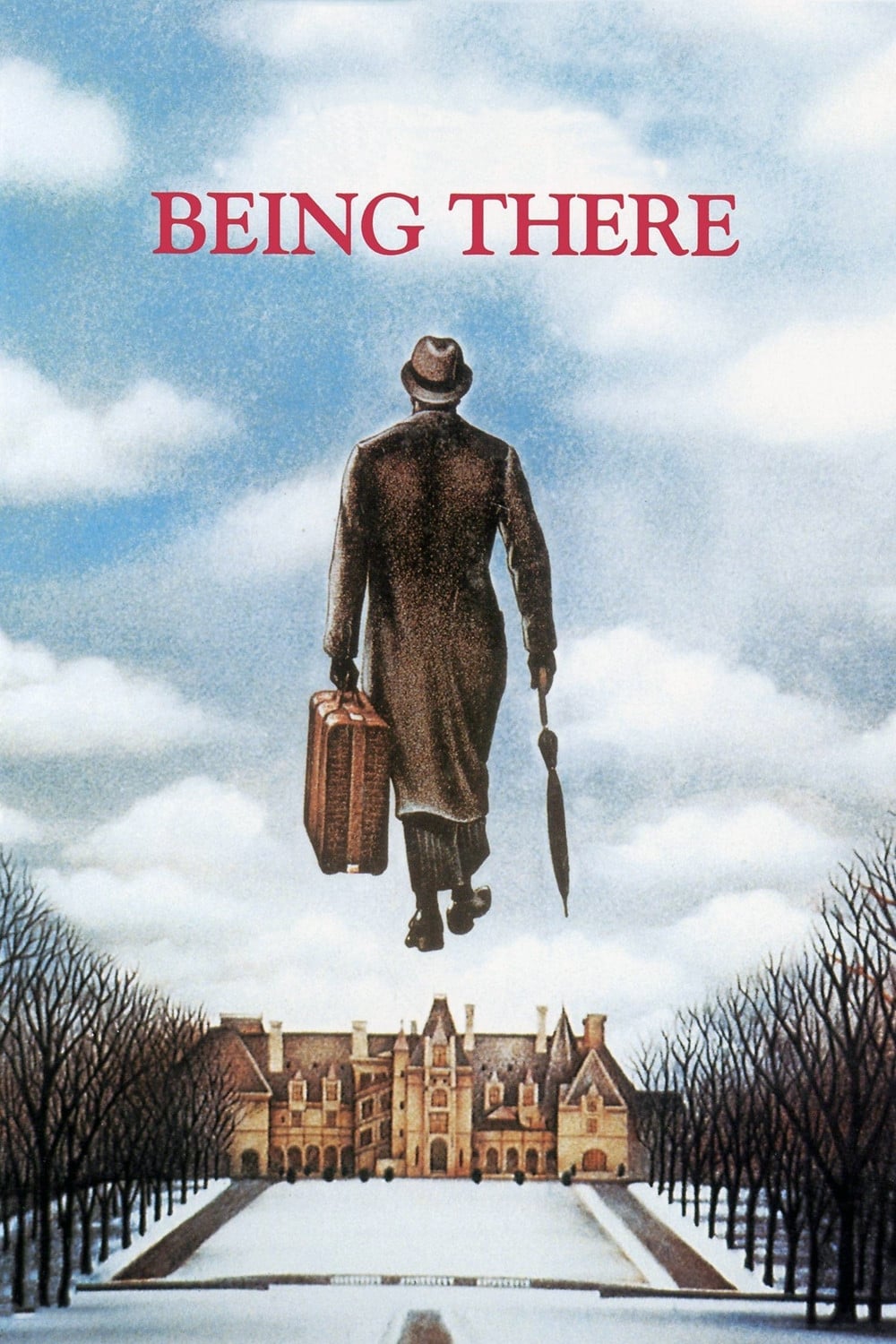
Plot Summary
Whenever I recall the first time I saw Hal Ashby’s masterful “Being There”, released in 1979, what lingers most vividly is not the story itself but the quiet audacity with which it unfolds. The film, billed as a satire, somehow sneaks up on me as both hilarious and haunting. It’s built around Peter Sellers’ character, Chance, a sheltered, almost childlike gardener whose entire experience comes from tending flowers and watching television. When I try to describe the plot to others, I can’t help but marvel at how little and yet how much actually “happens”.
The core of “Being There” lies in Chance’s abrupt displacement from his lifelong home. After his benefactor’s death, he’s swept into the wider world—a Washington, D.C. both familiar and entirely alien to him. This supposedly naive man, knowing little of politics or society, is mistaken for a person of profound wisdom due to his sparse, placid comments about gardening, which the political elite interpret as brilliant metaphors. Watching Chance, I always sense more than farce; there’s a deep discomfort in how easily powerful people project their own needs and ambitions onto him. This film is about perception—how we see, what we want to see, and the danger in confusing the two.
Major plot twists do arrive—if you wish to remain entirely unspoiled, skip ahead to the next section. For those ready: as Chance is taken into the fold of a dying power broker and his wife (beautifully portrayed by Melvyn Douglas and Shirley MacLaine), his slow drift to national prominence exposes breathtaking gullibility at the highest levels. My jaw dropped during each new twist of fate and misunderstanding. The longer I watched, the more I felt implicated in the joke: Who really understands those who guide us? Who decides what wisdom is?
Key Themes & Analysis
Every time I revisit “Being There,” I’m unmistakably struck by the film’s razor-sharp satire of American media, politics, and the illusion of competence. Ashby doesn’t just mock institutions—he questions what, beyond image and sound, gives anyone credibility in the eyes of society. Sellers’ performance as Chance is understated yet extraordinary; he doesn’t “perform” so much as simply exist on screen. There’s a serenity, a purity in his demeanor that leads others to fill his silence with meaning. I find myself uncomfortably aware that we all do this, in some way, with the people around us.
What astonishes me is the film’s refusal to provide clear answers. The cinematography, with its languid, observational lensing, places me as a complicit observer—I watch as others watch Chance. The careful use of still shots and almost surreal shifts in tone creates an uncanny distance, inviting me to question not just what I’m seeing, but how easily I might fall for surface appearance myself.
Director Hal Ashby, to my mind, crafts a world in which the satire is always balanced by a haunting sense of emptiness. Ashby’s direction relies on stillness: long takes, minimalist editing, and subtle framing. Scenes are built not on chaos, but on watching the world attempt to make sense of Chance, even as he quietly resists definition. To me, Shirley MacLaine’s Eve is more than a character—she is a vessel for the audience’s own need to find depth, to yearn for connection and meaning where there may be none at all.
Among the most interesting directorial choices is the film’s use of television as both a literal and symbolic background. The omnipresence of TV in Chance’s life is mirrored by the media’s role in inflating public perception. The more Chance repeats what he’s heard, the more profound he sounds. This is a movie that, for me, is less about plot and more about the mechanics of misunderstanding—how language, power, and appearances circulate endlessly until no one remembers their original purpose.
The performances anchor the satire in reality. Sellers offers a level of restraint I rarely see in comedic roles; his blank stares, gentle confusion, and simple answers are unforgettable. Melvyn Douglas, in a role that would win him an Oscar, embodies the vulnerability of old money and political clout, yearning for renewal. MacLaine’s subtle emotional notes—her fragility, hope, and growing confusion—make the absurd situation feel uncannily plausible. Together, their work creates a delicate balancing act between comedy, pathos, and social critique.
If there’s a single, defining theme that cuts through “Being There” for me, it’s society’s hunger for meaning, and our readiness to invent it even in the most unlikely of places. The film skewers pomposity and gullibility, but it also exposes something deeply human: the risk of mistaking emptiness for virtue simply because we want to believe in something, or someone.
My Thoughts on the Historical & Social Context
Having soaked up “Being There” many times over the years, I always return to the question of why this satire hit with such precision in 1979. The political climate of late-1970s America was marked by post-Watergate distrust, anxiety over leadership, and a media landscape growing ever more powerful and pervasive. To me, the film lands right in the crosshairs of those anxieties. Americans were wondering just who, if anyone, could be trusted. When a character like Chance—devoid of experience, expertise, or even clear opinions—is mistaken for a sage, I can’t help but see it as a damning commentary on how desperate society had become for stability or simple answers.
For me, Ashby’s film straddles a fascinating cultural fault line. The pain of political disappointment after scandals, the stagnation of economic malaise, and the edge of technological change all suffuse “Being There.” I sense the exhaustion of an era searching for belief, whether in leaders, ideologies, or even TV personalities. The film captures a rare American mood—cynicism layered with yearning, satire shot through with loneliness. It’s no wonder the story is built around a character who learns everything from television; in many ways, television was rapidly becoming the lens through which America saw itself, a phenomenon that feels even more relevant now, in our media-saturated world.
I can’t ignore the present-day echoes. Watching “Being There” now, in an age dominated by reality TV, social media personas, and “viral wisdom,” the notion that visibility can be mistaken for depth, and that image can overtake substance, hits even harder. The gap between public perception and private reality—so brilliantly rendered by Ashby and Sellers—remains painfully close to my own contemporary concerns about celebrity politicians or influencers celebrated for empty slogans. In my eyes, the film’s true sting is that almost nothing has changed; our hunger for easy heroes and our tendency to misunderstand only grows with new technology. It’s clear to me that “Being There” predicted much more about the future than it perhaps intended.
Fact Check: Behind the Scenes & Real History
Diving deep into the stories behind the making of “Being There,” I’ve encountered a few remarkable details that only deepen my appreciation for the film. First, the casting of Chance was almost as unpredictable as the character himself. Peter Sellers lobbied extensively for the role, even firing his own agent to convince the studio. Sellers saw Chance as a departure from his usual comedic fare, aiming for authenticity and subtlety; some behind-the-scenes accounts mention his dedication, down to rehearsing movements with extreme precision to achieve that almost-empty presence. The final performance—both hilarious and tragic—was, in my view, a testament to Sellers’ genius.
There’s another story about the film’s ending that’s always fascinated me. Hal Ashby’s decision to shoot the famous final scene was, reportedly, met with studio resistance. The now-iconic image of Chance walking across the surface of a pond was not in Jerzy Kosinski’s original novel. Ashby insisted on including it, sensing that its ambiguity would spark conversation and debate. For me, this moment crystallizes the entire film—are we to take Chance as a kind of blank prophet, or has the world so lost its grip on reality that even the impossible appears plausible?
The production itself wrestled with authenticity. The Washington, D.C. locations and the upper-class interiors reflect an insider’s eye for detail. Even little moments, like the television being constantly on in the background, were meticulously crafted to reinforce the story’s themes. The filmmakers reportedly sampled real TV broadcasts to ensure a sense of reality bled into the film’s fiction. That dedication grounds the satire and lends the film its unsettling power.
Why You Should Watch It
- A singular performance by Peter Sellers—watching him balance innocence and inscrutability is a revelation for anyone who loves character-driven cinema.
- Timeless commentary on media, politics, and the dangers of projection—the satire feels eerily relevant to today’s world of viral personalities and surface impressions.
- Hal Ashby’s distinct directorial touch—the film’s mood, pacing, and visual style stand apart from typical comedies or satires, offering a hypnotic experience I rarely find elsewhere.
Review Conclusion
I’ve returned to “Being There” more times than almost any other satirical film, and each viewing shapes how I think about human nature, politics, and the performance of wisdom. What Ashby and Sellers achieved isn’t just clever or funny—it’s uncomfortably prescient. The film’s central joke is also a warning: that in a world desperate for meaning, we may mistake silence for depth and accident for intention. I can’t recommend it enough to viewers curious about the intersection of comedy, tragedy, and sharp social observation. My star rating: 5/5.
Related Reviews
- “Dr. Strangelove or: How I Learned to Stop Worrying and Love the Bomb” – I always recommend this to fans of “Being There” because Peter Sellers’ ability to juggle multiple identities and deadpan comedy is similarly showcased, but here in a satirical, political disaster setting. The thematic overlap—government absurdity, the consequences of misunderstanding—feels like a spiritual sibling.
- “Network” (1976) – For those who found Ashby’s critique of media compelling, “Network” pushes those ideas into explosive territory. I’m continually amazed by its prophetic take on television’s corrosive relationship with truth, making it a must-watch for anyone who appreciated the sharp edges of “Being There.”
- “The Graduate” (1967) – Viewers drawn to Ashby’s subtle direction and ambiguous tone will find similar pleasures in Mike Nichols’ classic. Its meditative pace, offbeat humor, and undercurrents of existential confusion have always reminded me of Chance’s journey and outsider status.
- “Harold and Maude” (1971) – Another Ashby film, but one that uses gentle irony and unique relationships to explore outsidership and the construction of meaning. If you resonated with the balance of restraint and eccentricity in “Being There,” Harold and Maude’s unconventional, poignant bond will feel immediately connected.
If you want to explore this film beyond basic facts, you may also be interested in how modern audiences respond to it today or whether its story was inspired by real events.
🎬 Check out today's best-selling movies on Amazon!
View Deals on Amazon