
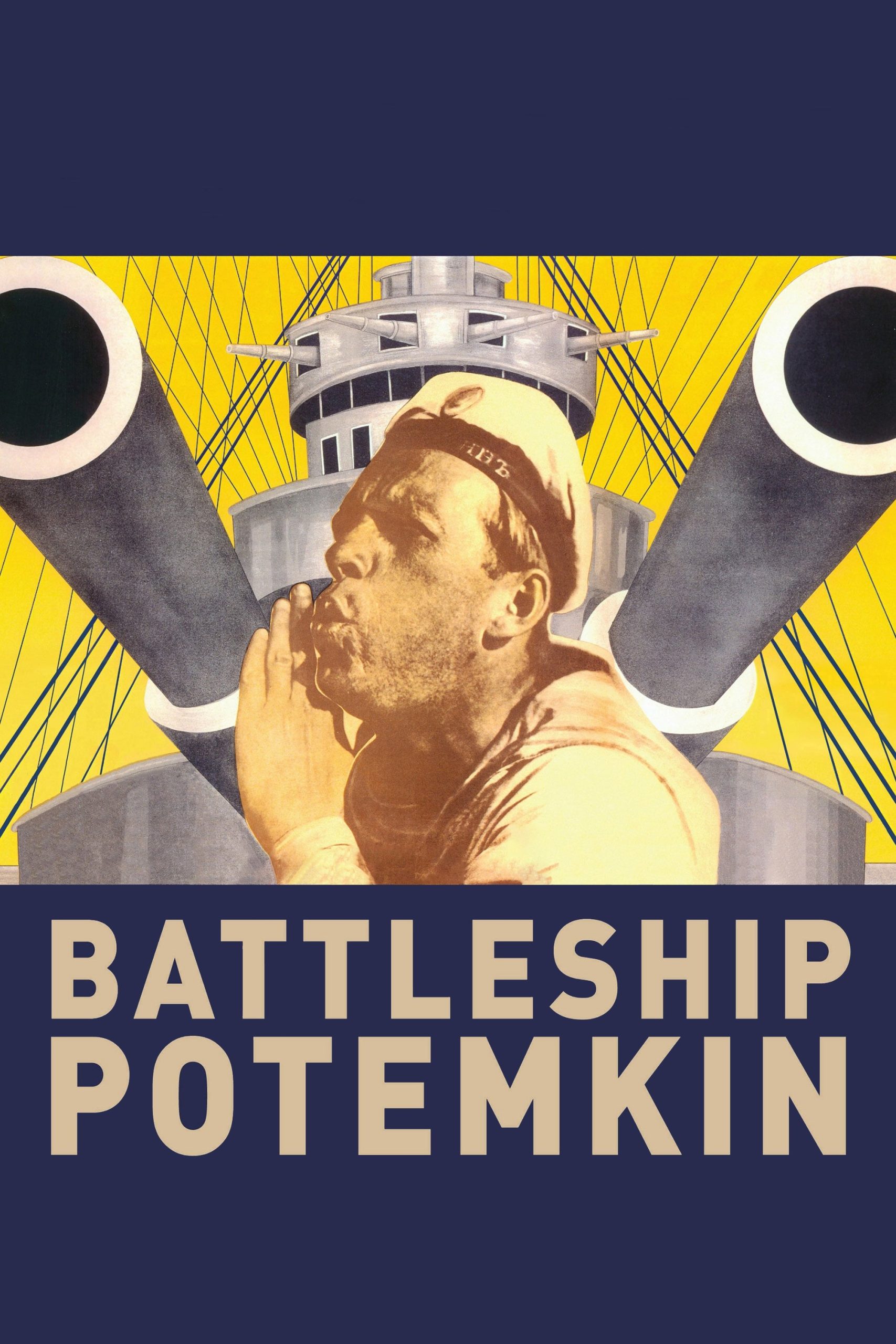
Plot Summary
From the very start, I found myself pulled headlong into a world of tension and revolt that Sergei Eisenstein so brilliantly crafts. “Battleship Potemkin,” released in 1925, is an experience that is less about individual characters and more about the tidal surge of collective action, all set aboard a Russian battleship in 1905. I immediately sensed the gravity of the seething mood among the sailors, an undercurrent of resistance brewing under brutal authority. While the initial setup may appear straightforward—a mutiny against oppressive officers—I felt the real narrative unfurl through the way the mood moves and changes among the masses. The story’s beauty, for me, lies in its emotional crescendos and how the plot becomes less about plot points and more about the searing force of injustice.
Without delving into key spoilers too soon, I would advise readers to brace themselves for a sequence that has become one of the most iconic—and unsettling—in film history. The film reveals plenty through gestures and glances before unleashing a full-scale rebellion whose ripples can almost be felt through the screen. Every act of defiance, every escalation, is shown through mesmerizing visuals and collective rage rather than dialogue-heavy exchanges. If you are expecting a plot that centers on a singular hero, you will instead find that the real protagonist here is the act of solidarity itself—something I found profoundly stirring and still relevant.
Key Themes & Analysis
What struck me most upon my first viewing was how the film refuses to remain just a work of historical recreation. Themes of collective oppression, unity, and sacrifice are woven into its very fabric. When I watched the sailors struggle with their inedible rations—a simple detail like maggot-infested meat—I could feel the mounting insult and frustration. This indignation does not just sit on the surface but fuels the whole ship and, by extension, the viewing audience. Eisenstein’s direction ensures that we don’t just watch; we participate in the maelstrom of injustice.
The cinematography, for me, stands apart as one of the most influential aspects. I was awed by the way Eisenstein manipulates montage, using rapid editing, rhythmic repetition, and close-ups to intensify emotion. In particular, the Odessa Steps sequence became for me a master class in how to choreograph panic and horror. The famous use of a baby carriage tumbling amid the chaos—a scene still referenced and parodied nearly a century later—demonstrates not only technical prowess but Eisenstein’s relentless commitment to ensuring the audience feels every jarring beat. It became clear that he pioneered a language of cinema where camera angles and cuts can ignite as much empathy as any actor’s performance.
On the subject of acting, the film’s cast mostly consisted of non-professionals, yet I found their conviction riveting. The sailors and civilians don’t act in the classical sense; instead, they embody roles with a stylized intensity that made their suffering and resilience seem universal. No single star dominates the frame—and this struck me as entirely intentional. The camera’s gaze almost always finds groups of faces, amplifying the collective over the individual. For anyone accustomed to modern character-centric storytelling, this collectivist focus offers a revelatory look into how communities, not just lone heroes, can drive the drama. I’ve always admired how Eisenstein trusts the rhythm of montage and the sheer physicality of bodies in motion to communicate more than any speech could achieve.
Beyond the technicalities, I felt the film’s greatest strength lies in how it converts political agitation into visceral cinema. The narrative arc is simple, but the emotional arc is profound, calling audiences across generations to reflect on resistance and social change. Every frame pulses with an urgency that I rarely see even in today’s most socially conscious films. When I consider the artistry at play—meticulous composition, courageous editing, and emotionally charged performance—I understand why so many directors, from Hitchcock to De Palma, herald this film as foundational to their own craft.
My Thoughts on the Cultural Impact & Legacy
I can hardly overstate how “Battleship Potemkin” shaped my own love of cinema and my understanding of its possibilities. This film is not just a pillar of Soviet cinema but, in my view, the very foundation for modern film language. I remember the first time I watched the Odessa Steps sequence—I was left breathless, not only by the technical wizardry but also by the sheer emotional weight. The way Eisenstein transforms a political uprising into a galvanizing, almost mythic spectacle has influenced generations of filmmakers and cinephiles like myself.
As a curator, I constantly find myself returning to “Potemkin” as a reference point for discussions about visual storytelling and the power of montage. Its legacy is visible in everything from propaganda to commercial blockbusters, from music videos to documentaries. Eisenstein’s belief that editing could create entirely new ideas through the collision of images revolutionized the field. I often think about how many contemporary films owe their use of rapid cutting, tense crowd scenes, and visual symbolism to what Eisenstein achieved in 1925. Even Hollywood directors who work worlds apart thematically find themselves drawing from his playbook.
But beyond theory, there’s something deeply personal about the film’s call for justice. I see in “Battleship Potemkin” an example of how art can respond to its moment, channel the rage and hope of the people, and create not only catharsis but also a catalyst for broader dialogue. The communal experience that Eisenstein captures is why I believe the film still matters today; its images linger not just as relics but as living, breathing examples of what cinema can accomplish when it dares to challenge and inspire its audience. For me, curating and revisiting this film is a way to keep alive not just a piece of cinema history, but the very ideals that gave birth to modern film movements worldwide.
Fascinating Behind-the-Scenes Facts
While the film’s legacy is enormous, it’s the behind-the-scenes lore that makes Potemkin even more riveting for me. For starters, Eisenstein’s use of non-professional actors was not just a practical decision, but a revolutionary artistic statement. He deliberately chose ordinary sailors and townspeople, wanting to capture authentic faces and reactions. This choice, I believe, is why the film’s emotional immediacy feels so raw even decades later.
I also found it fascinating how the Odessa Steps sequence was masterminded—though the massacre it depicts never actually happened in real life. That Eisenstein could orchestrate such a powerful, believable set piece speaks volumes about his mastery. The decision to stage this tragedy for dramatic and ideological effect remains controversial but has ensured the film’s lasting notoriety and influence.
Lastly, during editing, Eisenstein reportedly cut and recut the film obsessively, seeking the perfect tempo. The film’s distinctive, rapid-fire editing style—now synonymous with Soviet montage—was refined in post-production through endless trial and error. I find this compulsive attention to rhythm and pacing deeply inspiring as a film lover; it’s proof that the final product we see onscreen is hard-won, shaped as much by the editing room as by the on-set direction.
Why You Should Watch It
- It redefined the art of film editing and visual storytelling—even if you’re not a film history buff, the influence on how movies are made today is unmistakable.
- Its depiction of collective struggle and defiance is still urgent and relatable in today’s world—especially for anyone interested in the power of protest, activism, or the dynamics of social change.
- The cinematic set-pieces, especially the Odessa Steps sequence, remain some of the most powerful and haunting images ever put to film—they’re best experienced firsthand, not just studied in a textbook.
Review Conclusion
Reflecting on my repeated journeys through “Battleship Potemkin,” I find it remains as electrifying now as when it first exploded onto screens almost a century ago. Its combination of radical technique, potent political messaging, and emotional urgency makes it essential viewing for anyone who cares about what cinema can do. Few films have so fundamentally altered my understanding of the medium, setting the bar for visual power and narrative innovation. I see Eisenstein’s achievement not merely as a historical artifact, but as a living, breathing challenge to every filmmaker and audience member to see, feel, and think more deeply about the forces that shape our world. My rating: 5/5.
Related Reviews
- “October: Ten Days That Shook the World” (1927) – I see this as another essential Eisenstein work, exploring revolution through montage with similar stylistic boldness, making it a natural companion for those fascinated by “Battleship Potemkin.”
- “Come and See” (1985) – While set decades later and in a different political context, this Soviet anti-war film devastates through immersive visuals and the unflinching depiction of collective suffering, echoing Potemkin’s intensity and compassion.
- “The Passion of Joan of Arc” (1928) – I find Dreyer’s silent masterpiece shares Potemkin’s experimental spirit, using close-ups and expressionistic editing to create overwhelming emotional impact, making for a fascinating comparison in silent film storytelling.
- “The Bread and Alley” (1970) – Kiarostami’s early short resonates for me through its social realism and visual metaphor, qualities that reflect Potemkin’s influence on world cinema’s use of minimalist, poignant imagery to convey resistance and hope.
For readers looking to go deeper, these perspectives may help place the film in a broader context.
🎬 Check out today's best-selling movies on Amazon!
View Deals on Amazon