
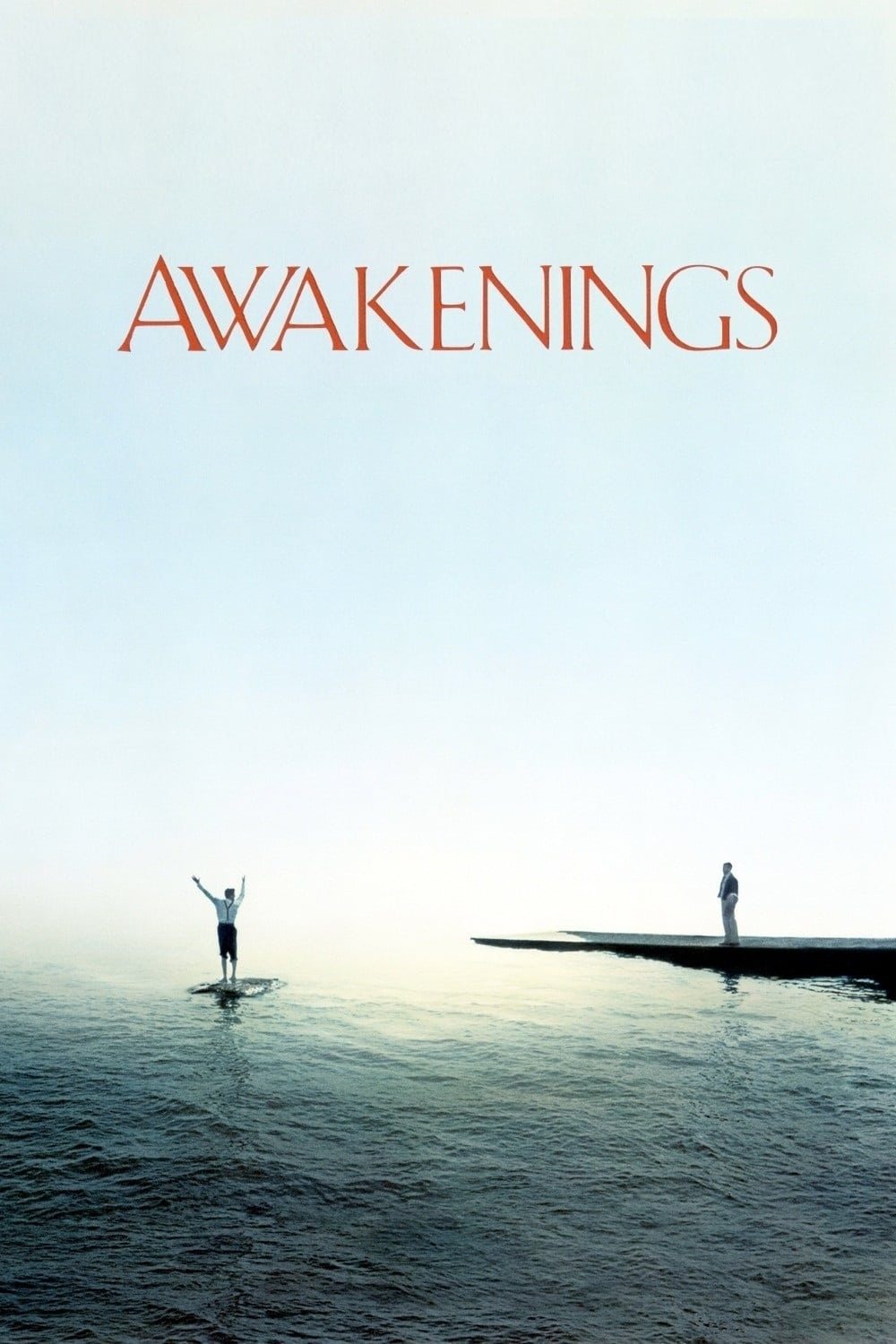
Plot Summary
The first time I watched “Awakenings,” I found myself caught between hope and heartbreak, entirely transported by the journey this film—a deeply moving drama directed by Penny Marshall—offered. Balancing moments of miraculous wonder with the often-harsh realities of medical science, the story follows Dr. Malcolm Sayer, a shy and compassionate neurologist who becomes captivated by the mysterious catatonic patients at a Bronx hospital in the late 1960s. Robin Williams inhabits Dr. Sayer with an endearing awkwardness that immediately drew me in; he’s not the flamboyant version of the actor that I grew up with, but instead a man gripped by empathy and burning curiosity.
What resonated with me most was the slow, almost hypnotic unveiling of small triumphs. Dr. Sayer, new to bedside medicine, tries unconventional techniques to reach his patients, people seemingly lost to the world but deeply present in subtle ways. The discovery that these patients can be “awakened” by the then-experimental drug L-Dopa becomes, in my eyes, a delicate dance between scientific possibility and human longing—the deep desire to reconnect with the world after years of silence. The emergence of Leonard Lowe (Robert De Niro) from decades of vegetative existence is handled gently, almost reverently, by the script. Watching Leonard rediscover the world as a man, rather than just a patient, still brings a lump to my throat every time. There’s hope in every moment, tempered by the knowledge that these awakenings might be temporary.
Without giving away the most crucial outcomes, I have to warn: the film does not shy away from showing setbacks and struggles, both medical and existential, that arise as the hospital staff and Leonard confront the fragility of their regained lives. Yet, even as realities settle in, I felt each scene was imbued with the dignity of the patients, never reducing them to mere medical cases, but elevating their experience to something deeply, universally human.
Key Themes & Analysis
What struck me most about “Awakenings” is how it probes the boundaries between medical science and the sanctity of human experience. I saw the narrative as much larger than its hospital setting—it’s a meditation on the fragility of life, the overpowering need for connection, and the bittersweet tension between hope and despair.
Penny Marshall’s direction impressed me with its steady calm—there’s a gentle pace and patience to her visual storytelling. She lingers on faces, gestures, and the small miracles of bodily movement, which turn the simple act of someone raising their hand into a moment of wrenching significance. This gentle approach, in my opinion, amplifies the core theme of human resilience—a tiptoe toward possibility that never betrays the hardships these patients face.
The cinematography, handled by Michael Seresin, is subtle yet evocative; I found the muted palettes and often diffused lighting created an atmosphere both clinical and suffused with hope. Those moments bathed in golden afternoon light, as patients move or speak for the first time in years, still feel miraculous. I see the visual style as supporting the film’s thesis: that miracles, if they exist at all, are found in fleeting, everyday moments rather than grand gestures.
Turning to performance, Robin Williams delivers one of his most understated and affecting portrayals. What I appreciate most is his restraint; Williams plays Sayer with a vulnerability that’s quietly revolutionary for 1990s Hollywood. He’s gentle, awkward, overflowing with empathy, never overshadowing the patients whose lives are at the center. Contrasting with him, Robert De Niro infuses Leonard with a childlike wonder and raw physicality that left me awestruck. De Niro’s transformation—from rigid stillness to the exuberant rediscovery of self—remains imprinted in my mind. No less impactful is Penelope Ann Miller in her supporting role, bringing warmth and longing to every shared scene.
Underlying these individual performances is the question the film seems to ask again and again: What do we owe those who cannot advocate for themselves? The script, adapted from Dr. Oliver Sacks’ memoir, doesn’t offer easy answers. Marshall and her cast allow uncertainty and discomfort to remain, making the audience confront both the exhilaration and cost of these awakenings. I connect deeply with the way “Awakenings” doesn’t shy away from the ethical ambiguities inherent to experimental medicine; instead, it illuminates the shared ground of vulnerability between caregiver and patient.
I felt the juxtaposition of medical progress and the impermanence of miracles was especially poignant. The film isn’t content to simply celebrate breakthroughs; instead, it lingers on the fleetingness of those triumphs, prompting me to cherish human connection even more. The bittersweet finale made me contemplate not just what it means to “wake up,” but how easy it is to miss the simple joys while searching for miracles.
My Thoughts on the Cultural Impact & Legacy
Looking back, “Awakenings” changed the way I thought about medical dramas. At a time when Hollywood tended to prioritize spectacle over substance, this film proved that quiet, character-driven storytelling could resonate just as powerfully. What lingers with me most is how the film challenged viewers to see catatonic patients—who, in real life, had been tucked away for years—not as passive recipients of medicine, but as people with rich inner lives and dreams deferred.
On a personal level, I find that “Awakenings” radiates empathy and humility in a way few dramas do. It shaped my standards for what a health-related film should strive for: honesty, respect, and a refusal to tie up complex dilemmas with a tidy bow. I often return to this film when curating recommendations for audiences interested in compassionate, mature cinema. Its emotional resonance helped legitimize films about neurological or psychological difference, paving the way for later works that treated patient narratives with nuanced dignity, such as “A Beautiful Mind” or “Still Alice.”
Within the broader cinematic landscape, the film stands out as a transformative lens on disability and care—one that’s echoed through countless later films but rarely matched for grace. When I think about what makes “Awakenings” endure, it’s the core message that even the most impermanent moments of connection are worth everything. For me as a curator, this movie isn’t just a benchmark; it’s a touchstone that continues to shape my understanding of film as a vessel for healing, visibility, and shared experience.
Even decades after its release, audiences still discover “Awakenings” and find themselves moved. I believe that lasting legacy stems from its refusal to manipulate or sentimentalize its subjects. The film’s realism, balanced with an almost spiritual sense of hope, makes it a work I consistently recommend to those yearning for more than simple escapism.
Fascinating Behind-the-Scenes Facts
Learning about the making of “Awakenings” only deepened my appreciation for the film. One aspect I find especially fascinating is that Robin Williams was inspired by the real Dr. Oliver Sacks, upon whom his character is based. In preparation, Williams shadowed Dr. Sacks at the hospital, studying his mannerisms and listening to his unique blend of scientific curiosity and gentle awkwardness. Williams later described the experience as transformative—he channeled Sacks’ distinctive speech patterns and gestures, which, to me, grounds his performance in compassionate realism.
I’m also drawn to the story of how Robert De Niro researched his role as Leonard Lowe. De Niro spent extensive time with patients affected by post-encephalitic syndrome, studying their movements, speech, and responses to the world. He consciously avoided caricature, instead seeking input from medical professionals and families. The result, I believe, is a portrayal steeped in authenticity, never exploitative or reductive.
Finally, what truly amazed me was that the real Dr. Sacks was involved as a consultant on set. His insistence on clinical realism can be seen in the smallest details—right down to the way medication is administered or the depiction of neurological symptoms. Marshall and her team went so far as to film in abandoned hospital wards that matched the era, lending the movie a sense of place that feels nearly documentary-like.
These behind-the-scenes decisions, in my mind, contribute to the film’s deep integrity and emotional power.
Why You Should Watch It
- A showcase of masterful acting from Robin Williams and Robert De Niro, offering performances that are heartfelt, restrained, and unforgettable.
- An invitation to reflect on the meaning of compassion, resilience, and medical ethics—the themes resonate beyond the hospital walls and into the fabric of everyday life.
- A timeless, emotionally powerful story inspired by real events, providing both hope and a candid look at the limits and possibilities of science.
Review Conclusion
Few films have lingered with me like “Awakenings.” From the humble heroism of Dr. Sayer to the transcendent moments of Leonard’s awakening, every viewing reminds me that cinema at its best is both a mirror and a balm. I hold this film in the highest regard for its commitment to truth, warmth, and the celebration of fleeting miracles. If a film can move us to see the world, and the people around us, with more humility and courage, then it has achieved something rare. For those seeking a drama that will stay with them long after the credits roll, I give “Awakenings” a 4.5/5.
Related Reviews
- One Flew Over the Cuckoo’s Nest (1975): I find this film pairs beautifully with “Awakenings” for its unflinching look at institutional care, dignity, and the battle between individual will and medical authority. Both films invite us to reflect on what liberation truly means inside hospital walls, making this a compelling thematic companion.
- The Diving Bell and the Butterfly (2007): I recommend this film for its lyrical, first-person exploration of disability and resilience. Like “Awakenings,” it’s rooted in a true story and asks us to contemplate the power of spirit even when the body is unresponsive—the poetic camerawork offers another fascinating approach to the internal world of its protagonist.
- My Left Foot (1989): For viewers gripped by the intersection of art, disability, and family, I believe “My Left Foot” is an essential next step. Daniel Day-Lewis’s acclaimed performance and the compassionate script render every moment as urgent and precious as those in “Awakenings,” making this a meaningful follow-up.
For readers looking to go deeper, these perspectives may help place the film in a broader context.
🎬 Check out today's best-selling movies on Amazon!
View Deals on Amazon