
Quick Take: A profound masterpiece that replaces laser blasts with linguistic puzzles, proving that the greatest alien mystery is how we communicate with each other.
Imagine a world teetering on the edge of chaos after twelve enigmatic alien spacecraft suddenly materialize across the globe. “Arrival,” directed by Denis Villeneuve, isn’t just a science fiction spectacle—it’s a cerebral, emotionally resonant film that asks profound questions about language, time, and human connection. As a master of slow-burn narrative suspense, Villeneuve leverages the genre to craft an experience as intimate as it is gigantic, inviting viewers to contemplate what it means to truly communicate and to understand one another.
Plot Summary
At its core, “Arrival” follows linguistics professor Dr. Louise Banks, played by Amy Adams, who is recruited by the US military after spacecraft appear at randomly dispersed locations around the planet. Alongside theoretical physicist Ian Donnelly (Jeremy Renner), Louise is tasked with deciphering the language of the mysterious extraterrestrial visitors—referred to as “Heptapods”—to answer a question the entire world is anxiously awaiting: What is their purpose on Earth?
The narrative unfolds primarily at one of these landing sites in Montana, where Louise and Ian communicate with the Heptapods through a transparent barrier within the ship. The aliens express themselves in mesmerizing circular symbols, leading Louise down a path of linguistics, patience, and intuition. As tense governments around the world interpret the aliens’ elusive messages—sometimes too hastily—Louise races to unlock the deeper meanings behind their communications before fear and misunderstanding erupt into global conflict.
Warning: Spoilers ahead for key narrative elements. As Louise progresses in learning the aliens’ complex language, she begins experiencing vivid visions and fragmented memories. These seemingly unrelated moments become central to her understanding, revealing a mind-bending twist about perception and time. The boundaries between past, present, and future blur, culminating in a revelation that reframes everything both Louise and the audience thought they understood. In the end, the film advocates for connection and understanding over suspicion and hostility, elevating its extraterrestrial premise into a meaningful meditation on choice, love, and loss.
Key Themes & Analysis
“Arrival” distinguishes itself through its intricate exploration of communication and the limits (and power) of language. The storyline is driven less by action than by intellectual discovery, consistently returning to the idea that words—how they’re used, learned, and interpreted—can unite or divide civilizations. The Heptapods’ written language, depicted in beautiful, flowing logograms, becomes a metaphor for perspective itself, challenging viewers to reconsider how their own languages shape their thinking.
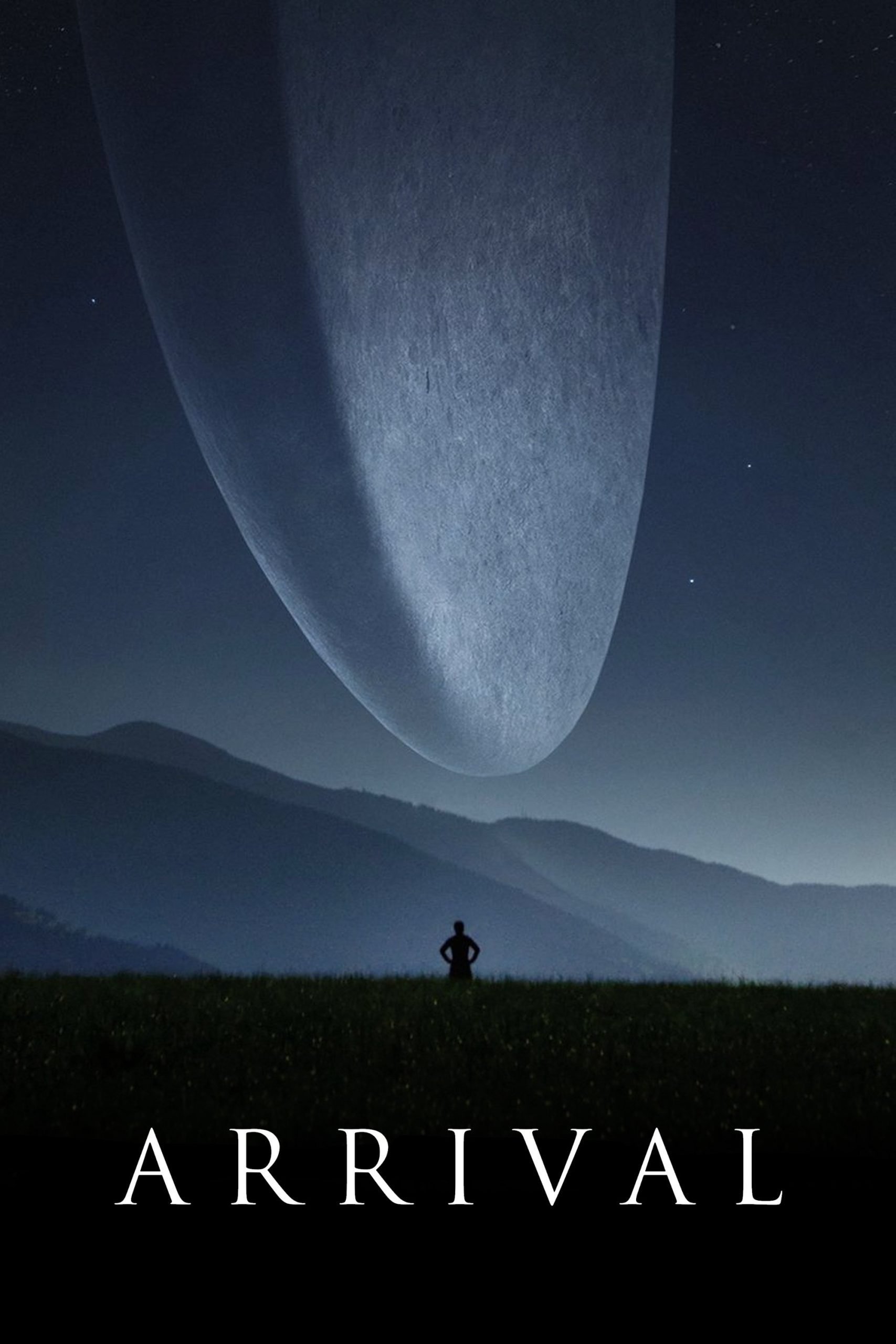
Denis Villeneuve’s direction is both restrained and precise. The film moves at a deliberate pace, creating tension not through bombastic set-pieces but through quiet moments of introspection and gradual, awe-filled discovery. Cinematographer Bradford Young crafts an atmosphere that feels almost tactile, using muted color palettes and natural lighting to evoke a sense of melancholy and wonder. The imagery is haunting: the monolithic ships hovering like stone slabs, the fog-laden Montana fields, and the intimate, everyday settings where Louise’s private life unfolds.
The performances are pivotal, particularly Amy Adams’s portrayal of Louise. Adams brings nuance and emotional clarity to a character navigating overwhelming uncertainty and personal grief. Her internal evolution is captured through subtle expressions and body language, anchoring the film’s cerebral elements in genuine human experience. Jeremy Renner offers warmth and a grounded presence, complementing Adams with understated humor and insight.
Crucially, “Arrival” also interrogates the broader implications of cross-cultural, even interspecies, contact. Rather than portray the aliens as invaders or saviors, the film insists on a slower, more collaborative approach, highlighting how misunderstanding and haste can have catastrophic consequences. The narrative critiques global politics and media sensationalism, emphasizing the ethical responsibility that comes with first contact—not only to seek answers, but to ask the right questions.
Jóhann Jóhannsson’s haunting score enhances the film’s meditative tone, folding in natural sounds and ambient textures that echo the film’s central questions: What does it mean to understand? Can language transcend barriers? The music lingers, just as the questions do, long after the credits roll.
Historical & Social Context
Released in late 2016, Arrival resonated deeply with a world facing increasing political polarization and a breakdown in international diplomacy. Unlike traditional “alien invasion” films that focus on military conquest, Villeneuve’s work reflects the contemporary anxiety over isolationism. The film’s portrayal of twelve nations struggling to share information mirrors real-world challenges in global cooperation, suggesting that our greatest threat isn’t the “other,” but our own inability to communicate.
Based on Real Research: The Sapir-Whorf Hypothesis
The intellectual core of Arrival is grounded in the Sapir-Whorf hypothesis, a real linguistic theory suggesting that the structure of a language affects its speakers’ world view or cognition. The production team collaborated with professional linguists from McGill University to ensure that Dr. Louise Banks’s methodology—from the use of visual logograms to the step-by-step decoding process—felt authentic. This commitment to scientific realism elevates the film from a mere fantasy to a plausible exploration of first contact.
Why You Should Watch It
- Intelligent Science Fiction: “Arrival” reshapes what audiences expect from alien encounter narratives, prioritizing intellectual engagement and philosophical depth over spectacle.
- Powerful Emotional Resonance: The film balances abstract ideas with authentic, deeply moving character arcs that resonate on a personal level.
- Stunning Cinematic Craftsmanship: Every technical aspect—from acting to cinematography to the evocative soundtrack—contributes to a uniquely immersive, thought-provoking cinematic journey.
Review Conclusion
“Arrival” is a rare gem in contemporary science fiction—one that uses its extraterrestrial premise as a vessel for exploring the fundamental challenges of communication, empathy, and loss. Denis Villeneuve’s careful direction, combined with Amy Adams’s luminous performance, transforms what might have been a standard first-contact film into something immeasurably richer and more humane. By asking viewers to consider how language molds reality, the film gently nudges us toward greater compassion and understanding, both with each other and with the unknown. For those drawn to films that challenge the mind as much as they stir the heart, “Arrival” stands as a luminary example, meriting a confident 4.5/5 star rating.
Expand Your Journey
For those looking to dive deeper into the world of Arrival, we highly recommend exploring the source material and related works:
-
Read the Original Story: This film is a brilliant adaptation of the Nebula-winning novella “Story of Your Life” by Ted Chiang. While the film emphasizes the global tension, the book offers an even more rigorous look at the physics and mathematics behind the Heptapod language.
-
Cinematic Comparisons: If you were moved by the atmospheric storytelling and philosophical depth of Arrival, consider watching “2001: A Space Odyssey” for its similar themes of human evolution, or “Contact (1997)” for its realistic portrayal of a female scientist’s first encounter with extraterrestrial intelligence.
🎬 Check out today's best-selling movies on Amazon!
View Deals on Amazon