
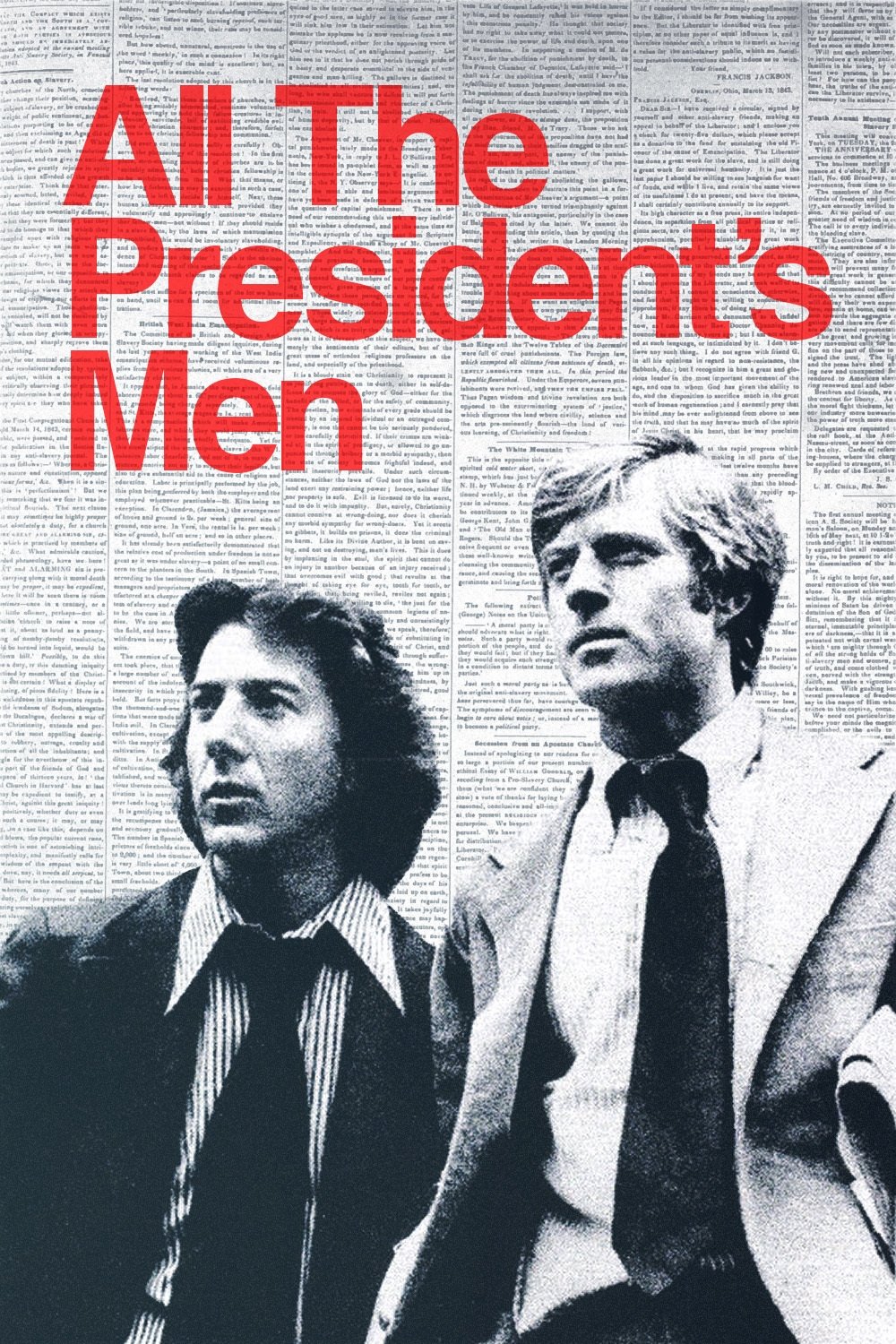
Few films have so vividly captured the tension and stakes of investigative journalism as “All the President’s Men,” a landmark 1976 political thriller helmed by director Alan J. Pakula. Nestled firmly in both the historical drama and thriller genres, the movie tells the true story of two enterprising reporters whose work would ultimately unravel the Watergate scandal, changing the course of American history. With a script adapted from the bestselling book by Bob Woodward and Carl Bernstein, and featuring a powerhouse cast including Robert Redford and Dustin Hoffman, this film remains a powerful meditation on truth, power, and the perseverance of the free press.
Plot Summary
Set in the early 1970s, “All the President’s Men” follows the dogged efforts of Washington Post reporters Bob Woodward and Carl Bernstein as they dig into what initially appears to be a minor break-in at the Democratic National Committee headquarters in the Watergate complex. Their investigation leads them into a labyrinth of secrecy and deceit, uncovering a connection between the break-in and members of President Nixon’s re-election campaign.
Through a series of interviews, late-night calls, and mounting risks, the journalists slowly piece together a story that suggests a conspiracy reaching the highest echelons of government. Methodical digging and steadfast determination force Woodward and Bernstein to pursue leads that threaten their own safety, all under the wary supervision of their editor, Ben Bradlee.
As the stakes rise, the film paints a portrait of journalism under fire, highlighting the painstaking nature of source verification and the ethical dilemmas faced by those in pursuit of the truth. The tension is heightened with each revelation, culminating in a denouement where the threads of corruption begin to unravel. Warning: Major spoilers follow beyond this point for those unfamiliar with the Watergate scandal. If you prefer to watch the film with fresh eyes, it’s best to pause here; suffice it to say that Woodward and Bernstein’s work would ultimately contribute to the downfall of an American president.
Key Themes & Analysis
At its core, “All the President’s Men” is a story about the relentless pursuit of truth in the face of systemic obfuscation. The film dives deep into the mechanics of investigative journalism, illuminating just how much of journalism involves persistence, detail-oriented research, and a willingness to hold those in power accountable.
Director Alan J. Pakula uses a precise and unflashy visual style that echoes the clarity and seriousness that the subject matter demands. Long takes and tight close-ups immerse viewers in the urgency of the newsroom, while moments in parking garages and shadowy corridors evoke a sense of paranoia and danger that perfectly underpins the thriller elements of the narrative.
The cinematography by Gordon Willis—often labeled “the prince of darkness”—contributes a distinctive mood with its play on light and shadow. The dimly lit spaces and muted color palette mirror the murky political intrigue at the heart of the story. This visual style is not just atmospheric but also functional, creating a sense of authenticity and immediacy that brings viewers into the physical and psychological trenches with the investigative team.
The acting throughout is uniformly excellent. Robert Redford (playing Bob Woodward) and Dustin Hoffman (as Carl Bernstein) embody their real-life counterparts with an understated realism. Their performances avoid melodrama, instead investing their characters with the subtle complexities of professionals under duress—balancing ambition, integrity, and doubt. Equally impressive is Jason Robards as Ben Bradlee, whose nuanced portrayal captures the gravitas and wisdom of a seasoned editor steering his reporters through turbulent times.
Beyond character studies, the film’s themes resonate decades later. The fragility of democratic institutions, the importance of a free press, and the concept of accountability remain as relevant today as when the story first broke. “All the President’s Men” avoids bombastic statements, choosing instead to depict the arduous, often slow process of fact-finding and source verification. In this way, it honors the discipline of journalism and subtly encourages viewers to value skepticism and tenacity in the quest for truth.
Why You Should Watch It
- A masterclass in cinematic storytelling: The film sets a benchmark for procedural thrillers, weaving tension and suspense from real-life events with remarkable precision and economy.
- Timeless relevance: Its exploration of accountability, power, and the crucial role of press freedom feels as urgent and necessary today as it did in the post-Watergate era.
- Outstanding performances and craft: With pitch-perfect acting, brilliant directing, and moody cinematography, every element of this film contributes to an unforgettable viewing experience that both entertains and provokes thought.
Review Conclusion
“All the President’s Men” endures not just because of the historical importance of its subject matter, but because of the way it celebrates the values of diligence, skepticism, and moral courage. Alan J. Pakula’s direction, paired with taut writing and distinctive performances, delivers a film that is gripping in its detail and lasting in its impact. Whether you are a history buff, a fan of thrillers, or someone interested in the intersection of politics and media, this movie offers not only a riveting story but also a masterclass in craftsmanship. More than forty years since its release, it continues to be a reference point for honest, intelligent cinema about real events. Rating: 4.5/5 stars.
🎬 Check out today's best-selling movies on Amazon!
View Deals on Amazon