
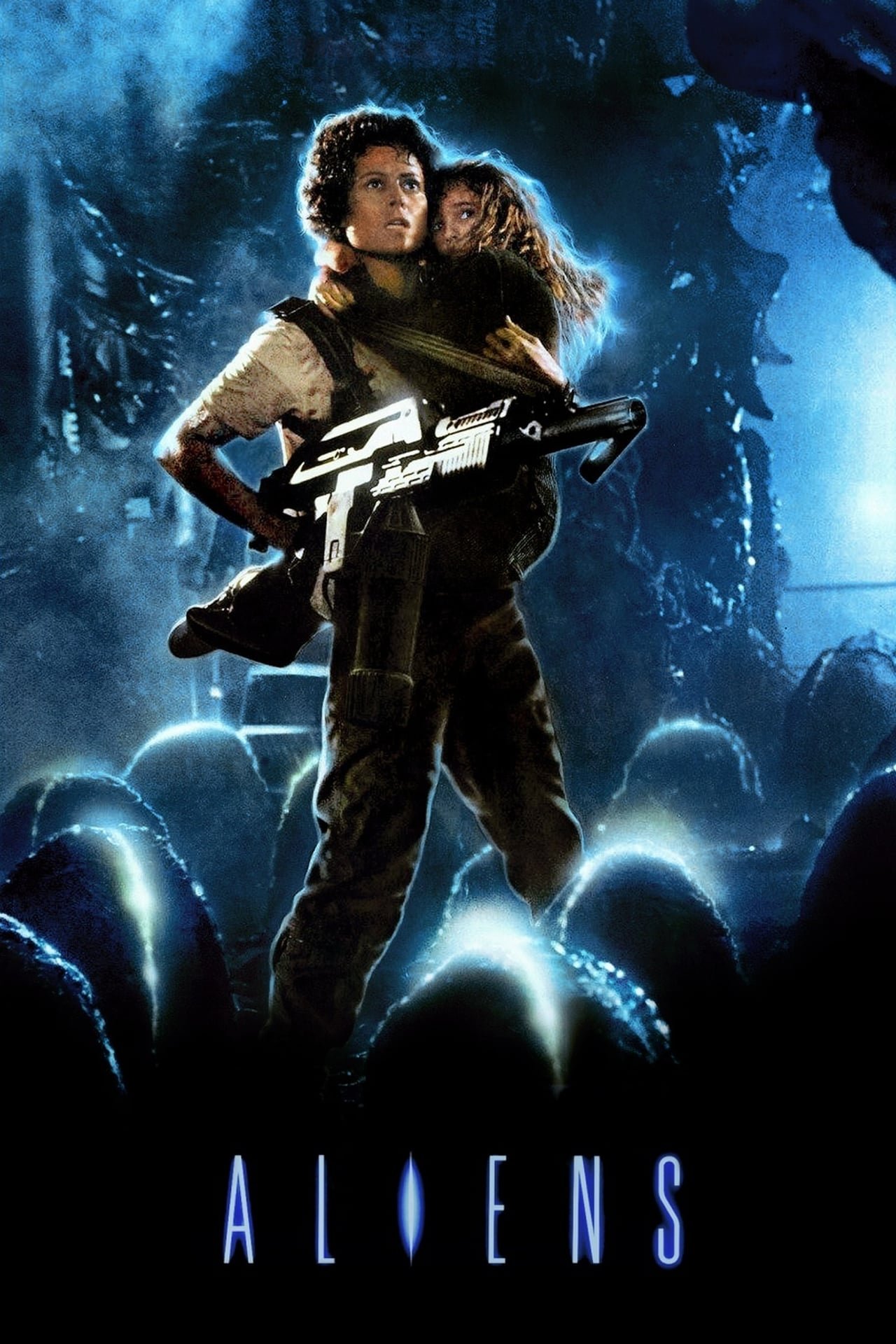
Few sequels have managed to match, let alone surpass, the impact of their predecessors in the world of cinema, but James Cameron’s 1986 science fiction film “Aliens” stands as a prime example of how to elevate a beloved franchise. As both director and writer, Cameron shifts genres from the tense horror of the original “Alien” into a high-octane blend of action and suspense, crafting a movie that continues to captivate audiences and inspire filmmakers nearly four decades later. With its impeccably structured tension, memorable characters, and groundbreaking effects, “Aliens” remains a hallmark of genre filmmaking, cementing its reputation as a must-see for fans of science fiction, action, and thriller movies alike.
Plot Summary
Set over half a century after the events of Ridley Scott’s original film, “Aliens” rejoins Ellen Ripley (Sigourney Weaver), the lone survivor of the Nostromo. Awoken from hypersleep after 57 years, Ripley finds herself thrust back into danger when she’s recruited by representatives of the Weyland-Yutani Corporation. They ask her to accompany a platoon of Colonial Marines to the terraformed planet LV-426, now home to a human colony that’s recently gone mysteriously silent.
What begins as a mission of rescue and investigation quickly escalates when Ripley and the Marines discover that the colonists have fallen victim to a nightmarish infestation of deadly xenomorph creatures. The atmosphere is thick with dread as the group explores the shadowy corridors of the colony’s outpost, realizing the magnitude of the threat they face. With every turn, the tension mounts, and the team’s high-tech weaponry soon feels woefully insufficient against the overwhelming odds.
As Ripley emerges as both a tactician and protector—particularly in her relationship with the orphaned girl, Newt—the movie explores themes of survival, motherhood, and the limits of human determination. The ensemble cast features standout performances from Michael Biehn as Corporal Hicks, Paul Reiser as the ambiguous company man Burke, and Bill Paxton as the unforgettable Private Hudson, each contributing to the film’s dynamic group chemistry.
Warning: The following section contains some minor plot spoilers
The narrative builds relentlessly toward a pulse-pounding climax, blending explosive action with personal stakes. As the survivors battle for survival in the sprawling, atmospheric complex, the film deftly balances large-scale combat with intimate character moments, culminating in a finish that delivers both emotional payoff and genre-defining spectacle.
Key Themes & Analysis
“Aliens” is far more than a straightforward action flick—it’s a film layered with thought-provoking themes and technical artistry. One of its dominant motifs is maternal instinct and protection. Ellen Ripley’s transformation from sole survivor to fierce guardian finds her forging a maternal bond with Newt, echoing the film’s exploration of family, both chosen and biological. This theme resonates in every confrontation with the xenomorphs, particularly through the presence of the alien queen, whose own protective nature drives much of the film’s suspenseful final act.
From a cinematographic standpoint, Cameron and director of photography Adrian Biddle deploy atmospheric lighting and claustrophobic framing to amplify tension. The colony’s metallic corridors, shrouded in darkness and haze, foster a perpetual sense of unease, while inventive use of motion trackers and point-of-view shots place viewers directly into the heart of the action. Practical effects, from the iconic design of the aliens to the mechanical exosuit Ripley dons, lend the film a tactile, realistic quality that augments its world-building.
James Cameron’s direction is marked by impeccable pacing and attention to detail. He expertly escalates the stakes, ramping up the action without sacrificing character development. The script skillfully juggles the camaraderie and friction among the Marines, setting up tense set pieces while never losing sight of Ripley’s personal journey. Cameron’s decision to infuse the film with political undertones—corporate greed, military hubris, and the expendability of human life—adds resonance to what could otherwise have been a straightforward monster movie.
The performances deserve significant praise. Sigourney Weaver delivers a career-defining turn, blending vulnerability and steely resolve. She breathes authentic life into Ripley, earning an Academy Award nomination for her work—an uncommon feat for a genre performance. The ensemble cast provides vibrant, memorable, and often quotable portrayals that have become iconic in their own right, from the bravado of Paxton’s Hudson to the quiet strength of Biehn’s Hicks. The chemistry among the Marine squad conveys both camaraderie and the tragic stakes of their mission, drawing viewers deeper into the film’s perilous world.
Beyond its themes and performances, “Aliens” broke new ground in film technology. The practical alien effects, miniature work, and sound design set a benchmark for immersive world-building, influencing a generation of filmmakers. The intense orchestral score by James Horner provides a driving pulse that amplifies both horror and heroism, seamlessly tying together the film’s emotional and action beats.
Why You Should Watch It
- Genre-defining action and suspense: “Aliens” masterfully blends the terror of science fiction horror with large-scale action, creating sequences that remain some of the most gripping in cinema history.
- Rich, multi-dimensional characters: The film features complex relationships, standout character arcs, and memorable dialogue, ensuring viewers become invested in the fates of the people on screen.
- Groundbreaking effects and filmmaking: From its atmospheric set design to cutting-edge creature effects, “Aliens” offers an immersive visual and sensory experience that stands the test of time.
Review Conclusion
In the landscape of science fiction cinema, “Aliens” continues to shine as a monumental achievement—an expertly crafted sequel that surpasses expectations. James Cameron’s film not only builds upon the legacy of Ridley Scott’s “Alien” but expands its universe in bold, compelling ways. Through its riveting narrative, unforgettable characters, and pioneering practical effects, “Aliens” set a new standard for genre filmmaking. Its resonant themes of survival, family, and resilience make it more than just an action thriller; it’s a deeply human story cloaked in extraterrestrial terror. For both returning fans and newcomers, “Aliens” is a movie that remains as thrilling and relevant today as it was upon release.
Star Rating: 4.5/5
🎬 Check out today's best-selling movies on Amazon!
View Deals on Amazon