
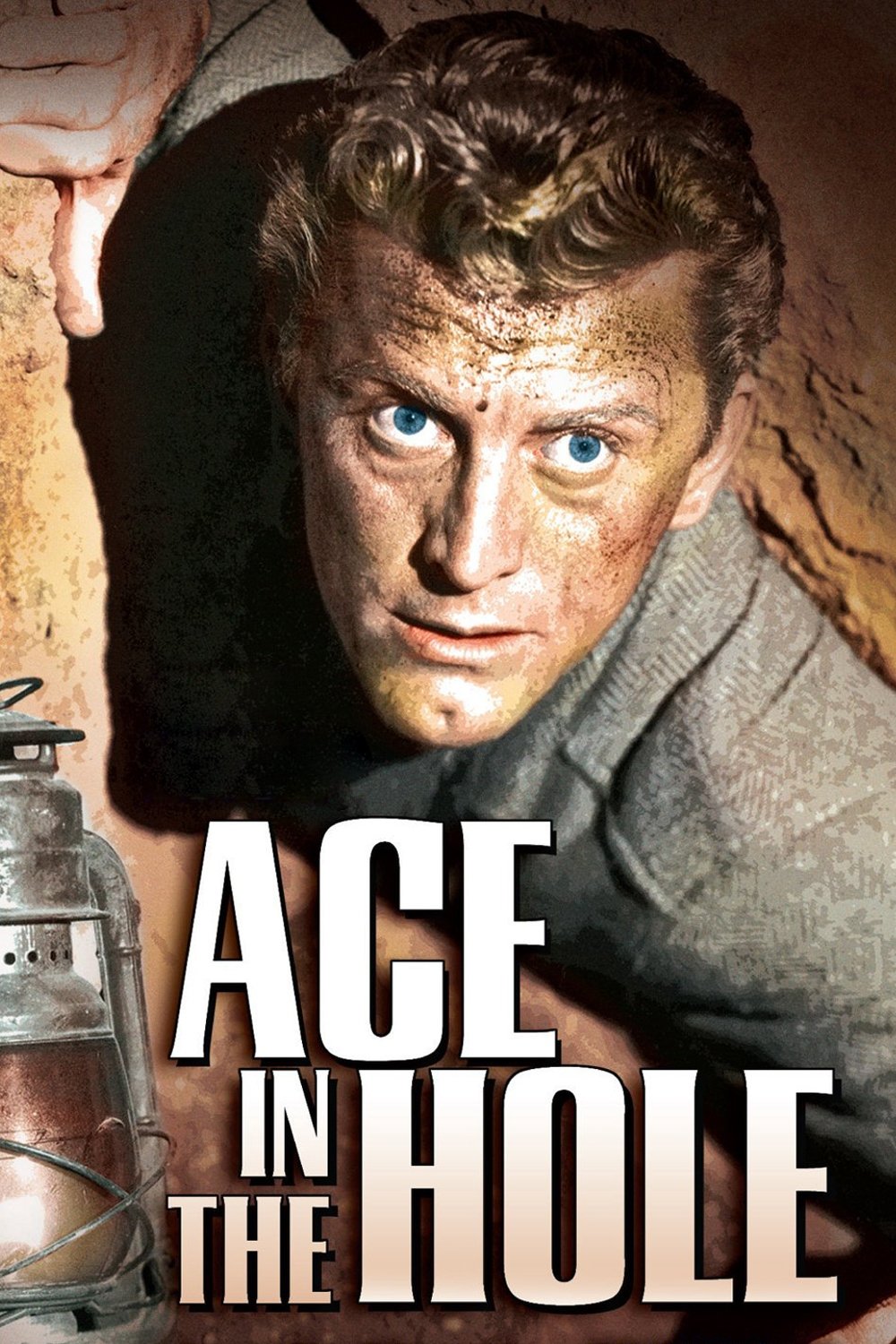
If you’re looking for a movie that remains hauntingly relevant and unflinchingly honest about the pitfalls of American ambition and the lust for sensationalism, it’s hard to look past director Billy Wilder’s classic film noir-cum-media satire. This 1951 release is a razor-sharp drama that carves into the fabric of journalism, small-town morality, and the everyday theater of human suffering, placing itself squarely in the annals of films that challenge and provoke as much as they entertain. For fans of sharp dialogue, bold direction, and a searing look at the world beneath the headlines, this movie offers a compelling, at times uncomfortable, window into mid-century America and, perhaps surprisingly, our own times.
Plot Summary
Set against the arid backdrop of New Mexico, the story centers on Chuck Tatum, a once-prominent big-city reporter whose professional missteps have landed him in a podunk newspaper office, his ambitions bruised but very much intact. Tatum, played with commanding bravado and sly cynicism, is desperate not just for any scoop, but for the kind of story that could catapult him back to the top of his field.
When he learns of Leo Minosa, a local man trapped in a cave-in at an ancient Indian burial site, Tatum senses an opportunity for a career-resurrecting exclusive. He ingratiates himself with Leo’s family and the local authorities while orchestrating the rescue and its publicity, stretching the unfolding “human interest” narrative for maximum media spectacle.
A carnival atmosphere soon descends on the once-sleepy town, drawing caravans of curiosity seekers, radio personalities, and fellow reporters. Tatum, always a step ahead, manipulates the rescue operation and public perceptions, playing both hero and antihero. Through nuanced subplots involving Leo’s embittered wife and the morally malleable sheriff, the film reveals the depths—both literal and figurative—to which people will go in search of fame and fortune.
Spoiler Warning: The story’s tension ratchets up as rescue efforts stall and Tatum’s carefully constructed narrative risks unraveling, leading to a powerful moral reckoning that leaves no character untouched. The climax remains one of the most stark and unvarnished in early 1950s cinema, concluding the story with a gravity and poignancy that lingers long after the credits roll.
Key Themes & Analysis
At the heart of the film lies a withering critique of media sensationalism and the lengths to which individuals will go to exploit tragedy for personal gain. Billy Wilder, known for his genre-hopping mastery and incisive screenwriting, dissects the relationship between journalist and audience, power and responsibility, hope and cynicism. Tatum is a character in moral freefall, aided and abetted by a society all too willing to trade integrity for spectacle.
The film’s themes of exploitation, greed, and ethical compromise remain remarkably prescient. The lurid circus that builds around Leo’s misfortune mirrors the real-world ways in which disaster is commodified and people are reduced to footnotes or fodder for profit-driven enterprises. In many respects, the film was ahead of its time, anticipating our age of viral news, 24-hour coverage, and the blurring of truth and narrative.
Cinematographically, the movie is richly evocative. Wilder and cinematographer Charles Lang craft a world both vast and claustrophobic: the parched, open expanses of the Southwest juxtaposed with close, almost suffocating, interiors and the dark, jagged contours of the cave-in site. These visual choices press the audience further into the physical and emotional entrapments of its protagonist and victims alike.
Wilder’s direction is characteristically taut and unsparing. The film’s pacing is unhurried but relentless, each scene loaded with subtext and dramatic tension. The caustic wit of the screenplay, co-written by Wilder, remains as sharp as ever, with lines that cut through the screen and into uncomfortable territory. A deft mix of realism and pointed cynicism gives the film a documentary-like immediacy while never straying from its dramatic core.
The acting, led by a powerhouse performance from the film’s star, is uniformly excellent. The lead’s portrayal of Chuck Tatum is both charismatic and chilling. He alternates between easy charm and ruthless manipulation, drawing viewers in even as he pushes moral boundaries. Supporting characters—including the despairing Leo, his disillusioned wife Lorraine, and a corrupt local sheriff—offer shaded performances that reinforce the film’s themes of complicity and desperation. Every character, no matter how minor, is drawn with complexity, serving to create a world that feels both authentic and aching under its own failures.
The film’s legacy is one of courage—both in terms of its unwillingness to sugarcoat hard truths and in its influence on later media satires, from “Network” to modern investigations into media ethics. Its once-controversial message, which kept audiences and critics divided upon its initial release, is now widely acknowledged as a both prescient and enduring commentary on the darker side of the American dream.
Why You Should Watch It
- Unmatched Relevance: Despite being over seventy years old, the film’s examination of journalism and spectacle feels eerily contemporary in the age of clickbait and social media headlines.
- Stunning Performances: The lead actor’s performance is a benchmark for charisma laced with menace, while the supporting cast adds nuance and emotional weight.
- Masterful Filmmaking: Billy Wilder’s direction is razor-sharp, delivering a film that is as visually arresting as it is thematically resonant, recombining elements of noir, drama, and social critique.
Review Conclusion
In the panorama of American film, this movie emerges as a singular, unforgettable work—unsparing in its critique, brilliant in its execution, and deeply human in its insights. It might have been misunderstood or underestimated on its initial release, but time has only burnished its legacy as one of cinema’s boldest indictments of media culture and a towering achievement for its director and principal cast.
Few films from this or any era so bluntly illuminate the moral hazards of the American pursuit of fame and fortune. If you are a fan of classic Hollywood, sharp character studies, or films with something vital to say about contemporary society, this movie is essential viewing. Every frame is meticulously crafted, and every moment counts—delivering a cinematic experience that challenges, unsettles, and ultimately endures.
Star Rating: 4.5/5
🎬 Check out today's best-selling movies on Amazon!
View Deals on Amazon