
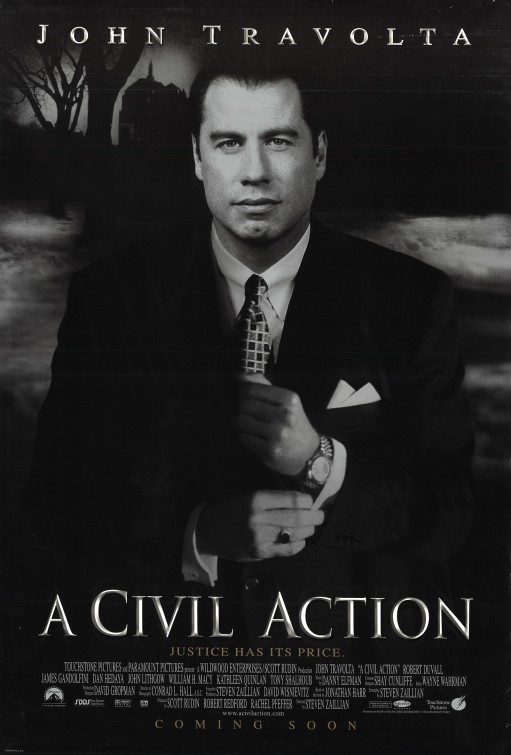
If you are a fan of legal dramas that probe the ethics and complexities of real-world justice, this film offers a deeply immersive and unsettling experience. Masterfully directed by Steven Zaillian, best known for his screenwriting skills on works like “Schindler’s List,” this 1998 courtroom thriller blends the intensity of a gripping legal battle with the sobering reality of corporate malfeasance. Its star-studded cast pulls you right into the moral gray zones of a true story that changed the face of environmental litigation forever.
Plot Summary
Set in the industrial heartland of Massachusetts, the film follows Jan Schlichtmann, a charismatic and somewhat arrogant personal injury lawyer. At his small Boston law firm, Schlichtmann typically chases lucrative cases with clear chances of winning. But when residents of the small town of Woburn come to him—their children suffering from leukemia they believe is caused by contaminated water—he reluctantly agrees to investigate. At first, the case seems like another business opportunity: sue the deep-pocketed corporations responsible, settle quickly, and move on.
But as Schlichtmann and his partners navigate the intricacies of the legal maze, the stakes become much higher than they ever anticipated. The evidence points toward two powerful companies—one of them represented by a cagey, veteran attorney, played with subtle gravitas by Robert Duvall. What begins as a straightforward lawsuit soon turns personal for Schlichtmann, as he uncovers the broader human consequences of environmental neglect and faces mounting financial, emotional, and ethical pressures.
As the case drags on, Jan is forced to weigh his passion for justice against the perilous reality of fighting multinational corporations with seemingly endless resources. The narrative carefully builds tension without resorting to melodrama, focusing on the price of seeking truth in an imperfect legal system. Warning: Major plot twists and revelations unravel as the case proceeds in the later acts, so viewers should prepare for a journey filled with moral ambiguity and irreversible choices.
Key Themes & Analysis
At its core, the film delves into the intersection of ethical responsibility and the often cold pragmatism of the legal world. Environmental accountability stands as a primary theme; the story is rooted in actual events, highlighting the toxic aftermath of industrial pollution and its devastating ripple effect on working-class communities. But the film doesn’t stop there—it goes further, interrogating the limitations of justice when pitted against corporate might and the letter of the law.
The cinematography is consistently somber, using washed-out palettes and subdued lighting to mirror the bleakness of both the grey New England winters and the emotional toll on everyone involved. Wide shots capture the haunting tranquility of the affected town, juxtaposed with the bustling legal arenas where life-and-death decisions are debated in crisp suits and sterile conference rooms. The courtroom scenes, in particular, use close-ups and tight framing to accentuate the psychological warfare between lawyers, judges, and witnesses.
Steven Zaillian’s direction is both restrained and incisive, never allowing the narrative to veer into sensationalism. The pacing is deliberate, giving the audience time to absorb the complexity of the issues at hand. The script, adapted from Jonathan Harr’s nonfiction book, maintains a strong balance between factual exposition and emotional resonance.
The performances are uniformly compelling. John Travolta leads as Schlichtmann, infusing the character with charm, self-interest, and ultimately, a raw vulnerability. His transformation from opportunist to dogged truth-seeker is convincing and heartbreaking. Robert Duvall’s turn as Jerome Facher, the seasoned defense attorney, stands out for its subtlety—he exudes a stoic, almost paternal wisdom that often outmaneuvers his flashier opponent. Supporting performances by William H. Macy, Tony Shalhoub, and Kathleen Quinlan ground the film in authenticity, each bringing depth to their roles as beleaguered legal partners and suffering townsfolk.
Beyond its legal intrigue, the film raises critical questions about the nature of justice: Is financial compensation enough for irreparable harm? Can any individual truly hold a corporation accountable, or does the struggle extract too great a personal price? Through its measured storytelling and strong character work, the film asks viewers to grapple with the messy truth at the heart of environmental and legal battles.
Why You Should Watch It
- Riveting True Story: The plot is based on an actual landmark court case, providing a nuanced look at environmental law and the challenges ordinary citizens face when confronting corporate power.
- Outstanding Performances: The top-tier cast, led by John Travolta and Robert Duvall, delivers emotionally rich, nuanced performances that elevate the story beyond standard courtroom drama.
- Thought-Provoking Themes: The film explores complex topics like environmental ethics, the limitations of the justice system, and personal sacrifice, prompting viewers to think critically about issues still relevant today.
Review Conclusion
This film stands out as one of the most thought-provoking legal dramas of its era—combining solid direction, atmospheric cinematography, and outstanding acting to deliver a story that lingers long after the credits roll. Rather than offering easy answers or triumphant victories, it immerses viewers in the exhausting, often frustrating reality of seeking justice in a world where power isn’t always on the side of the righteous. Both accessible and intellectually stimulating, the film remains especially timely in its exploration of environmental responsibility and the costs of activism. Whether you are a fan of legal procedurals or socially conscious cinema, this is a film well worth your time.
My Rating: 4.5/5 stars
🎬 Check out today's best-selling movies on Amazon!
View Deals on Amazon