
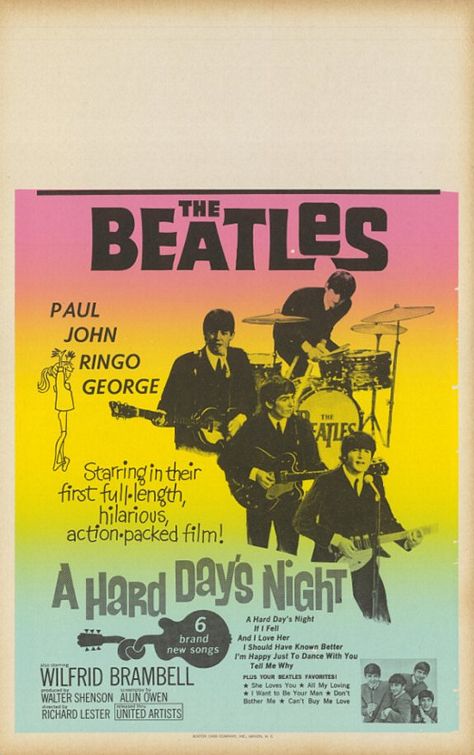
Few films encapsulate the spirit of their era while breaking cinematic ground like “A Hard Day’s Night.” Directed by Richard Lester and released in 1964, this groundbreaking musical comedy captures a day in the life of The Beatles at the crest of their global popularity. Often celebrated as one of the most inventive music films ever made, “A Hard Day’s Night” blends the energy of rock ‘n’ roll with the playful irreverence of British youth culture, setting a new benchmark for both musical cinema and the portrayal of pop icons onscreen.
Plot Summary
Set during the height of Beatlemania, “A Hard Day’s Night” follows John Lennon, Paul McCartney, George Harrison, and Ringo Starr as they navigate 36 chaotic hours leading up to a televised performance in London. Pursued by throngs of adoring fans, harried by the press, and wrangled by their exasperated manager, the Fab Four bounce from one slapstick encounter to another. Along the way, Paul’s mischievous grandfather adds comic mischief, climbing into trouble and pulling the band into unexpected situations.
The story unfolds in a breakneck pace mirroring The Beatles’ own meteoric rise and the frantic excitement surrounding their every move. Through trains, hotel rooms, and crowded streets, the band is shown alternately as global sensations and lovable lads from Liverpool, punctuating the film’s structure with electrifying performances of their hit songs. The result is part musical extravaganza, part satirical peek behind the curtain of pop stardom, and wholly a celebration of youthful exuberance.
Warning: Minor spoilers ahead. The final act brings the anticipation and chaos to a fever pitch as the boys gear up for their live television appearance. Despite obstacles, misunderstandings, and hilarious hijinks—including a police station detour and a case of mistaken identity—the film never loses its buoyant, witty rhythm. Yet, the narrative isn’t about peril or drama; instead, it leans into the sheer joy and absurdity of modern celebrity life, culminating in a roof-raising concert that cements both the band’s mythos and the film’s infectious legacy.
Key Themes & Analysis
“A Hard Day’s Night” is, above all, a film about fame—its thrills, its exhaustion, and its inherent surreal quality. Richard Lester’s direction transformed what could have been a simple promotional vehicle into a vibrant, avant-garde tapestry of satire and realism. One of its key themes is the absurdity of celebrity; throughout the film, The Beatles are both the world’s most recognizable faces and ordinary young men chafing under the constant pressures of public life. Their attempts to escape management, the media, and even their own personas underscore a tension between individuality and iconography.
The film’s cinematography, handled by Gilbert Taylor, adopts techniques reminiscent of the French New Wave, including handheld shots, rapid editing, and unconventional camera angles. These choices create a visceral sense of immediacy, plunging viewers directly into the whirlwind of Beatlemania. Lester’s use of jump cuts and breaking the fourth wall would go on to inspire music videos and pop culture for decades to come.
Dialogue in “A Hard Day’s Night” is razor-sharp, filled with deadpan humor, wordplay, and a distinctly British sense of irony. The script, penned by Alun Owen, allows the band members’ natural personalities to shine. Lennon’s wry wit, McCartney’s charm, Harrison’s understated humor, and Starr’s lovably hapless demeanor are all given ample space. Rather than asking the Beatles to play fictionalized versions of themselves, the film cleverly blurs the boundaries between reality and performance. This results in a level of authenticity seldom achieved in star-driven productions.
Musically, the film is a showcase for some of the band’s most beloved songs, including “Can’t Buy Me Love,” “If I Fell,” “And I Love Her,” and the eponymous “A Hard Day’s Night.” Each number is seamlessly integrated into the storyline, underscoring the band’s creative versatility and capturing the explosion of cultural energy that defined the 1960s. Unlike conventional musicals, the song sequences emerge as organic expressions of the Beatles’ reality, deepening the film’s connection with its audience.
Beyond its humor and music, “A Hard Day’s Night” is a snapshot of a transformative moment in popular culture. The movie’s portrayal of restless youth, defiant irreverence for authority, and insatiable appetite for excitement clearly anticipates the cultural revolutions to come. It immortalizes not only The Beatles but an entire generation’s yearning for self-expression and liberation from convention.
Why You Should Watch It
- Groundbreaking Film Craft: The inventive direction and cinematography, filled with playful techniques and visual innovation, set the stage for future music videos and modern musical films.
- Iconic Beatles Performances: The film features electrifying live renditions of The Beatles’ greatest early hits, offering an intimate view of their magnetic stage presence.
- Cultural and Historical Snapshot: “A Hard Day’s Night” provides a rare, authentic window into the 1960s, capturing both the frenzy of Beatlemania and the spirit of youthful rebellion that would define a generation.
Review Conclusion
“A Hard Day’s Night” stands as a vibrant, endlessly re-watchable testament to the power of music, youth, and cinematic invention. Richard Lester’s directorial flair transforms what could have been mere band promotion into an exuberant, genre-defining classic. Its technical brilliance, sharp humor, and compelling performances make it essential viewing—not only for Beatles fans but for anyone interested in the evolution of modern cinema and the cultural zeitgeist of the 1960s. More than sixty years after its release, the film remains as fresh and irresistible as the day it premiered.
🎬 Check out today's best-selling movies on Amazon!
View Deals on Amazon