
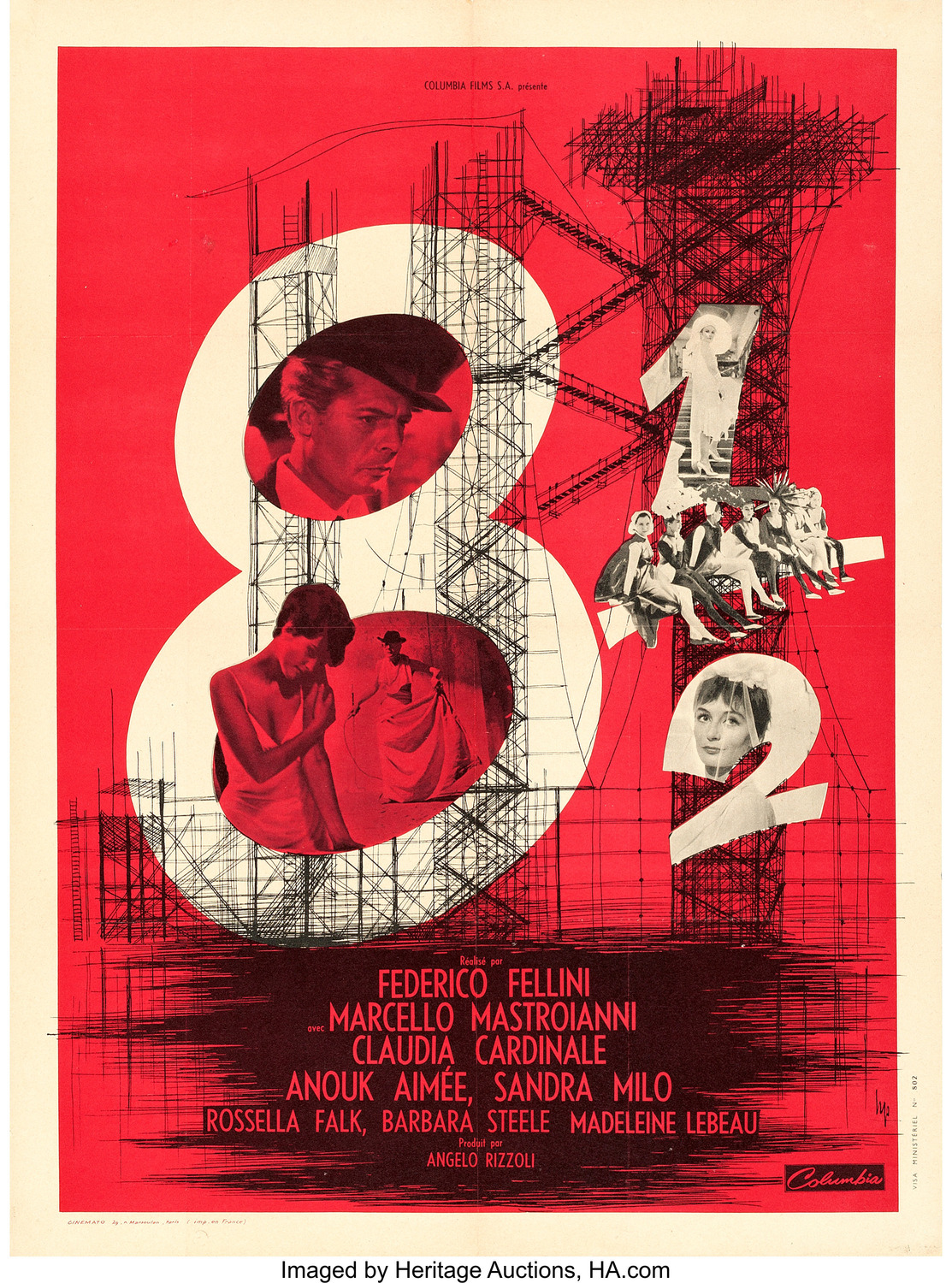
Few films in cinematic history have cast as long a shadow as Federico Fellini’s 8½, a 1963 masterpiece that remains a touchstone of both the art film and the drama genre. In a mesmerizing swirl of memory, fantasy, and artistic crisis, Fellini weaves a tale that is as enigmatic as it is engrossing. Revered for its technical invention and psychological depth, the film not only captured the imagination of a generation but redefined the language of cinema itself. For audiences new and old, 8½ invites you to step inside the mind of a troubled filmmaker, offering an alluring journey through creativity, identity, and the very nature of storytelling.
Plot Summary
8½ centers around Guido Anselmi, a successful film director grappling with an overwhelming creative block as he embarks on what is meant to be his magnum opus. We first meet Guido at a luxury spa where he is meant to rest, but the respite instead amplifies both his anxieties and distractions. Surrounded by producers, actors, crew, and his wife, Guido retreats into a world teeming with memories, dreams, and hallucinations, often struggling to distinguish reality from fantasy.
The narrative unfolds through a series of vignettes and recollections rather than a conventional linear progression. Guido’s attempts to reconcile his professional obligations with his personal turmoil form the backbone of the film; he is besieged by everyone’s expectations while simultaneously haunted by memories of his childhood and the failures of his relationships. This labyrinthine journey becomes a reflection of Guido’s inner life, as symbolic encounters with his muse, his parents, and even his own self-doubt continuously disrupt his sense of stability.
Spoiler Warning: While the film avoids traditional plot twists, the ultimate resolution of Guido’s journey is best experienced firsthand. The ambiguity of the ending, coupled with its surreal presentation, leaves the audience contemplating not only Guido’s fate but also the broader implications for anyone who seeks to make sense of their own creative and personal chaos.
Key Themes & Analysis
At its heart, 8½ delves into the intricacies of the creative process and the burden of expectation. Fellini constructs an immersive study of an artist paralyzed by doubt, exploring how memory and fantasy interfere with work and relationships. This self-reflexive element—a film about making a film—creates a meta-narrative that has influenced storytellers for decades.
Exploration of Identity and Authenticity: Guido’s internal conflict is not merely about making a movie; it is a quest for authenticity in an environment saturated with superficiality. As he navigates demands from producers, impossible deadlines, and the persistent questions about the meaning of his work, Guido’s crisis becomes universal. The film suggests that the struggle for artistic integrity mirrors the broader human desire for self-understanding and truth.
Cinematography: Fellini’s collaboration with cinematographer Gianni Di Venanzo is nothing short of groundbreaking. The film’s use of high-contrast black and white imagery enhances the dreamlike atmosphere, blurring the boundaries between reality and imagination. Innovative camera movements, such as the fluid tracking shots and surreal framing, help the audience slip between past, present, and fantasy alongside Guido. Several sequences—including the iconic opening dream and the carnival-like finale—remain some of the most visually inventive in film history.
Directing Style: Fellini’s direction is marked by both confidence and self-questioning. He draws on autobiographical elements, infusing the narrative with personal touches that resonate with authenticity and vulnerability. The chaotic and crowded scenes—teeming with colorful personalities—reflect the cacophony of thoughts inside Guido’s mind. By juxtaposing moments of stillness with bursts of flamboyant energy, Fellini creates an ever-shifting tonal palette that mirrors the shifting moods of his protagonist.
Acting: Marcello Mastroianni delivers a nuanced and magnetic performance as Guido, embodying both the world-weariness and playful charm of the beleaguered creator. His subtle facial expressions and languid physicality convey volumes of inner turmoil without slipping into melodrama. The supporting cast, including Anouk Aimée as Guido’s long-suffering wife Luisa and Sandra Milo as his ebullient mistress Carla, add further layers of complexity to the story. Each character seems to represent a fragment of Guido’s psyche, making the interactions far more than simple dialogue exchanges—they are reflections of conflicting desires and memories that shape his world.
On both technical and narrative levels, 8½ showcases Fellini’s penchant for surrealism without sacrificing emotional depth, ensuring the film’s enduring reputation as a cornerstone of world cinema.
Why You Should Watch It
- Unparalleled Visual Storytelling: The film’s imaginative cinematography and surreal imagery remain as striking today as they did in 1963, influencing generations of filmmakers.
- Profound Psychological Insight: 8½ explores universal themes—creativity, personal crisis, memory—in ways that resonate with anyone who has ever experienced doubt or longing for purpose.
- Landmark in Film History: Not only did it set the standard for movies about moviemaking, but its artistic innovations have left an indelible mark on the medium itself.
Review Conclusion
8½ is far more than just a film about filmmaking—it is a celebration of the exquisite messiness of being human. By inviting viewers into Guido Anselmi’s fragmented world, Federico Fellini crafts a cinematic experience that is at once deeply personal and profoundly universal. Every frame hums with the tension between chaos and order, dream and reality, making each viewing a fresh and transformative encounter. For those seeking an essential work of art that challenges as much as it delights, 8½ remains a peerless classic.
Star Rating: 5/5
🎬 Check out today's best-selling movies on Amazon!
View Deals on Amazon