
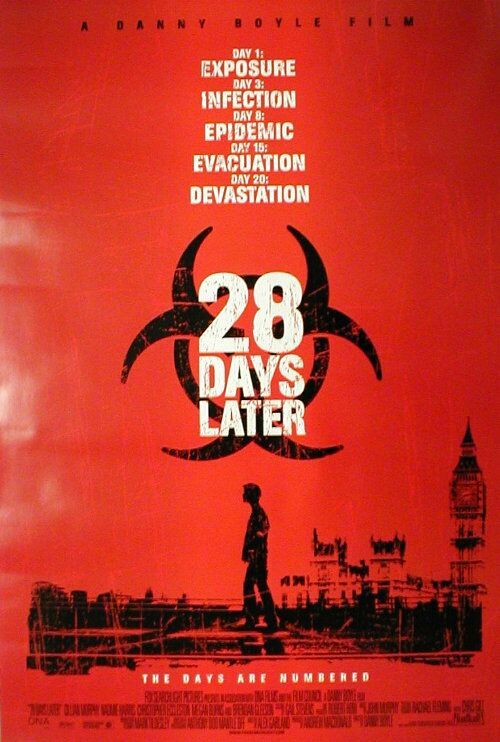
Few films have redefined a genre and sparked a cultural shift quite like Danny Boyle’s “28 Days Later.” Released in 2002, this British horror film revitalized the post-apocalyptic and zombie subgenres with its gritty realism, kinetic visual style, and fresh narrative approach. Drawing upon elements of survival horror, psychological drama, and societal commentary, Boyle crafts a haunting vision of a world undone by a virulent rage virus. The result is an influential and enduring entry in early 21st-century horror that continues to captivate audiences more than two decades after its debut.
Plot Summary
Set in a desolate and eerily empty London, “28 Days Later” opens with animal rights activists unwittingly releasing a highly contagious “rage virus” from a research facility. The narrative then fast-forwards nearly a month, as Jim (played by Cillian Murphy), a bicycle courier, awakens from a coma in a hospital to discover the city deserted and in ruins. Confused and alone, Jim encounters a handful of survivors, including the tough and pragmatic Selena (Naomie Harris) and Mark (Noah Huntley).
Together, they navigate a world that has rapidly devolved into chaos, avoiding those infected by the virus. The disease turns its victims into frenzied, violent, and nearly unstoppable threats within seconds, adding an unrelenting pace and tension to their journey. As the group searches for shelter and signs of other survivors, they encounter Frank (Brendan Gleeson) and his daughter Hannah (Megan Burns), who join in the quest for safety.
Seeking hope amid relentless despair, the survivors hear a radio broadcast promising sanctuary and a solution to the crisis. Their journey toward the supposed safe haven takes them through increasingly perilous landscapes, testing their resolve, morality, and faith in humanity.
Warning: Major plot spoilers ahead.
Upon reaching their destination, Jim, Selena, and Hannah find themselves confronting not just the infected, but also the darker sides of human nature. The film’s climax poses powerful questions about survival and what it means to maintain one’s humanity, even when civilization has collapsed.
Key Themes & Analysis
At its surface, “28 Days Later” is a pulse-pounding thriller, but beneath the urgent stakes lies a rich tapestry of themes and artistic choices that distinguish it from typical genre fare.
Redefining the Zombie Genre
One of the most significant innovations “28 Days Later” offers is its reinvention of the undead antagonist. Rather than the traditional, shambling zombies popularized by earlier genre entries, Boyle opts for “infected” humans who are fast, aggressive, and terrifyingly unrelenting. This radical shift introduces a new level of tension and danger, emboldened by handheld camera work and harsh digital cinematography. While not technically zombies, the infected capture the same sense of hopeless menace, rebooting classic tropes for a modern audience.
Post-Apocalyptic Realism and Societal Collapse
Boyle leans into a grounded, almost documentary approach to a familiar apocalyptic scenario. The deserted streets of London, filmed in the early hours to maximize realism, create an eerie atmosphere that viewers find both haunting and plausible. Rather than relying on excessive special effects or overt supernatural elements, the director focuses on the fear of contagion, isolation, and societal breakdown. The film’s tone is intense and unsettling, driven by John Murphy’s moody soundtrack and Boyles’ kinetic editing style.
Survival, Morality, and the Human Condition
At the narrative’s core is an exploration of what it means to survive after the collapse of civilization. Boyle and screenwriter Alex Garland confront harsh ethical dilemmas, such as the morality of violence, the value of camaraderie, and the temptation to abandon one’s ideals in an unrecognizable world. The survivors are often forced to make impossible decisions, raising the question: Is it possible to cling to one’s humanity when surrounded by relentless brutality?
Performances and Characterization
The film’s cast delivers strong performances all around, elevating the material above typical survival horror fare. Cillian Murphy brings a convincing vulnerability and gradually steelier resolve to Jim, making his transformation both believable and affecting. Naomie Harris’s portrayal of Selena is equally compelling, presenting a fierce, capable survivor who struggles with her own emotional walls. Brendan Gleeson’s Frank provides a much-needed emotional anchor and warmth amidst the grim proceedings, while Megan Burns captures the innocence and resilience of youth in a shattered world. The chemistry among the cast is palpable, and their performances ground the film in an emotional reality that enhances the horror elements.
Cinematography and Direction
Opting for digital video—a relatively new technique at the time—Boyle crafts a visual style that is gritty, raw, and immediate. The decision to shoot on digital allows for greater flexibility, such as clearing out London’s iconic locations for key early scenes. This choice results in some of the film’s most memorable imagery, including a hauntingly empty Westminster Bridge. Cinematographer Anthony Dod Mantle’s work is instrumental in creating the film’s immersive atmosphere, mixing frenetic action shots with moments of quiet, reflective beauty. The use of natural lighting, realistic color palettes, and a handheld camera aesthetic reinforces the authenticity and urgency of the experience.
Soundtrack and Audio Design
The soundtrack, composed by John Murphy, is both memorable and impactful. Tracks such as “In the House – In a Heartbeat” have become iconic, perfectly underscoring both the escalating terror and moments of emotional resonance. The film’s sound design amplifies the sense of isolation, chaos, and suspense, making silence as chilling as the cacophony of an attack.
Why You Should Watch It
- Unmatched Tension and Innovation: “28 Days Later” reinvents and energizes the zombie/post-apocalyptic genre with fast-paced infected, relentless suspense, and a nerve-wracking atmosphere that few films emulate successfully.
- Smart, Character-Driven Storytelling: Rather than relying solely on gore or jump scares, the film focuses on character arcs, moral complexities, and the emotional toll of survival, resulting in a richer, more engaging cinematic experience.
- Artistic Cinematography and Direction: Danny Boyle’s distinct visual and directorial choices, coupled with evocative music and stellar performances, make this film a standout technical and emotional achievement in horror cinema.
Review Conclusion
“28 Days Later” has earned its reputation as a modern classic, not only for breathing new life into a well-worn genre but for doing so with intelligence, artistry, and genuine emotional depth. Danny Boyle’s direction, paired with strong performances from a talented cast, ensures the movie remains gripping from start to finish. The film’s influence can be seen in countless works that followed, shaping both the style and substance of zombie and disease-based horror for years to come. Whether you’re a longstanding genre fan or new to post-apocalyptic thrillers, this movie offers a raw, thrilling, and thoughtful viewing experience.
Star Rating: 4.5/5
🎬 Check out today's best-selling movies on Amazon!
View Deals on Amazon