
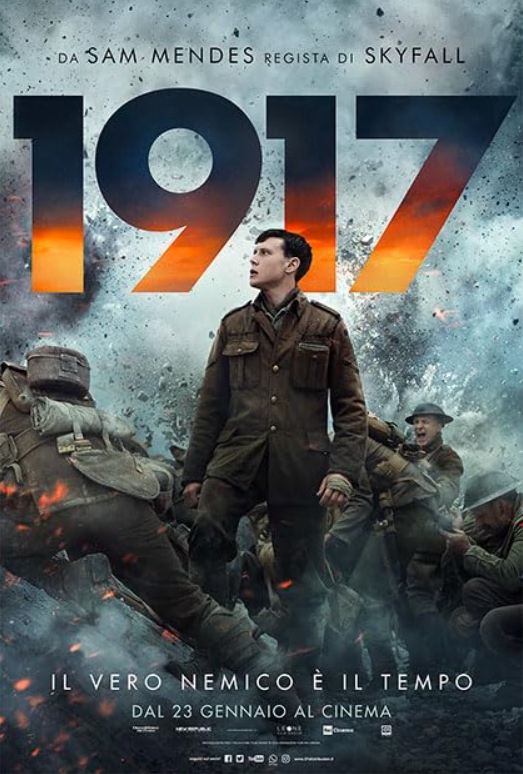
Few films in the modern era have managed to combine technical bravado with emotional resonance quite like Sam Mendes’s World War I epic. Deeply immersive and relentlessly tense, this war film draws viewers into the trenches and across devastated landscapes with a blend of stunning visuals and razor-sharp storytelling. Under Mendes’s seasoned direction, the genre finds new life, transforming a mission through enemy lines into an unforgettable cinematic journey.
Plot Summary
Set in the spring of 1917, the film plunges viewers into the midst of the First World War. The story follows two young British soldiers, Lance Corporals Schofield and Blake, who are abruptly assigned a perilous task: they must cross enemy territory to deliver an urgent message that will stop 1,600 fellow soldiers—including Blake’s own brother—from walking into a deadly trap. What starts as a simple mission quickly turns into a harrowing race against time, filled with tense standoffs, desperate escapes, and moments of unexpected humanity.
The narrative unfolds in what appears to be one continuous shot, giving the audience the experience of living every second alongside the protagonists. This technique establishes both an unshakeable immediacy and an intimacy rarely seen in war films. The pair’s journey leads them through mud-soaked trenches, shell-torn landscapes, abandoned villages, and across rivers—all while danger looms at every corner and hope flickers like a candle in the wind.
While the plot is straightforward—prevent a massacre by delivering a message in time—the film’s pacing and strong narrative drive keep the audience teetering on the edge of their seats. There are few moments to catch a breath as the men are faced with peril after peril.
Spoiler Warning: If you wish to avoid specific story points, be cautious—one of the film’s greatest strengths is the unpredictability of its characters’ fates, and some twists carry an emotional punch that is best experienced firsthand.
Key Themes & Analysis
At its core, the film is a meditation on duty, sacrifice, and the endurance of the human spirit in the face of overwhelming adversity. The setting of World War I, often overshadowed by films about later conflicts, acts as both a literal and metaphorical quagmire where morality, brotherhood, and survival are tested. The story isn’t merely about war’s chaos—it’s about how ordinary individuals find moments of grace under extraordinary pressure.
The cinematography by Roger Deakins is nothing short of breathtaking and earned him an Academy Award. Shot to appear as a single unbroken take, the film’s visual storytelling is both immersive and innovative. The camera weaves seamlessly through narrow trenches, war-torn buildings, and across open fields, capturing a sense of immediacy and unrelenting tension that truly immerses audiences in the soldiers’ plight. The use of natural light—especially in nighttime sequences set against burning buildings—heightens both realism and beauty, juxtaposing horror with unexpected moments of visual poetry.
Sam Mendes’s directing is a masterclass in restraint and tension. Instead of relying on bombast or spectacle, Mendes makes every minute feel urgent and intimate, focusing on the micro-level experience of its protagonists. The pacing never flags, and Mendes knows when to let silence—or the actors’ expressions—carry the emotional weight.
The performances, especially those of George MacKay as Schofield and Dean-Charles Chapman as Blake, are deeply affecting. MacKay in particular delivers a nuanced portrayal of courage under fire, making his character relatable and sympathetic from the outset. Their believable camaraderie grounds the film even as chaos rages around them. Notable cameos from veteran actors such as Colin Firth, Mark Strong, Benedict Cumberbatch, and Andrew Scott add authority and gravitas to the proceedings without upstaging the leads.
The score by Thomas Newman subtly underscores the relentless pace, never overwhelming the film’s quieter moments but ramping up the tension as danger closes in. Sound design, too, is impeccable, immersing viewers in the roar of gunfire, the deafening silence of no-man’s land, and the distant cries of unseen soldiers. The technical and artistic elements meld together to create a war film that is both thrilling and deeply human.
Underlying it all is an exploration of legacy and memory. Mendes, inspired by his own grandfather’s wartime stories, asks viewers to consider not just the grand strategies of war but the quieter, personal heroics that so often go unsung. The film invites a reckoning with the past, honoring those whose courage bridges the gap between generations.
Why You Should Watch It
- Unprecedented Cinematic Immersion: The continuous-shot technique places viewers at the center of the action, providing a uniquely intense and intimate perspective on war.
- Outstanding Visual and Technical Achievement: With Roger Deakins’s Oscar-winning cinematography and seamless direction from Sam Mendes, the film sets new standards for visual storytelling and production design in war cinema.
- Resonant Emotional Core: The performances and personal stakes make the narrative deeply moving, setting it apart from more detached or bombastic genre entries.
Review Conclusion
This war film stands as a towering achievement in both technical innovation and heartfelt storytelling. Sam Mendes’s singular vision, combined with Roger Deakins’s masterful cinematography and standout performances from the cast, delivers a war epic that is not just visually overwhelming but also deeply personal. The film transcends the conventions of the genre, taking viewers on a journey that is as emotionally impactful as it is cinematically ambitious.
Whether you are a fan of war movies or simply appreciate excellence in filmmaking, this film promises an unforgettable experience, balancing raw tension with profound humanity. It is not just a story about war—it is a testament to the endurance of hope in the darkest times.
Star Rating: 4.5/5